
National Art Museum of Belarus, Minsk. Keeping national and world art with dignity
My art history professor put it perfectly: The Art Museum of Belarus is an encyclopedic incarnation of the school subject that is called “World Cultural Studies.”
This phrase perfectly captures the essence of the museum: all types of art, everything is here. It is difficult to think of another museum that has approached its collection so fundamentally, deeply, and responsibly. No, I remember one! I would put The Pushkin State Museum of Fine Arts in Moscow on a par with the National Museum of Belarus, but even these two museums are difficult to compare. The Museum of Belarus is unique in its own way.
Table of Contents
From stalinist empire style to high-tech
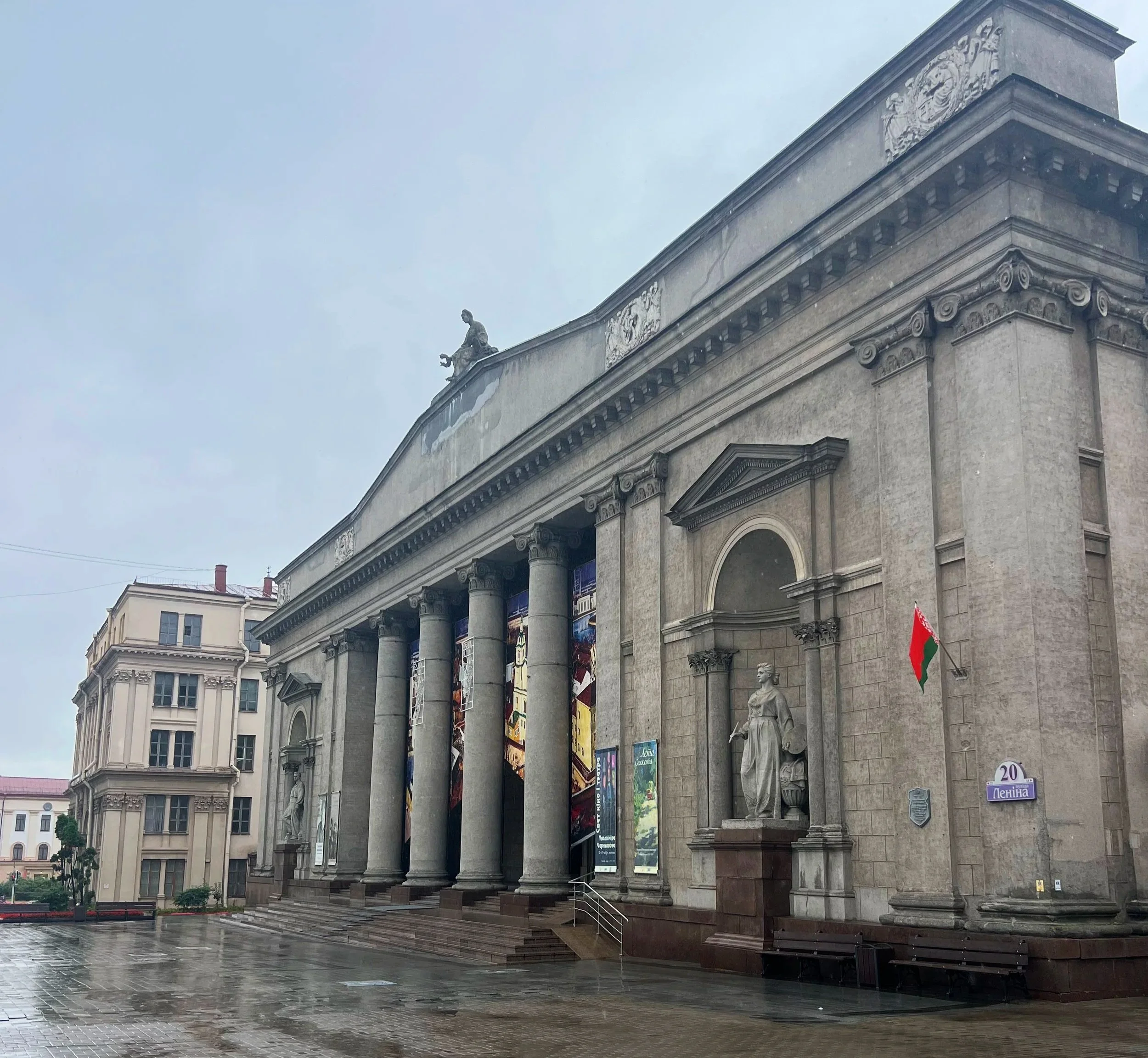
The first thing that strikes you as you approach the museum is its massive main façade. It was designed by Soviet architect Mikhail Baklanov. The building itself is a prime example of the solemn Stalinist Empire style. Massive columns, austere proportions, and a monumental sculptural group on the portico set the visitor in a classical, almost sacred mood. However, the real surprise awaits you inside.
The museum has long outgrown its historical boundaries. It was foundedn in 1939, but in 2009, a new, ultra-modern wing was officially opened. This large-scale architectural integration has made it possible to significantly expand the exhibition space. The modern extension, with its abundance of glass and metal, a complex system of overhead natural light, and open gallery walkways, creates a striking spatial contrast.

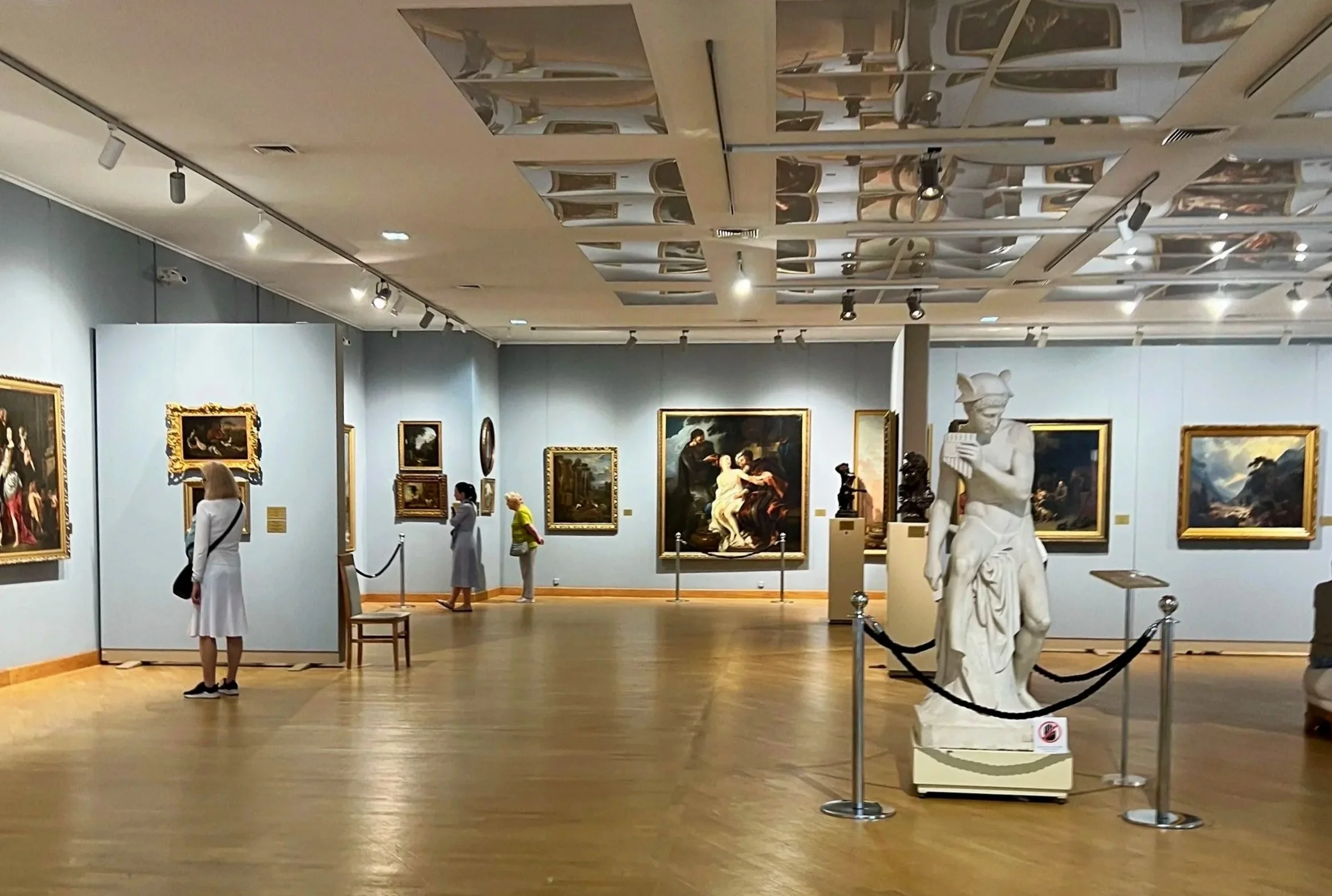
As you move from the classical, academic halls with their parquet floors into the spacious, light-filled pavilions of the new wing, you can physically sense the connection between eras. The space is organized so skillfully and ergonomically that the halls never feel cluttered, and the natural light allows you to discern the subtlest nuances of painting techniques without straining your eyes with artificial glare.
The museum is large. The collection is located in the main historical building and a new wing, which opened in 2009.
Now the museum holds the largest collection of national and foreign art in the country. It houses more than 30,000 exhibits that form 20 collections of art monuments from Belarus, other countries, and peoples of the world. The museum has the following scientific departments: ancient Belarusian, contemporary Belarusian, Russian and foreign art, scientific and educational work, scientific and inventory, and scientific and restoration.
Secrets of the exhibition and must-see highlights
Trying to see the entire collection in a single day is a tactical mistake. A vast amount of information will you to emotional burnout so you’ll be running away from the Museum back to eating draniki*.
As an art historian, I recommend focusing your attention on three key, unique thematic sections that represent the museum’s greatest pride and cultural value.
*draniki is the national dish of Belarus, refers to crispy, savory potato pancakes or fritters.
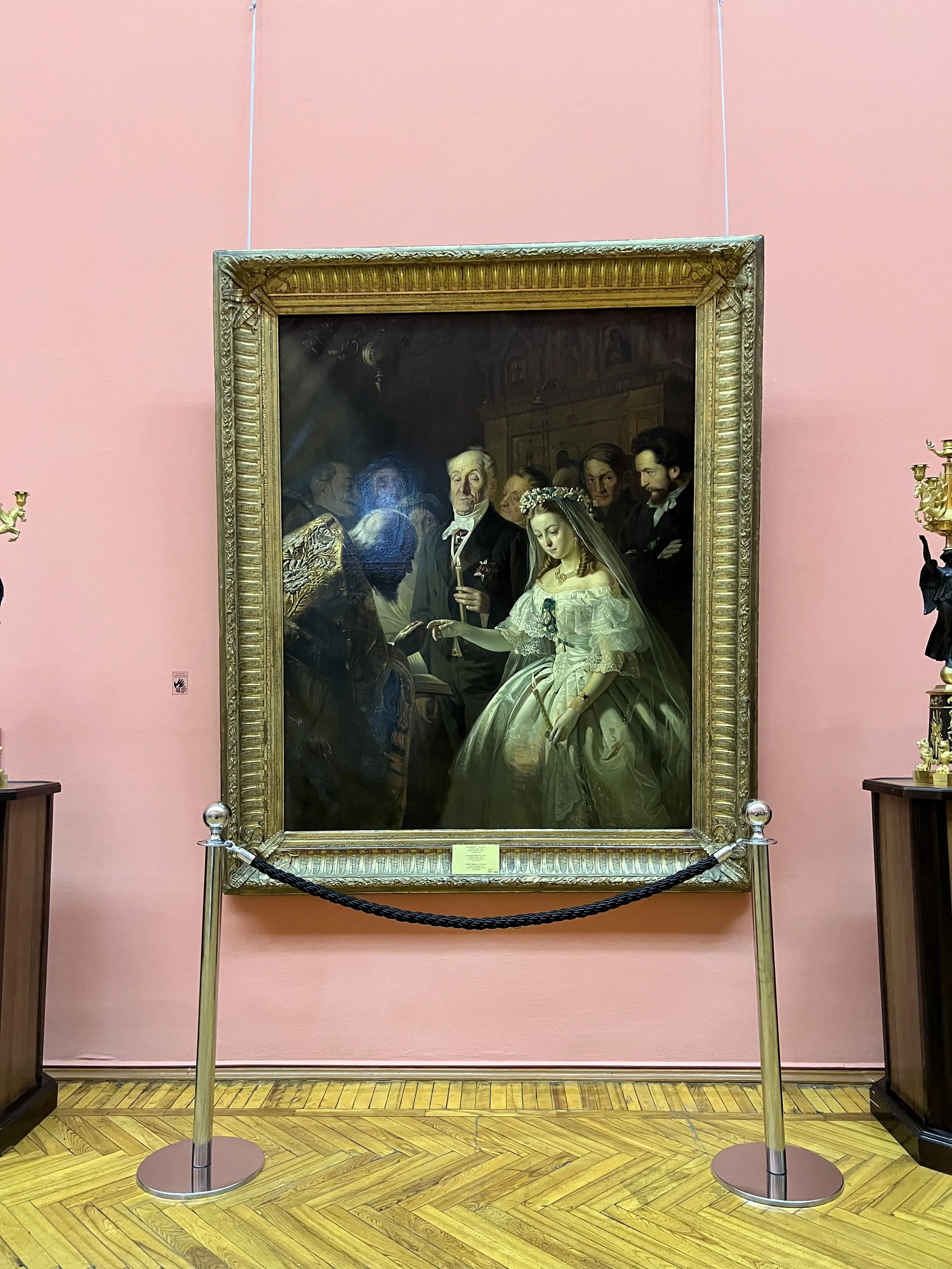
Vasili Pukirev, The unequal marriage, 1862, oil on canvas
1. A chronicle: “Returned masterpieces”
The most powerful, emotional, and historically significant part of the museum’s collection is shrouded in the tragic events of the mid-20th century. Before the start of the Great Patriotic War, the State Art Gallery of the Byelorussian SSR possessed magnificent collections. However, Minsk fell under Nazi occupation literally in the very first days of the war. The rapid advance of German troops made it impossible to evacuate these priceless treasures fully and in a timely manner.
As a result, virtually the entire pre-war collection (about 3,000 first-rate exhibits) was completely looted and taken out of the country. The German occupation authorities systematically confiscated paintings by great Russian and European masters on the personal orders of Adolf Hitler. These works of art were intended for the Führer’s colossal private museum in the Austrian city of Linz. After the war ended, Soviet art historians, military personnel, and diplomats undertook a titanic and meticulous effort to locate and repatriate the lost treasures. To date, of the 3,000 stolen items, only about 500 masterpieces have been returned to their homeland.
IMPORTANT: pay close attention to the captions and labels accompanying the paintings. Canvases by such titans as Ivan Aivazovsky, Isaac Levitan, Ivan Shishkin, Vladimir Borovikovsky, and Ilya Repin — which were repatriated from Germany and other European countries — they all are marked with a small red star.
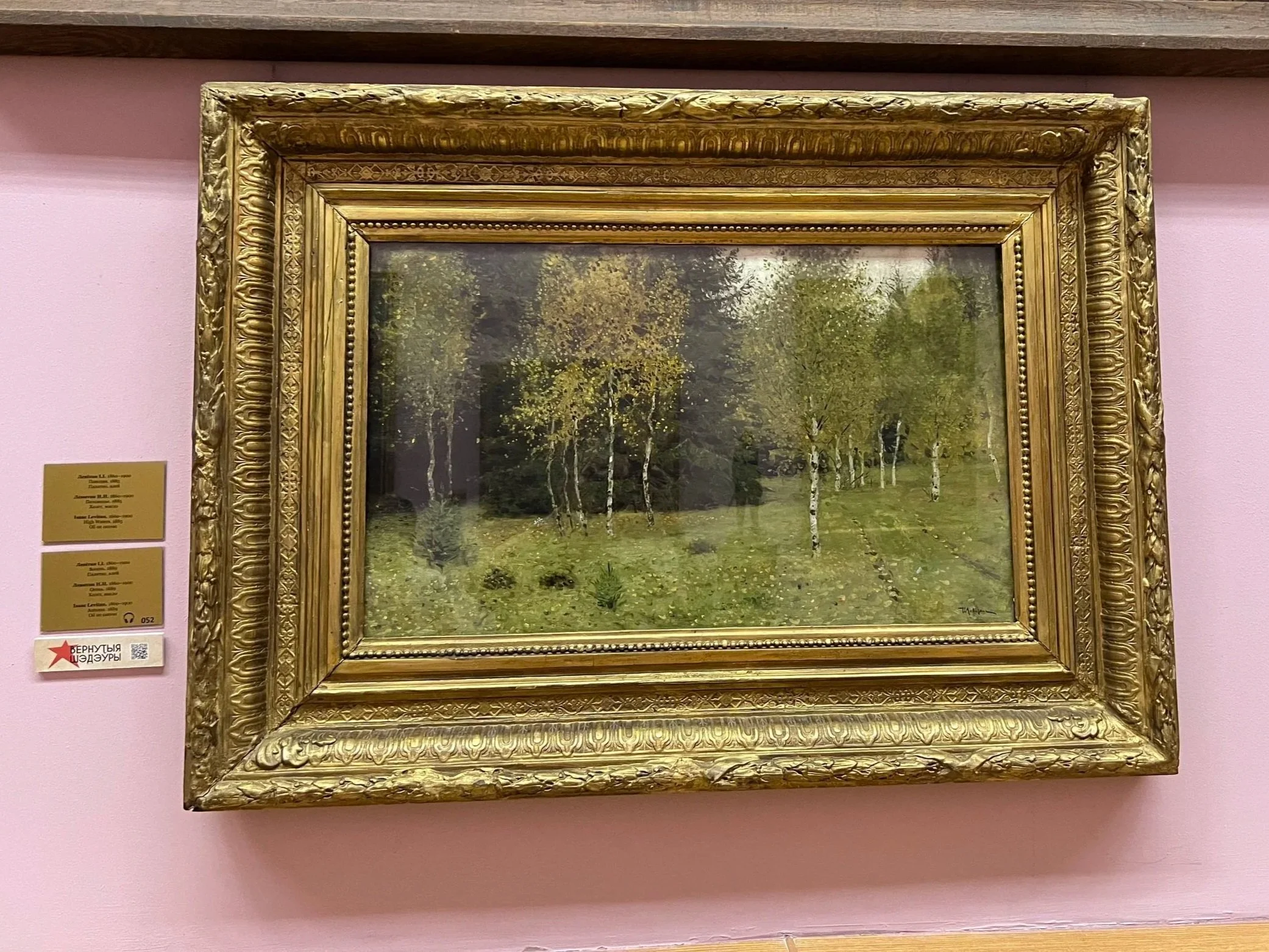
Isaac Levitan, Autumn, 1889, oil on canvas. ‘Returned masterpieces’ collection
2. The phenomenon of Belarusian watercolor painting of the 20th–21st centuries
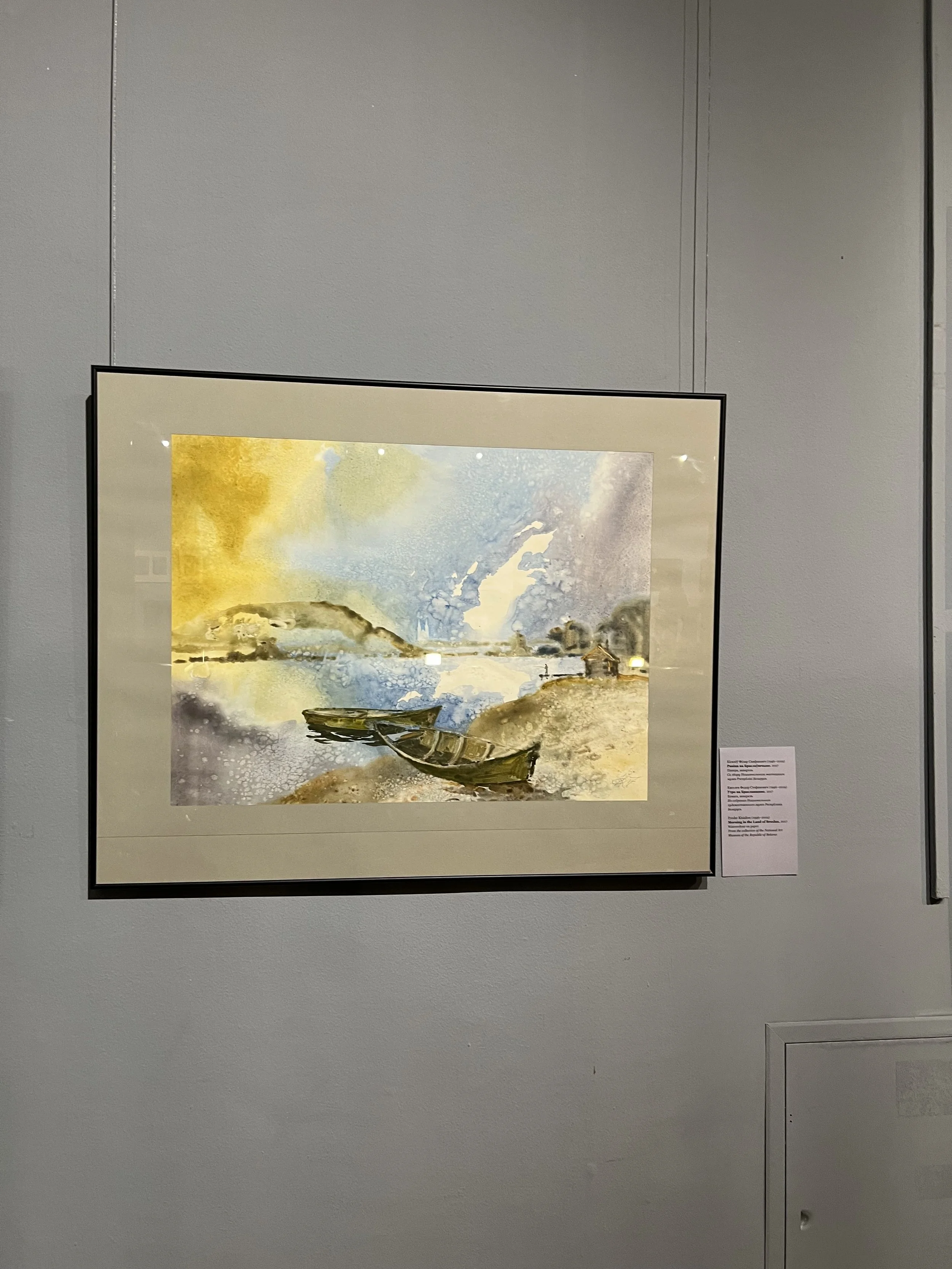
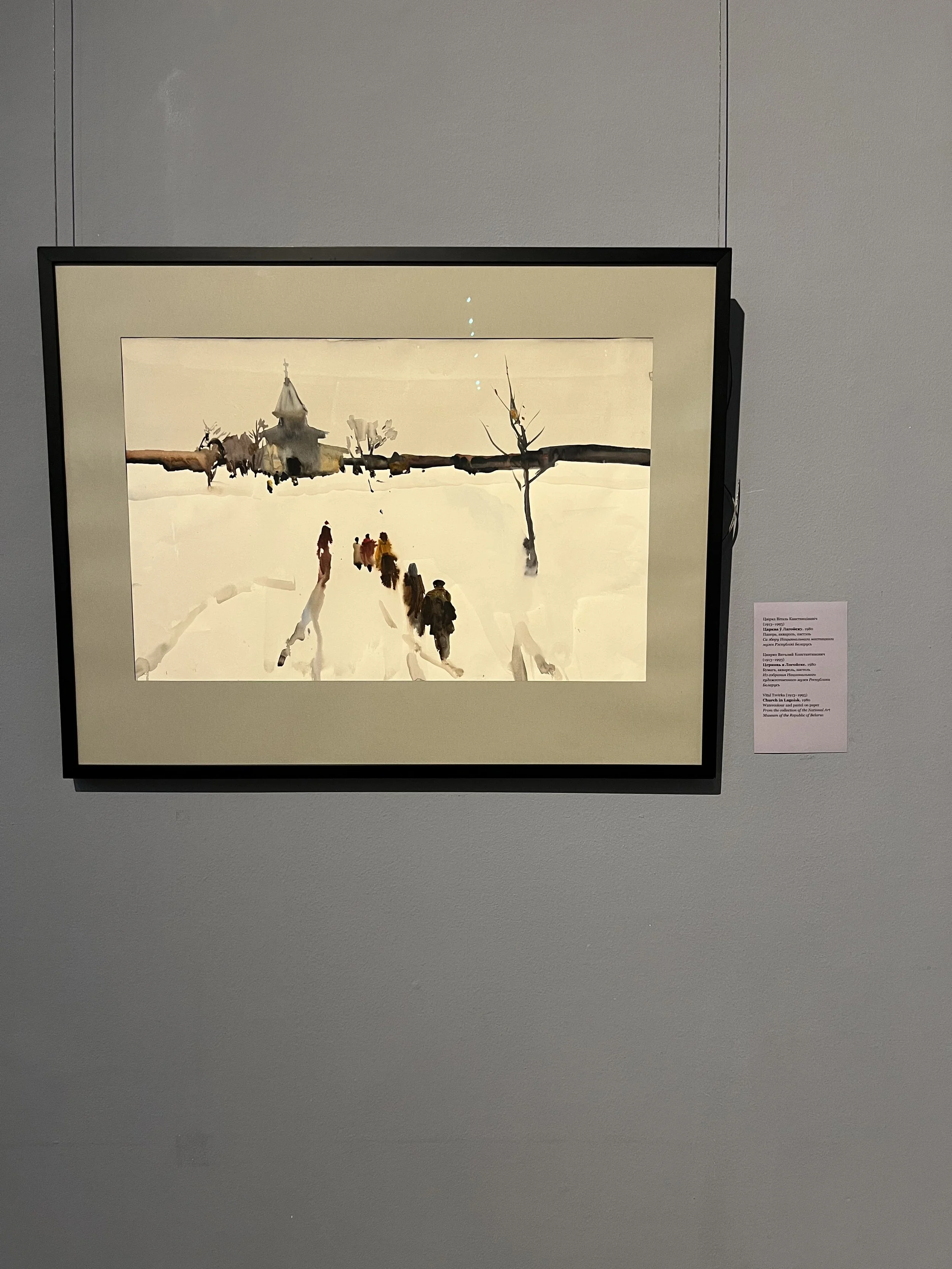
Belarussian watecolors is the true poetry and soul of Belarusian culture. The watecolors are the heart of the museum’s collection.
Watercolor painting is an incredibly complex, capricious technique that demands flawless mastery. Here, it is impossible to correct a mistake, repaint a layer, or hide an imperfect brushstroke.
The masters of the Belarusian school (among whom the works of V. Tsvirko, F. Kiselev, and G. Shutov are particularly noteworthy) have brought this art to absolute perfection. Their works are entirely free of false pathos, political expediency, or pomposity. It is an incredibly deep, quiet, and intimate love for their native land.
The artists masterfully utilize the natural properties of water and pigment. They create the illusion of tangible, damp, mist-filled air, a light predawn breeze, and soft, subdued sunlight — so characteristic of Belarusian landscapes.



After touring the magnificent halls and heading down to the first floor of the historic building, don’t rush out onto the bustling Lenin Street just yet. Stop by the local museum gift shop.
The museum administration has created a unique conceptual space. Here, at very reasonable prices, you can purchase stunning, lavishly published art books, rare catalogs of past exhibitions, and high-quality reproductions and prints of antique Belarusian icons. Of particular interest is the section featuring local artisanal crafts: textiles, ceramics, and jewelry created by contemporary Belarusian artisans inspired by the museum’s collections.
General info
Location & address: 20 Lenin Street, Minsk. The museum is located right in the heart of the city center, just a short 5-minute walk from the Kupalovskaya / Kastrychnitskaya metro stations.
Opening hours: Open daily from 11:00 AM to 7:00 PM. Please note that the museum is closed on Tuesdays, and the ticket office stops selling tickets 30 minutes before closing time.
Financial details: a standard admission ticket for an adult visitor without any discounts costs approximately 10 Belarusian rubles (equivalent to about 3 U.S. dollars). Amateur photography and video recording with smartphones and cameras inside the exhibition halls is permitted absolutely free of charge, but strictly under one condition, you must turn off the flash completely, as sudden flashes of light damage the ancient pigments in the paintings. For a more immersive experience, I recommend renting an audio guide or booking a private tour.
IMPORTANT: Don’t miss the beautiful museum souvenir shop on the ground floor. It offers high-quality art albums, unique prints of Belarusian icons, and locally crafted artistic souvenirs that make perfect cultural gifts.
