

Graffiti Vandalism epidemic in Europe: why tagging is killing our cities
The façades of our cities are the face of our culture. Yet, for the past few decades, the visual identity of Europe has been systematically defaced by unauthorized graffiti.
To be clear: this is not a critique of vibrant street art culture or commissioned murals. This is about tagging and destructive graffiti. These damage property, carry zero cultural value, and erode the architectural legacy of our continent.
European architecture, spanning from classical antiquity to modernism, is under threat. Historic façades are increasingly marred by graffiti, replacing visual harmony with urban decay.
Table of Contents
Defining the Issue: Art vs. Vandalism
Europe has shaped the very language of global architecture. And what do we see now? The same streets that once inspired architects and visionaries are increasingly marred by vandalism. Graffiti sprawls across historic facades, public spaces fall into neglect, and the visual harmony (that once distinguished European cities) is being eroded. The architectural legacy that stood as a testament to human ingenuity and artistic ambition is being defaced.
According to the Oxford English Dictionary, vandalism is “the deliberate destruction of or damage to public or private property.” Tagging fits this definition perfectly, with up to 76% of streets in some European cities affected, transforming historic centers into neglected spaces.
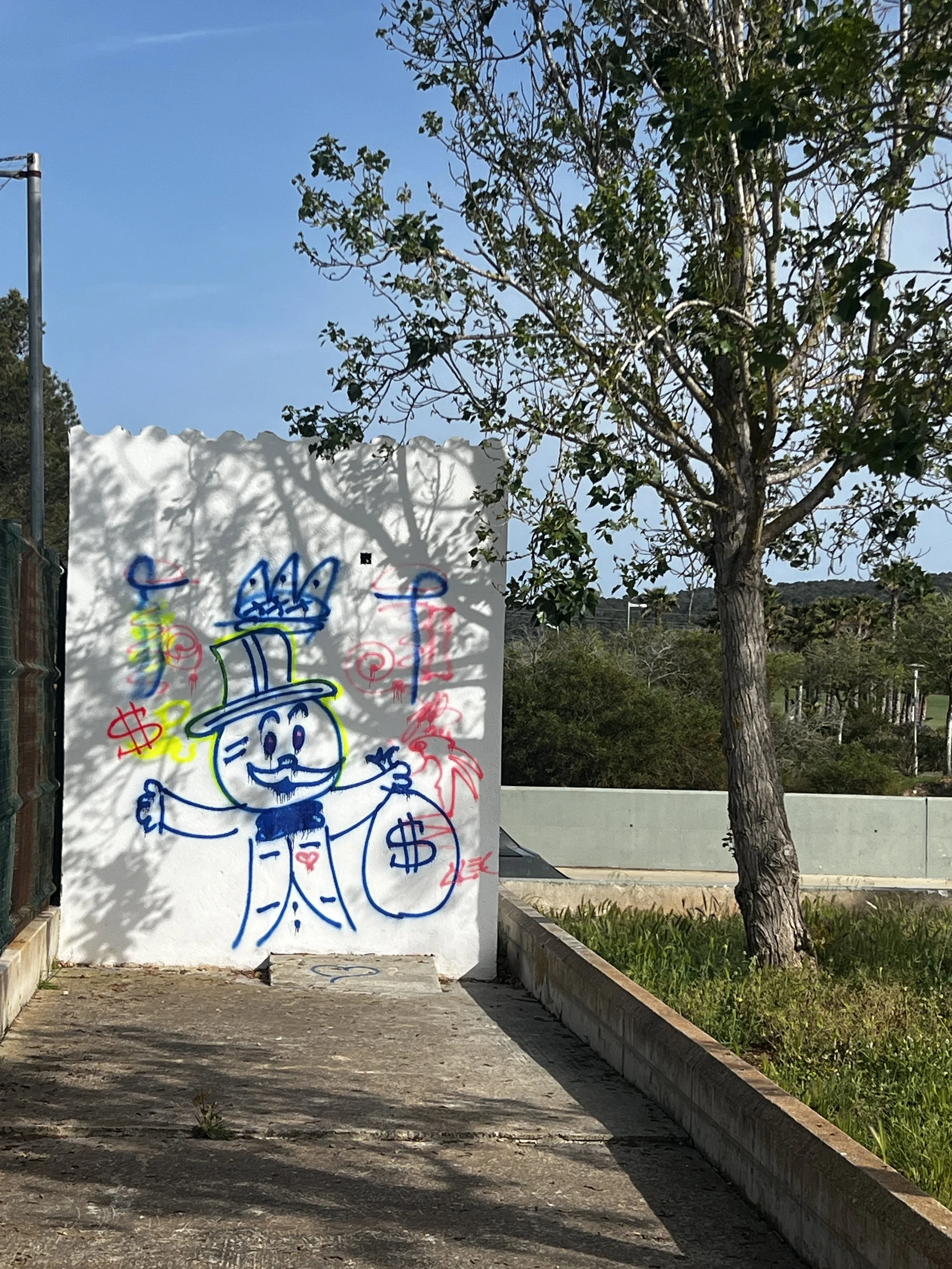
Tagging is neither art, nor a type of self expression. It is vandalism.
This form of vandalism in European cities persists, continues unchecked, and even worsens over time. The purpose of this text is not to delve into the history of graffiti and subcultures as a whole but to draw attention to a significant issue. These are the unlawful, uncontrolled, and unpunished defacement of buildings, façades, urban infrastructure, walls, fences, and other public and private surfaces.
Over the past few decades, the urban aesthetic of European cities has been marginalized and devalued. In many cases, city centers are becoming indistinguishable from neglected ghettos. Once a civilized and beautiful place, Europe has come to resemble a chaotic accumulation of defaced façades, scribbled walls, and neglected public spaces.
I support a zero-tolerance policy toward unauthorized graffiti, and this text aims to explain why we should all adopt the same stance.

The façades of cities represent the face of a country and its people
Vandalic Graffiti Epidemic
I am using the medical term “epidemic” because in my opinion it perfectly reflects the scale of the issue. The problem has all the signs of an Epidemic in the context of vandalic graffiti and here’s why.
The problem reached mass prevalence and spreaded across vast areas of Europe. It gained momentum about 15-20 years ago, and very quickly spreaded all over Europe, like real desease. Despite some attempts to combat and contain it, inability to fight it led the issue to grow. When authorities do nothing — the problem grows.
Over time, the persistence of vandalistic graffiti ensured that, even in the face of some minor (minor!) countermeasures, the phenomenon continued to endure and replicate itself.
Social consequences are inevitable. I strongly argue that quality of visual culture in Europe massively declined and communities started to feel more isolated, and the overall environment of European cities majorly deteriorated.

Together with ugly commercial banners graffiti vandalism worsen ugliness of European cities
Systematic failure?
I don’t want to sound like a moralist babushka, but we have to face the truth, today’s visual culture is in decline.
The fact that people pick up spray cans and go out to deface buildings is rock bottom. The fact that passersby see these vandalized walls every day and grow accustomed to ugliness is another. And the fact that city administrations make little to no effort to combat this destruction is yet another.
It’s a systemic crisis.
The offense goes unpunished. Only occasionally do the media publish symbolic reports about a vandal being arrested and fined.
In the EU, fines for vandalism vary significantly depending on the severity and nature of the act, with penalties ranging from €200 to €820,000, or even higher, sometimes including imprisonment. However, these measures are rarely enforced effectively, and that allows the problem to persist and escalate.
Clearly, existing laws are ineffective, as vandalism in Europe continues to increase every year.
Form of expression?
Many supporters see vandalistic graffiti as a form of expression and its prohibition as an attack on freedom of speech and/or artistic expression. Well, let’s examine this claim.
Freedom of expression is a fundamental right, but like any right, it is not absolute. It exists within a framework of laws and regulations that ensure it does not infringe upon the rights of others. The moment an individual’s “artistic expression” damages someone else’s property (whether public or private) it ceases to be a right and becomes an offense.
True freedom does not mean the absence of rules; it means a balance between individual expression and social order. Without regulation, any form of self-expression could justify destruction, leading to chaos. Imagine a society where anyone could paint over historical buildings, public transportation, or private homes in the name of ‘artistic freedom.’ We don’t need to imagine, we witness this in Europe already. This is total breakdown of shared space and respect for others.
Graffiti vandalism is not a necessity for artistic self-expression. Legal alternatives exist—designated walls, street art festivals, commissioned murals. Many renowned street artists operate within these frameworks, proving that creativity does not require lawlessness.

Where one person’s freedom begins to harm the collective space and the property of others, it is no longer a right but a violation. A society that values both artistic expression and public order must enforce boundaries to protect both.
Damage to economics
People rarely think that vandalistic graffiti imposes significant, massive economic burdens. But the truth is scary. Just to clean it up, the intervention of highly specialized personnel and the use of very costly machines are needed and the money comes from taxpayers. This money could have gone to something like roads, or green parks, but they don’t.
Graffiti attacks and associated cleaning procedures cost Europe approximately €90 million annually, particularly impacting cultural heritage buildings and monuments.
Unfortunately comprehensive EU-wide statistics are limited (which only proves the lack of interest from the government to solve the problem).
Cost that you cannot measure with money
Apart from direct cleanup expenses, graffiti vandalism carries other hidden, more serious economic consequences like reduced property values, increased vacancies, and heightened insurance premiums.
These factors collectively strain community resources and can lead to higher taxes and diminished public services. Degraded environments repel tourism, investors, and creative industries, which further stifles economic growth. The association between urban decay and crime is well-documented, vandalized areas tend to have higher rates of antisocial behavior.
A decline in aesthetic standards deepens social divisions, where well-maintained, clean areas become exclusive to wealthier classes, while vandalized and deteriorating streets remain the reality for poorer and marginalized communities.

The whole city becomes a “broken window” from the Broken Windows Theory
Aesthetics, psychological impact and mentality
As an art historian, I view the erosion of public aesthetics as the most dangerous consequence of this epidemic. Living in a defaced environment actively warps both public taste and the collective mentality of a society.
When citizens are constantly surrounded by scarred walls, dirty streets, and defaced architecture, their visual standards inevitably plummet.
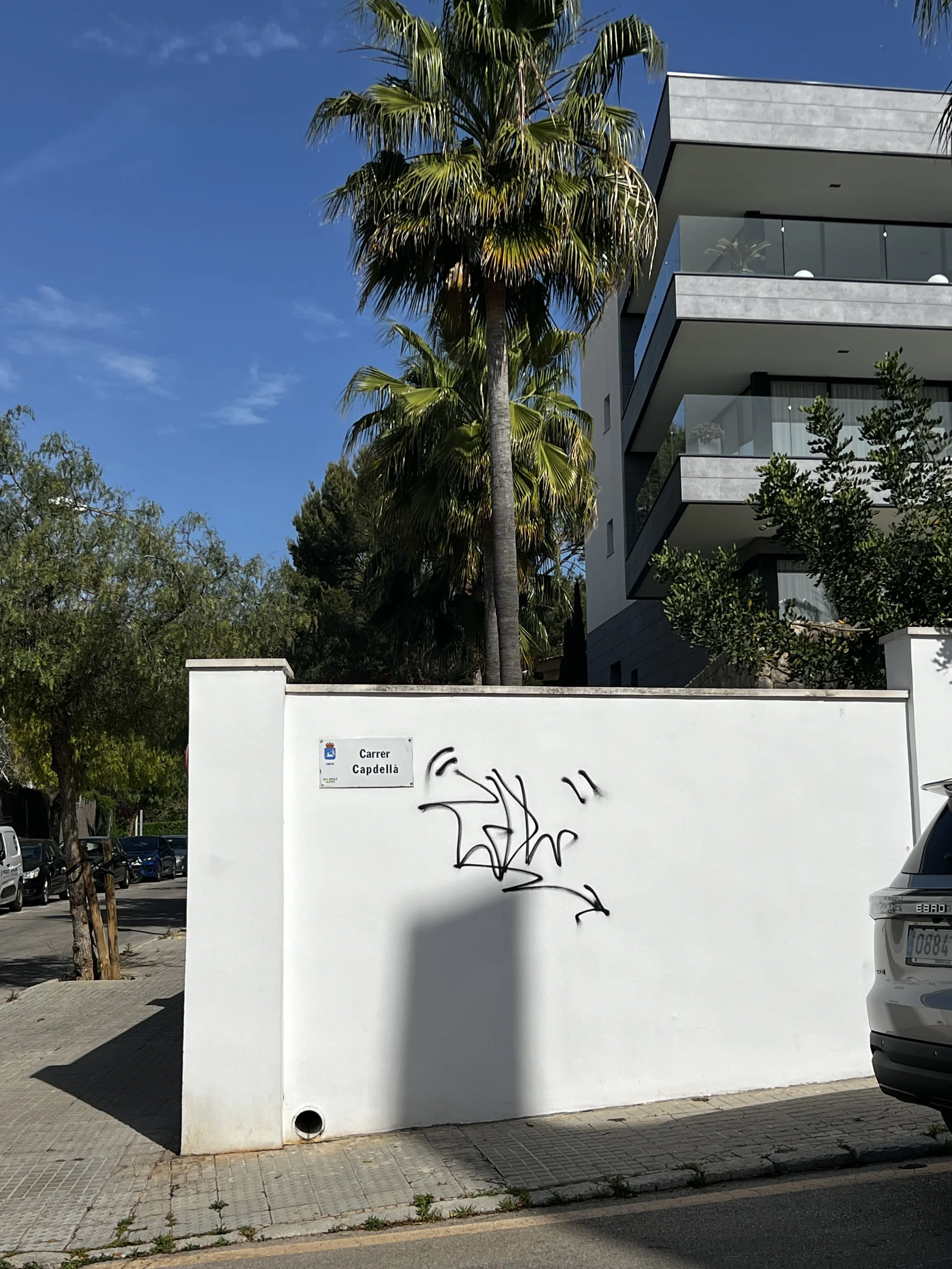
Take Spain as a prime example: vandalism there has become so deeply embedded in the daily landscape that people no longer register the stark contrast between historic beauty and senseless destruction. This passive acceptance of low aesthetic quality in shared spaces is the most tragic part of the crisis.
The long-term consequence is an intellectual weakening of artistic discernment. When a society loses its reference points for beauty, people genuinely struggle to separate meaningful, high-value artistic expression from lazy, destructive tagging.
Worse still, we are currently raising a generation inside a visual vacuum. Children growing up in graffiti-choked neighborhoods will inherently hold lower creative and cultural standards. Without a clean, respected environment to serve as a baseline for what is beautiful, their ability to value, protect, and create art is compromised from the start.
Normalization of Disorder
That is how slowly but steady, through generations, a city covered in vandalism sends an unconscious message that rules, maintenance, and order are secondary. This is the core idea behind so-called theory of broken windows.
The Broken Windows Theory is a criminological concept that suggests visible signs of disorder—such as vandalism, graffiti, and urban decay—encourage further crime and antisocial behavior. The theory was introduced by social scientists James Q. Wilson and George L. Kelling in 1982.
According to the theory, small disorders lead to bigger problems because if minor issues like graffiti or broken windows are ignored, it signals that rule-breaking is tolerated, leading to more serious crimes.
Soon, the whole city becomes a “broken window”.
Destruction is a common sight, and people begin to associate neglect with normality, which can erode civic responsibility. This normalization of visual chaos spills over into other aspects of society, and it weakens discipline and social cohesion forever.
Vandalized cities create nothing but apathy and resignation
People mirror their surroundings and a clean, inspiring city fosters ambition and a sense of purpose. Young people growing up in vandalized spaces inevitably absorb a mindset of disregard for heritage, design, and quality. Their approach to work and self-development is minimized.
The message is more that simple “We can create beauty” to “Why bother?”. People get discouraged from higher aspirations and investments in culture.
To tackle graffiti vandalism, we need a clear plan that includes prevention, involving the community, and enforcing laws to reduce its financial damage.
Conclusion: reclaiming our cities
The graffiti epidemic in Europe is not an aesthetic debate; it is a systemic crisis affecting economics, psychology, and cultural preservation. To stop this decline, European cities must pivot from passive cleanup to aggressive prevention. This requires:
Strict law enforcement.
Mandatory, heavy financial penalties for vandals.
Rapid-response cleanup policies to erase tags before they can multiply.
Only by reclaiming the visual integrity of our public spaces can we restore civic pride and protect Europe’s architectural legacy for future generations.
