
Belfast street art scene: your 3 min guide to understanding it
Belfast has its famous street art. When you hear this, if you haven’t been to Belfast, you’re probably picturing the pan-European epidemic of ugly tags, the visual equivalent of someone spitting in public and calling it a statement. This is not that.
In Belfast, walls historically get used as a social message, historical evidence, argument. The city has spent decades mastering this language. Some of the murals are protest, some are memorial, some — dtrong visual essay.
Belfast street art is really hard to categorize though — political, social, artistic…. It’s all three, really, usually at once, often on the same wall.
Let’s look at a few.
Table of Contents
Homelesness
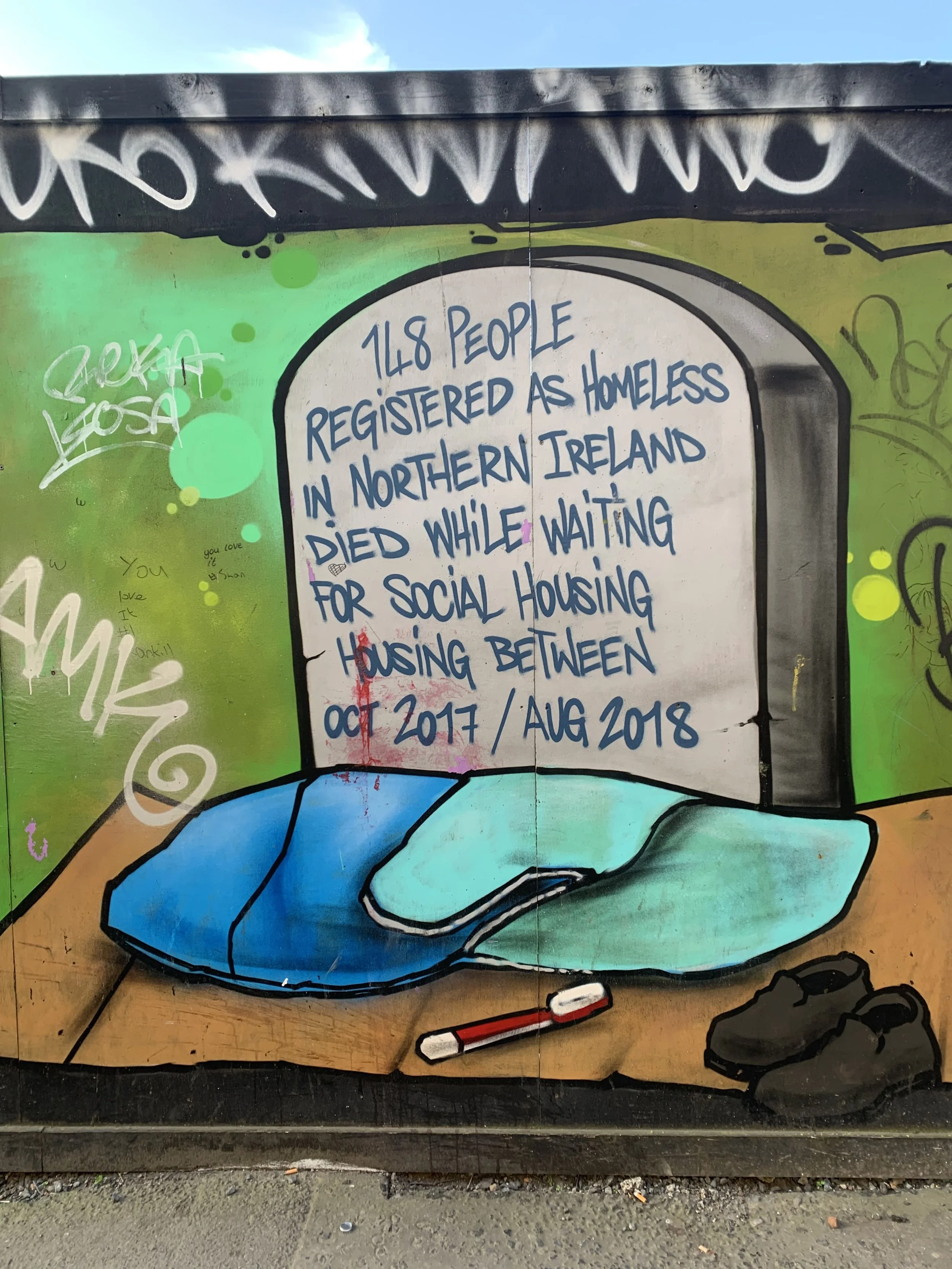
«118 people registered as homeless died…»
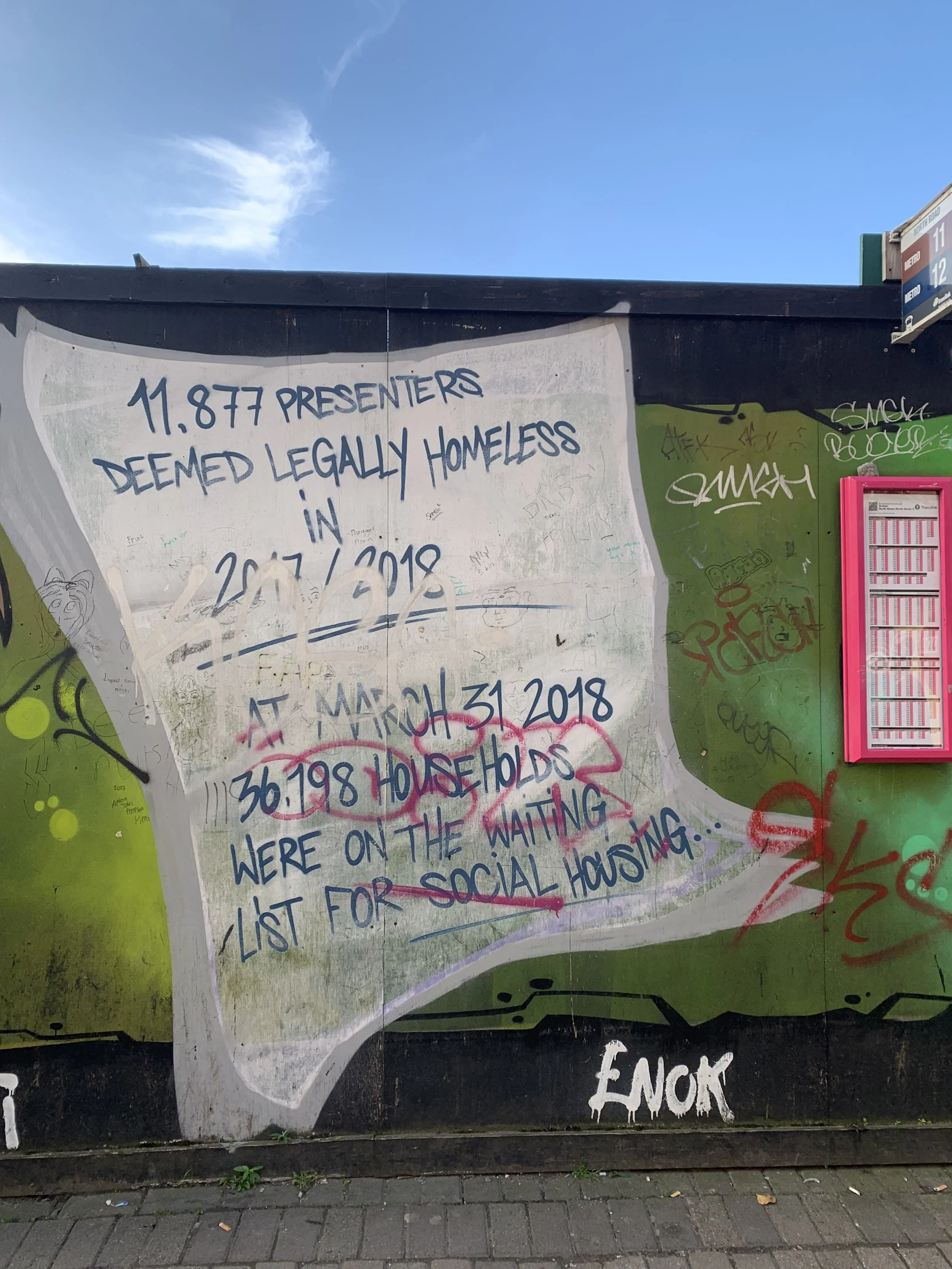
«11,877 presenters deemed legally homeless…»
This art is built around statistics about homelessness. These are real numbers about deaths and the scale of the housing crisis in Northen Ireland.
That’s what differs work from the better-known political murals in Belfast. This artwork is about a current issue unlike the many others murals you may see in Belfast dedicated to political conflicts (like the Troubles, and events related to them).
In Northern Ireland, housing remains a very sensitive topic.
Bobby Sands
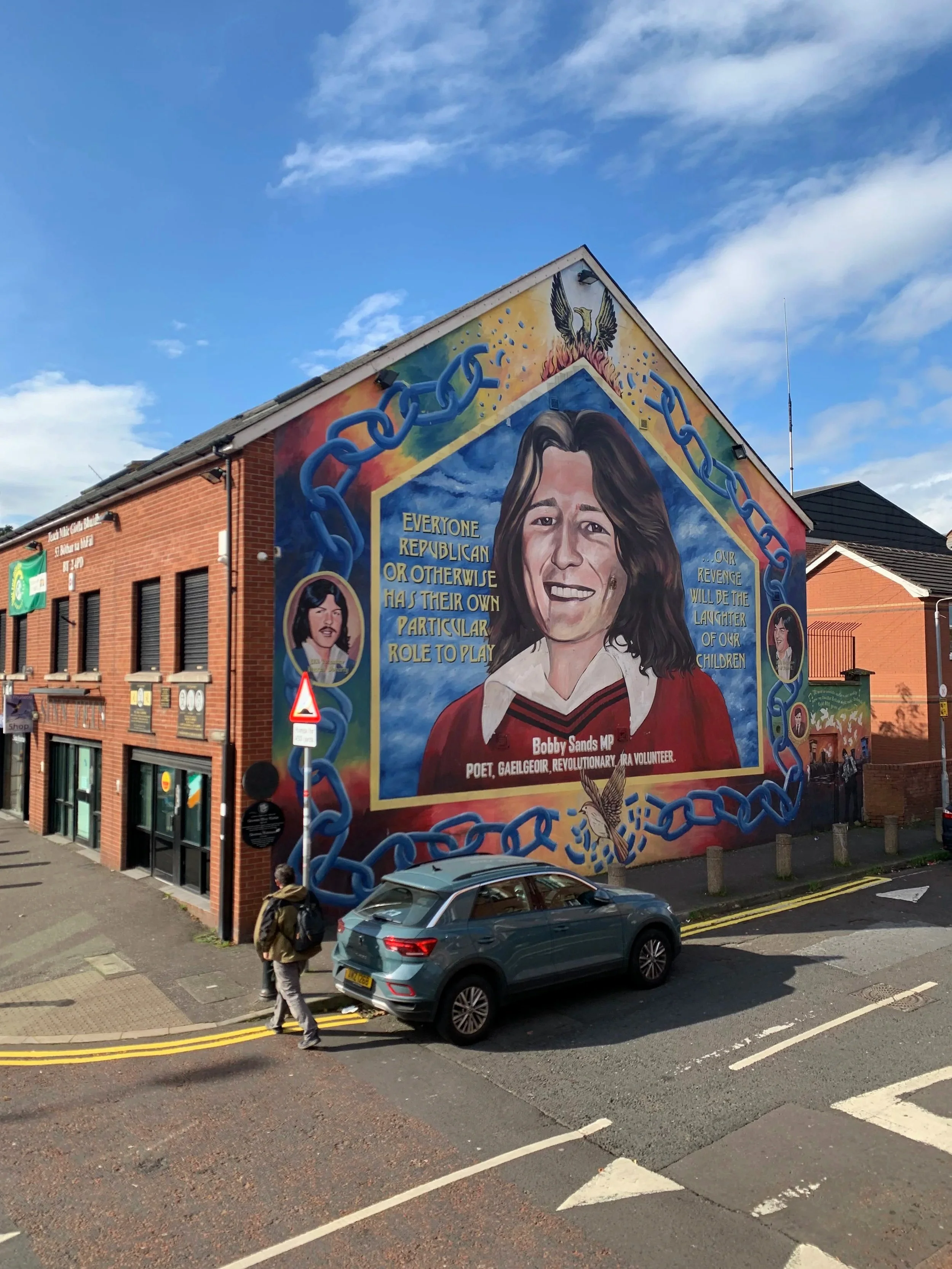
Unlike the more recent social pieces, this mural belongs to an earlier phase of Belfast street art, where the goal wasn’t commentary so much as commemoration and political identity.
One of the most recognisable mural of Belfast — Bobby Sands, painted on a gable wall along the neighbourhood of Falls Road.
The mural sits on the side of a Sinn Féin office, which already tells you this is not neutral ground. Sands (full name Robert Gerard Sands) was an IRA member who died in 1981 after a hunger strike in the Maze Prison. His death became an international story and a defining moment for Irish republicanism.
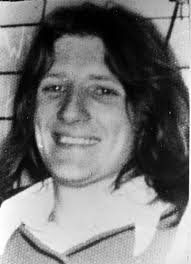
The mural is based on a well-known prison photograph.
Around the portrait, he’s described as a poet, a Gaeilgeoir (Irish-language speaker), a revolutionary, and an IRA volunteer. There’s also a line often associated with him: “Everyone, republican or otherwise, has their own particular part to play”.
Proclamation of the Irish Republic
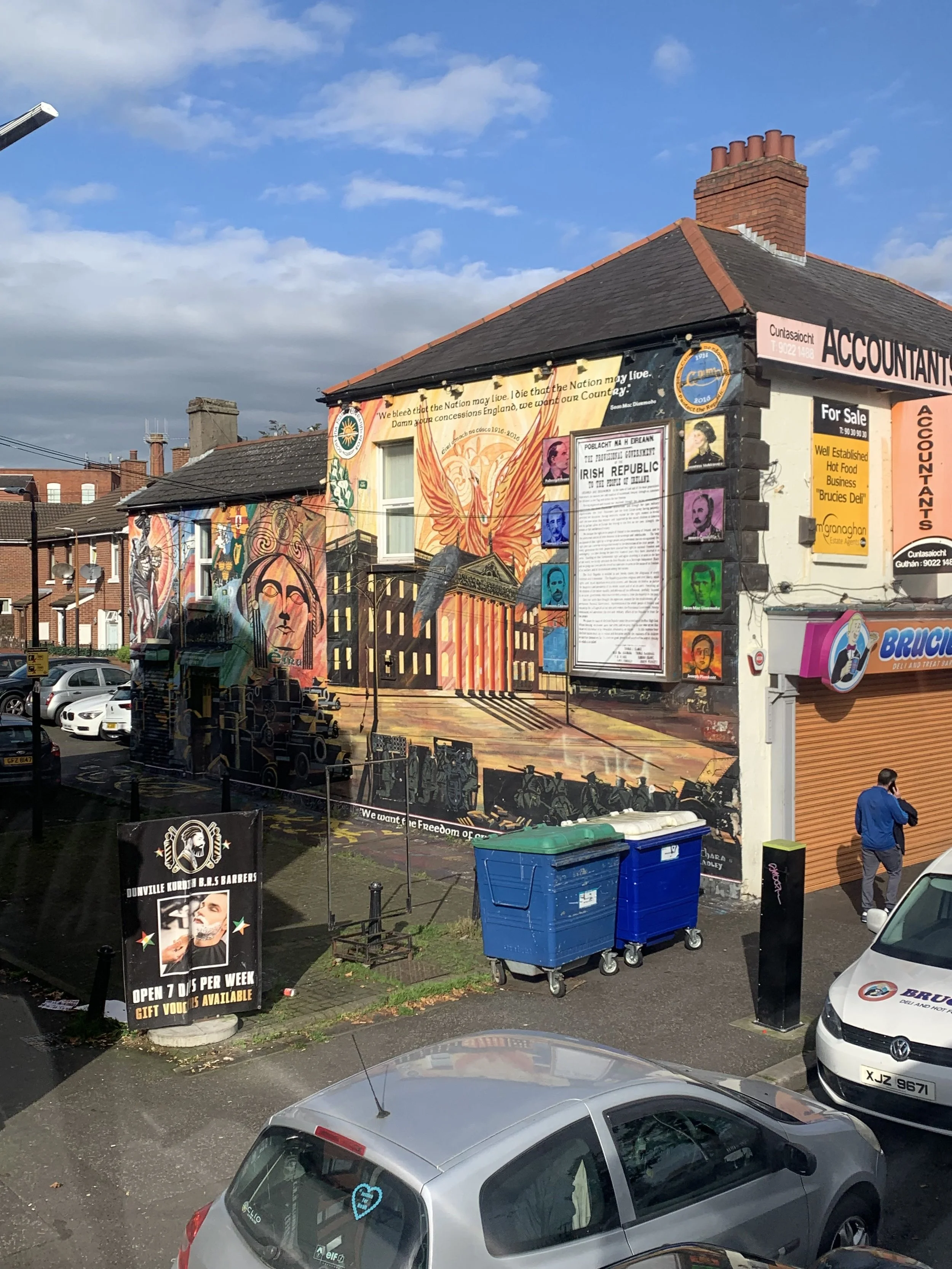
Another highly political mural on Falls Road.
This one, created by Gerard 'Mo Chara' Kelly, is a compressed narrative of Irish republicanism. At the center is the General Post Office in Dublin during the Easter Rising. Above it, a phoenix rises, making the message explicit: destruction followed by national renewal.
The mural includes the Proclamation of the Irish Republic (“Poblacht na hÉireann”), the document read out in 1916, effectively turning the wall into a kind of public archive. To the side, portraits of the uprising’s leaders.
HOPE
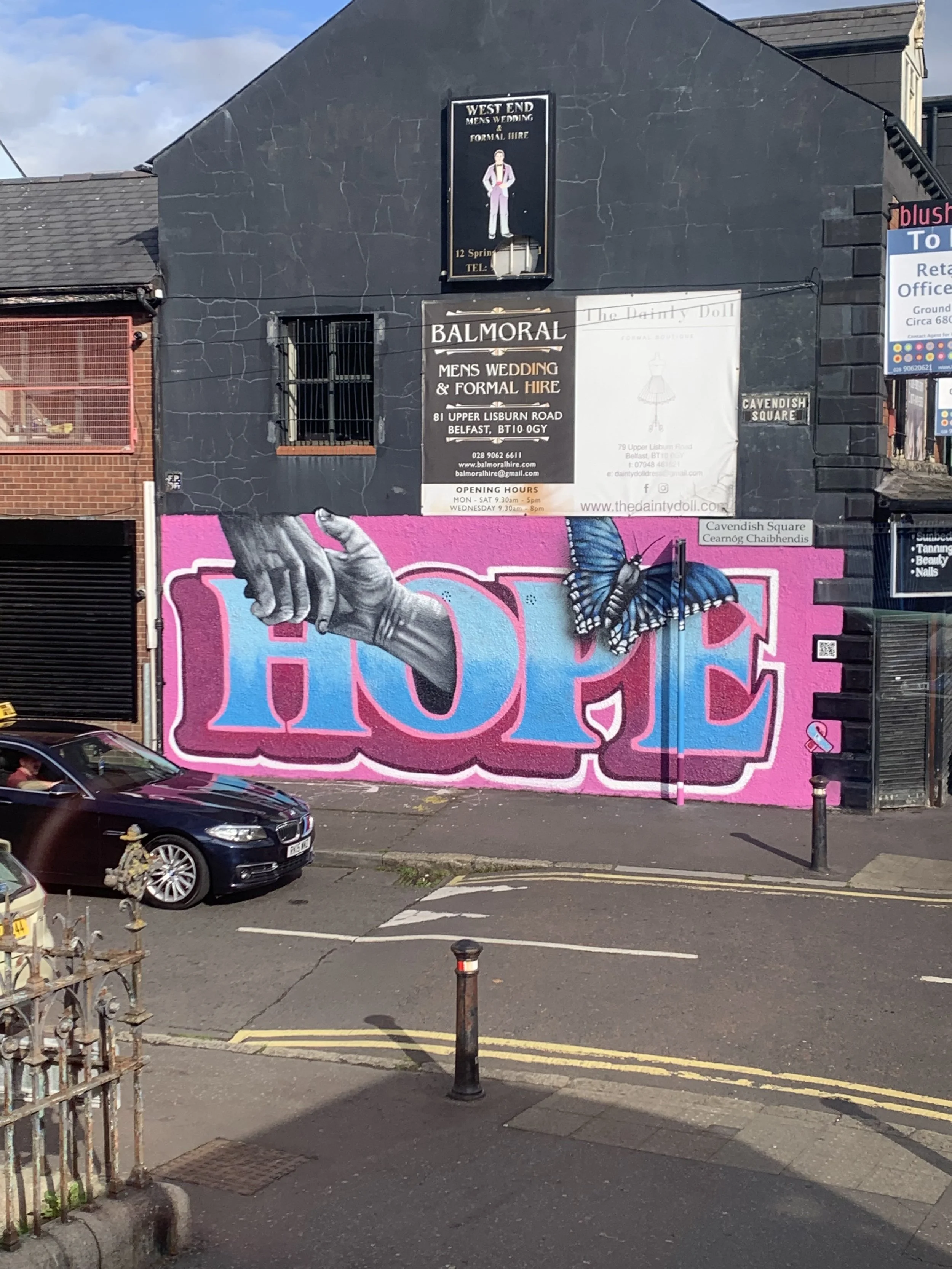
The mural is located near Cavendish Square and Upper Lisburn Road.
It sits on a commercial building (formalwear shop), in everyday urban space, which separates it from political murals on Falls Road or other historically charged locations.
Thу work is not about any particular event. It was inspired by shared all human values like connection, solidarity, the idea of community repair. Everyone is welcome to put their meaning into this work. It is not confrontational at all, which is great, because not every art HAS to be confrontational.
Our struggle continues
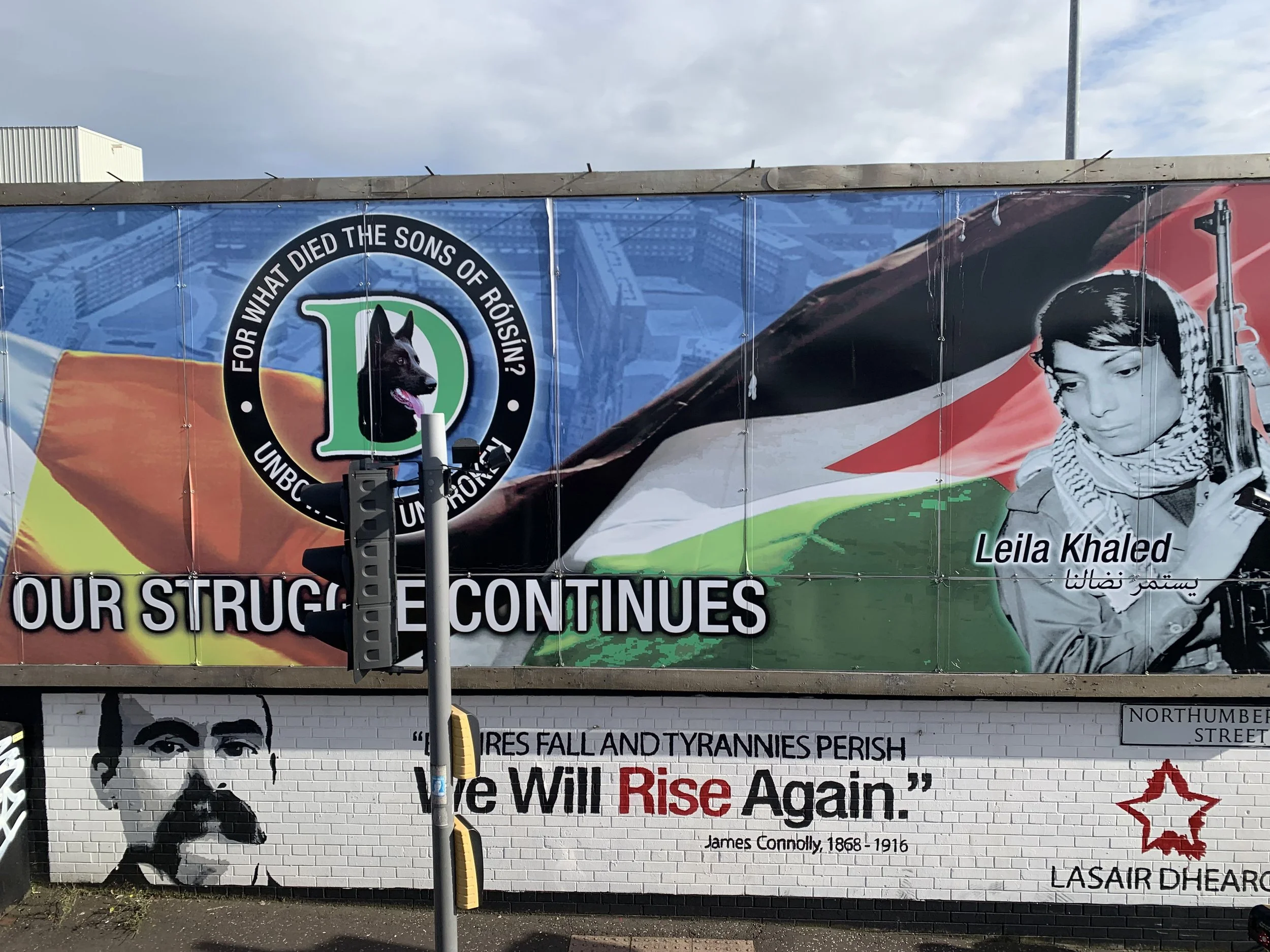
It is one of the most political murals of Belfast. Can be found on Northumberland Street.
At the center is Leila Khaled in a keffiyeh and holding a rifle, a recognizable image associated with Palestinian resistance. Below, there’s James Connolly, one of the leaders of the 1916 Easter Rising, accompanied by a quote about resistance and return. Between them, the Irish tricolour and the Palestinian flag.
“Our struggle continues” and references to “Róisín’s sons” (a poetic personification of Ireland) is a clear, straightforward message of the author.
“30 years of indiscriminate slaughter”
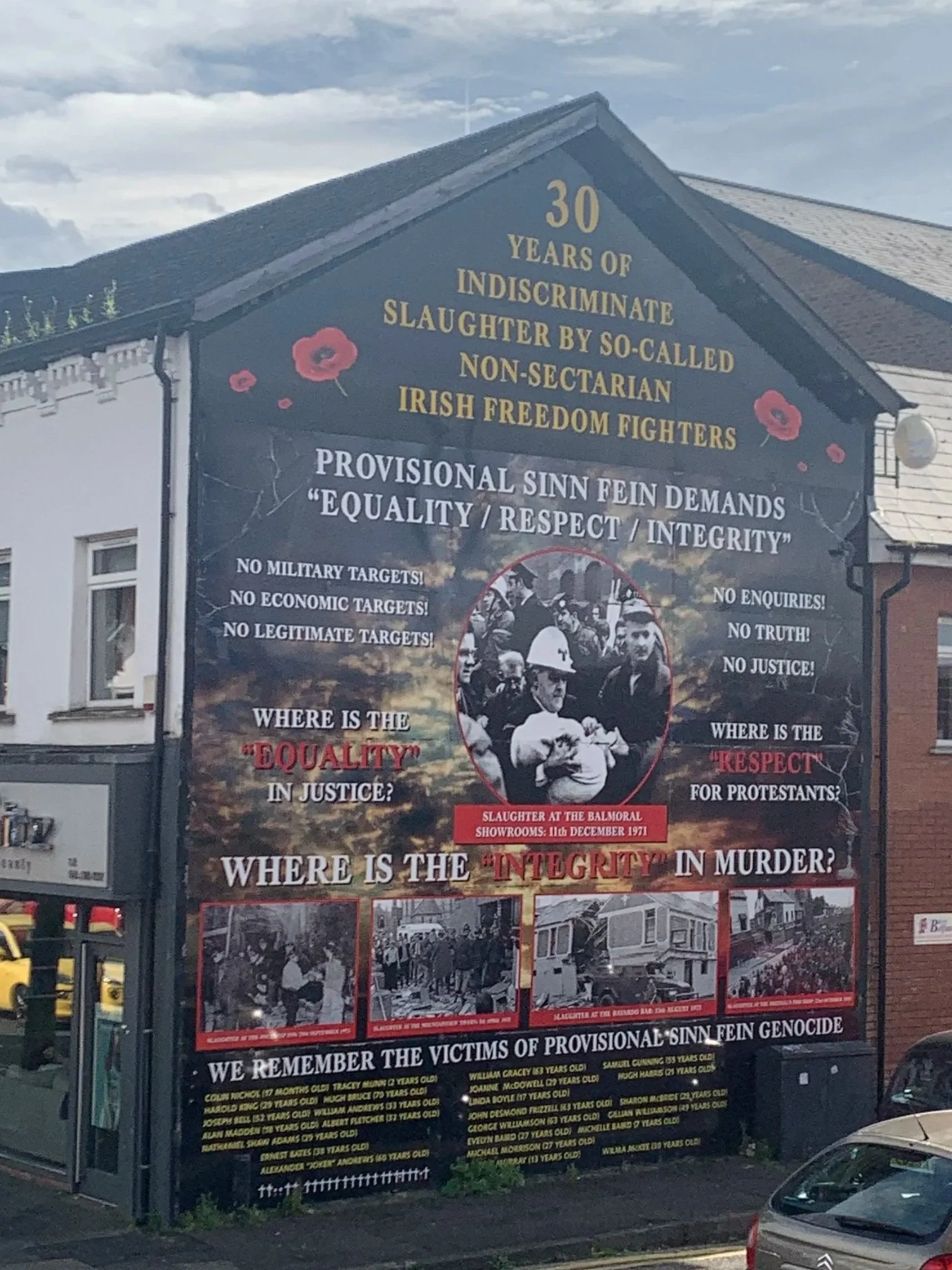
This mural is a special kind of a memorial, located on Shankill Road
It’s also a sort of accusation. It commemorates victims of violence during the Troubles, specifically referencing attacks attributed to the IRA over what it describes as “30 years of indiscriminate slaughter”. One of the central points of reference is the 1971 bombing of the Balmoral furniture showroom, an event that remains part of loyalist memory.
Visually and rhetorically, it’s very different from the murals on Falls Road. This is now a loyalist perspective, rooted in unionist communities, and it doesn’t even try to pretend neutrality. Sinn Féin is implicitly or explicitly criticized, so the narrative is framed around victimhood and loss on this side of the conflict.
So these were just a few of murals I came across in Belfast.
Keep in mind: these murals aren’t fixed. Walls are regularly updated, repainted, or replaced altogether.
