Do Museums Really Need Cafés?
I once wrote a short review of the café at the Prado, noting how odd it is that such a large museum has only one café. I always pay close attention to how a museum is structured, its infrastructure, accessibility, and so on. For me, having a good café in a museum is a plus — a place to take a break, grab a coffee, and eat. Sometimes, it's a great place for my fellow academics' meetings. But whether a museum truly needs a food sector is a separate conversation.

Museum cafe at the Red Star Line Museum, Antwerp, Belgium
I know people who start their museum visits with a stop at the café. If they’ve had a long journey, they simply need to refuel before diving into the exhibits. Once, when we were heading to NGV in Melbourne with kids from a remote part of the city, they were so hungry that we had no choice but to eat first. Searching for a place outside the museum in such cases is inconvenient — being able to grab a piece of physical food before spiritual food is far more practical.
Personally, I usually visit the museum café after 2–3 hours of walking through exhibitions. I eat, then return to the galleries. When I was writing my thesis and working on my book, I spent entire days at the National Gallery of Ireland — entire days, and that’s not an exaggeration. I worked there. So I would practically have breakfast and lunch at the cafeteria on the ground floor.

Museums are physically and mentally demanding spaces. Visitors spend hours walking, standing, and absorbing huge amounts of information. A café is a good resting point, where it is nice to pause, reflect, and recharge.
Museum cafés aren’t just about food
These days, museums strive to be inclusive spaces for visitors of all ages and abilities. So, cafés provide essential seating areas for those who need a break — elderly visitors, families with young children, or individuals with disabilities. When my son was small, the cafés were so helpful whilst visiting museums around the world during my travels. I would have not been able to visit museum during my travels if museums never had their caferirias.
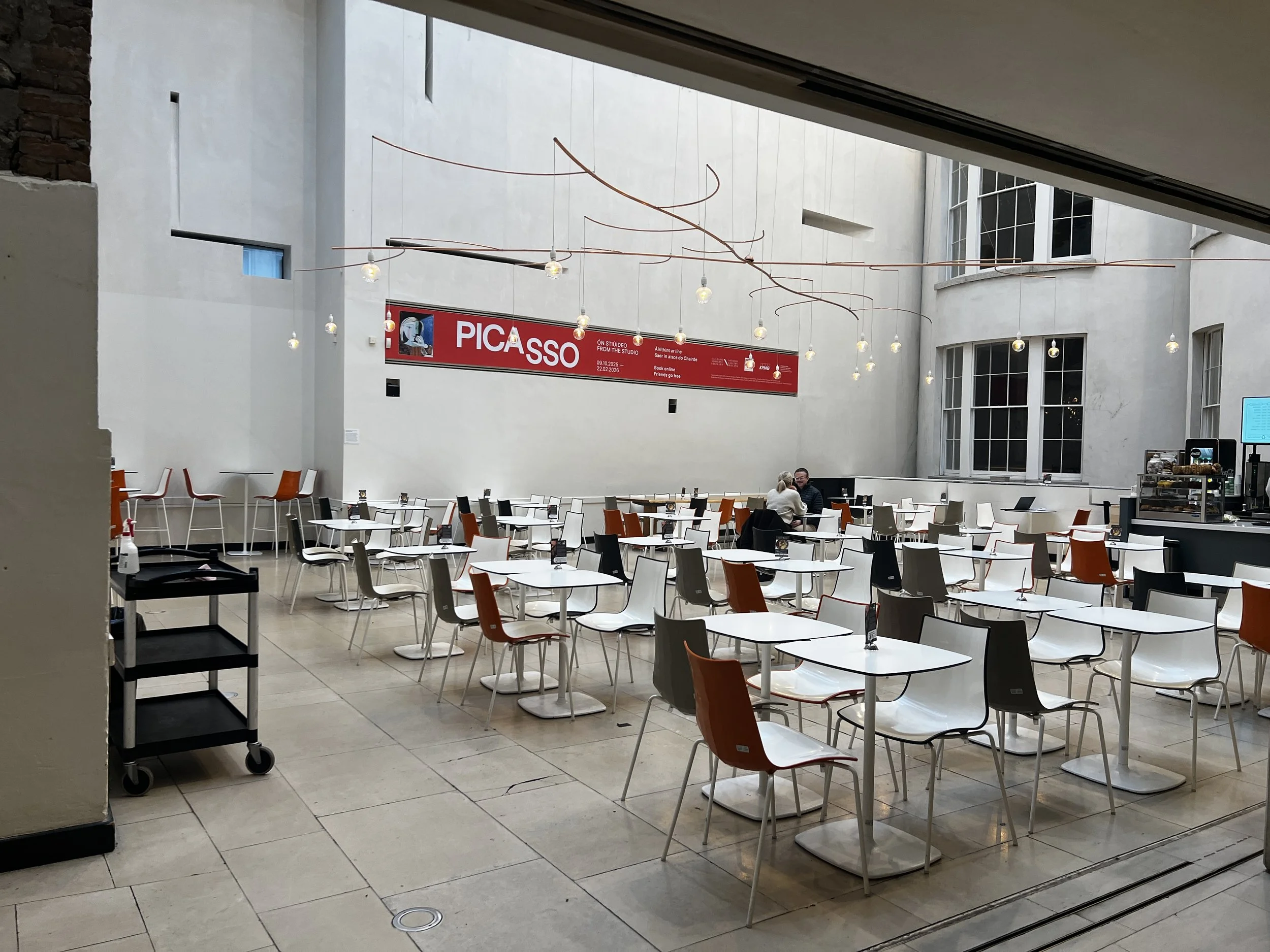
Cafeteria at NGI, Dublin
What I truly appreciate is when museums integrate their café experience with the museum’s themes. Themed menus, historical recipes, or locally sourced ingredients can enhance the storytelling aspect of the institution. Not every museum can afford this, but when they do, it’s amazing.
For example, National Gallery of Victoria’s (Melbourne) famous Tea Room offers a modern take on the traditional afternoon tea. Their extensive selection of exotic and classic teas includes varieties exclusively sourced and imported for the Tea Room. You’ll find handmade macarons, éclairs, and an exquisite selection of cakes crafted by a team of talented pastry chefs. This is like the whole extension of the museum experience for visitors. Very, very exciting.

Tea room in NGV, Melbourne, Australia
Art institutions need to make money, too
Let’s not forget that. Alongside museum shops, cafés contribute to their financial sustainability. Shops have long been an integral part of museums, so why shouldn’t cafés be as well?
Many museums struggle with funding, and revenue from cafés helps cover operational costs, exhibitions, and educational programs. Well-managed cafés is significant sources of non-ticketed income.
Take Es Baluard, a small yet ambitious contemporary art museum in Palma, Mallorca. The island’s tourism is highly seasonal, and operating a café in winter would be financially unfeasible. Even in summer, the visitor numbers might barely justify having a café at all—because, sadly, art isn’t the primary reason people come to Mallorca. But that’s a whole different story…
So, do all museums need cafés?
Large museums benefit significantly from cafés, but not every institution necesserily requires one. Smaller, niche museums with short visit durations might not justify having a dedicated eatery. In such cases, alternatives like outdoor picnic areas, or partnerships with nearby restaurants may be enough. Vending machines? Personally, I’m not in favor of having them in museums — they make the space feel cheap-ish or give off the vibes of a train station.
However, in major museums where visits last multiple hours, having an on-site café dramatically improves the visitor experience.
