

The ultimate ancient Art Guide: where to find 9 intriguing petroglyphs worldwide
Early examples of rock art are among the greatest works of art in all of human history. Like all great art, petroglyphs give us insight into how people thought and lived, even tens of thousands of years ago.
Table of Contents
Depictions of human figures, fantastical animals, unusual creatures combining human and animal traits, and geometric patterns continue to fascinate humanity with their sophistication, powerful forms, and intricate details. Petroglyphs offer a unique window into the daily lives of our ancient ancestors.
We’ll tell you about some of the most amazing and mysterious examples of cave art from around the world, though there are thousands more that are just as impressive.
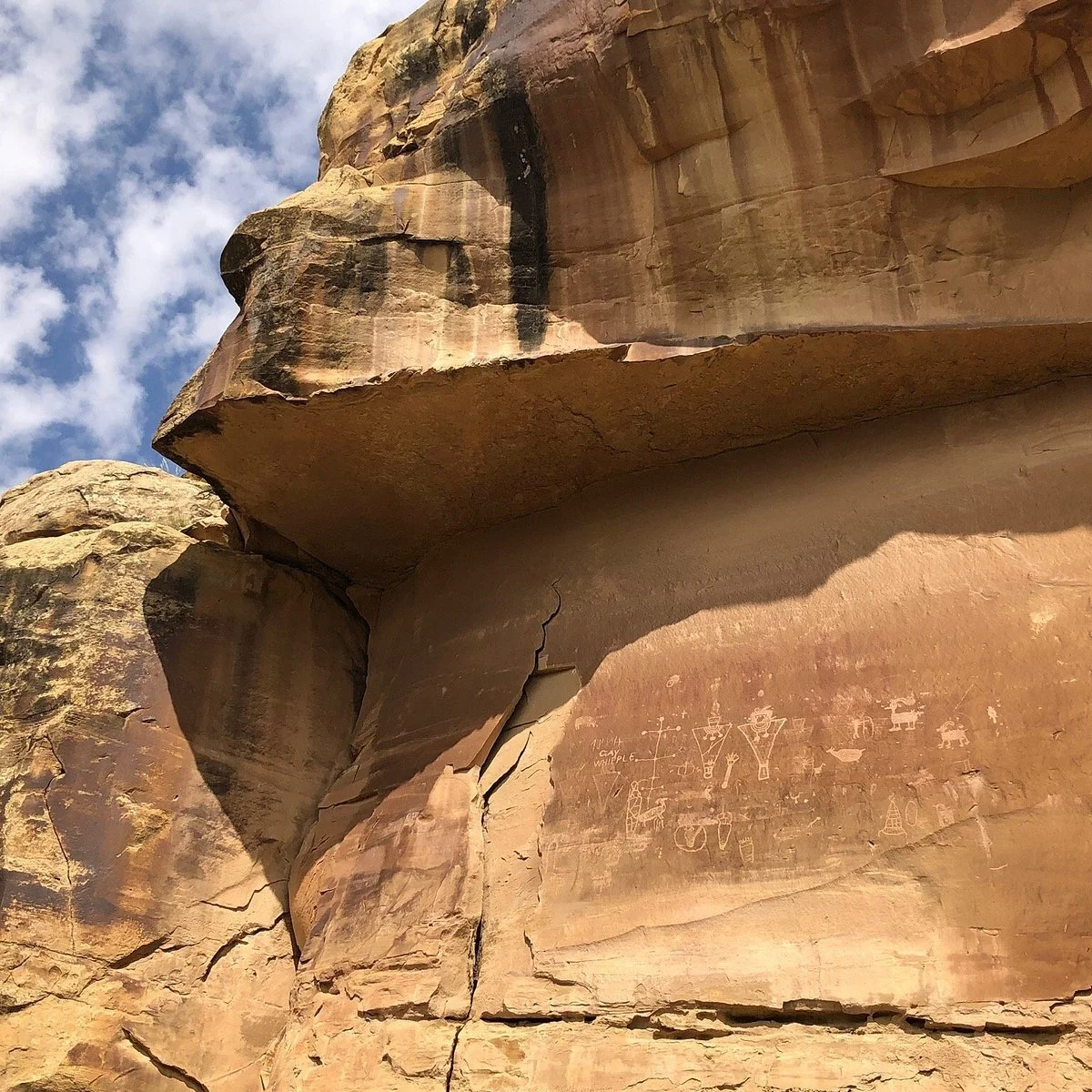
The petroglyphs of Sego Canyon
1. The petroglyphs of Sego Canyon (Utah, US): extraterrestrial creations or shamanic visions?
Location: Utah, USA
Age: Circa 8,000 years old
The sandstone cliffs of Sego Canyon on the banks of the Green River in Utah, USA, contain a fascinating gallery of petroglyphs carved by Indigenous peoples approximately 8,000 years ago. They consist of more than 80 life-size figures without eyes, often without arms or legs. Some claim that these mysterious figures are evidence of extraterrestrial visits to Earth in the distant past. But scientists are convinced that these strange creatures are shamanic sketches created during trance states.
The first human settlements in Sego Canyon date back to the Archaic Period (6000–100 BCE). The Anasazi, Fremont, and Ute tribes left their mark on the area, transferring their religious visions, clan symbols, and records of important events onto the rock walls. Proponents of the ancient astronaut theory suggest that the strange rock art figures at Barrier Canyon, west of the Green River, depict extraterrestrial beings who once visited Earth. They point to the large, hollow eyes and triangular heads as evidence that the figures were not human.
However, others, such as prehistoric art specialist Polly Schaafsma, say that they represent shamanic art associated with the ritual practices of archaic peoples. Schaafsma explained that “spirit figures” were often depicted with snakes, and symbols of water/life were inscribed on their torsos. The presence of these types of figurative (human and animal) motifs is evidence that a shamanic tradition existed among Western archaic peoples, at least for a certain period of time.
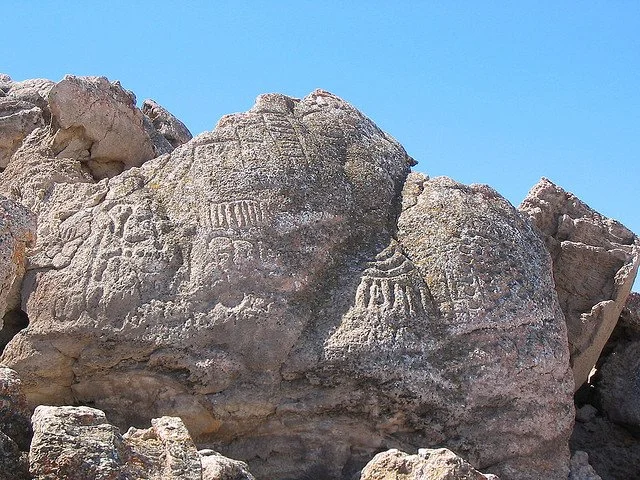
Rock art of Winnemuca Lake (Nevada, US)
2. The oldest rock art in North America — Nevada, US
Location: Lake Winnemucca, Nevada, USA
Age: 10,500 to 14,800 years old
A set of petroglyphs in western Nevada (U.S.), dated in August 2013 to between 10,500 and 14,800 years ago, is the oldest rock art ever found in North America. Previously, the oldest petroglyphs in North America were dated to 6,700 years ago and were found in the Long Lake area of Oregon.
The ancient petroglyphs in Nevada are carved on limestone boulders located on the western shore of what is now the dried-up Lake Winnemucca. The designs include both simple symbols, such as straight lines and swirls, and more complex ones that resemble trees, flowers, or leaf veins.
A series of abstract designs resembling ovals or diamonds strung together has also been discovered. These designs bear a resemblance to petroglyphs previously found in Oregon. However, as of July 2026, their meaning and symbolism have not yet been deciphered.
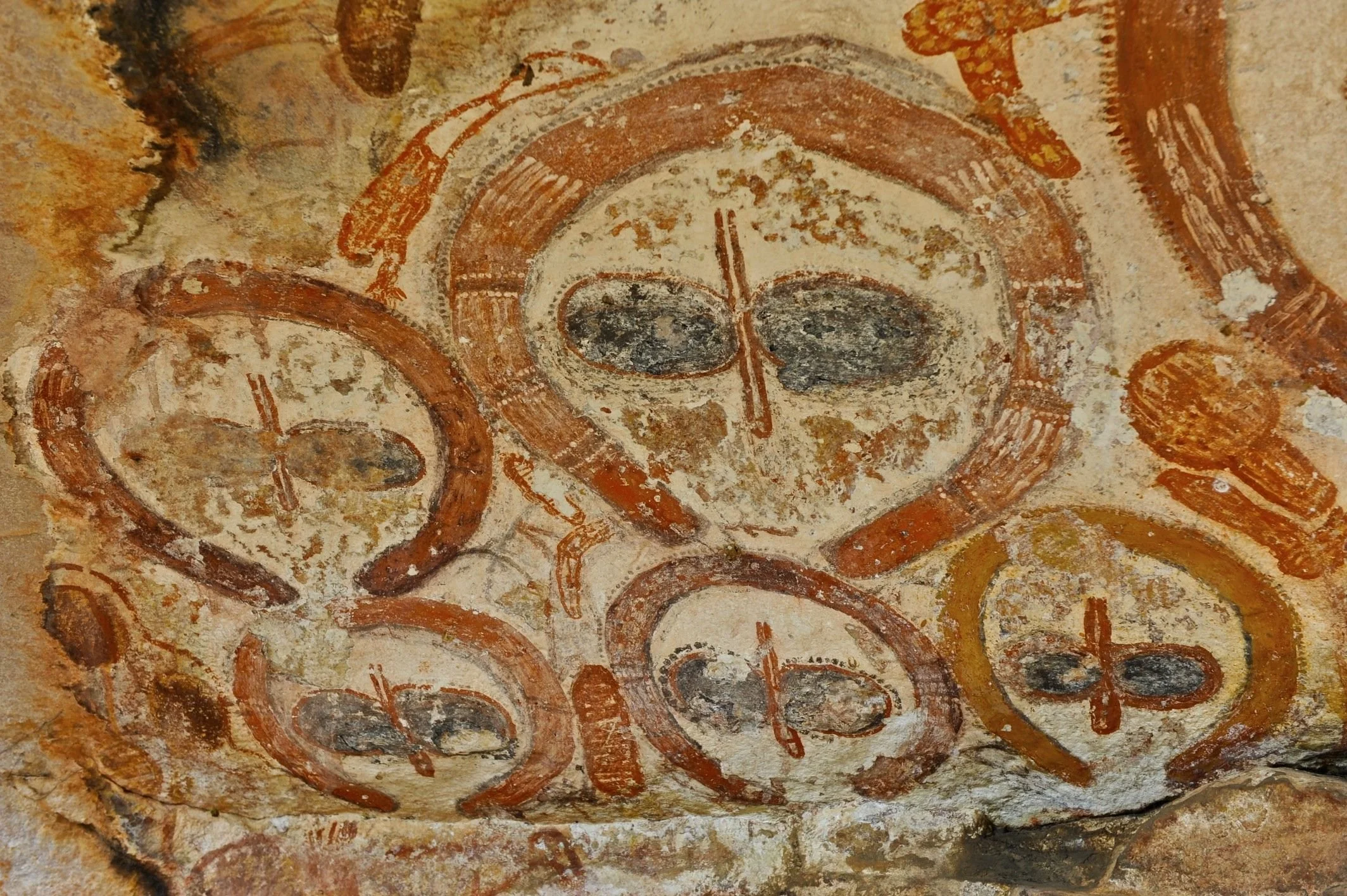
Aboriginal Paintings of the Wandjina, Australia
3. Mystical Aboriginal Paintings of the Wandjina, Australia
Location: Kimberley Region, Australia
Age: At least 60,000 years old
One of the most intriguing and perplexing legends about the Australian Aborigines is the tale of the Wandjina, supreme spiritual beings and the creators of the earth and humankind. According to legend, the Land of the Wandjina covered a vast area of approximately 200,000 square kilometers of land, freshwater bodies, ocean, and islands in the Kimberley region of northwestern Australia.
The rock art found in this area has been dated to at least 60,000 years old. In the Wanjin tradition, the paintings depict humanoid figures with white, mouthless faces, black eyes, and large heads surrounded by a halo.
These images fully illustrate one of the main legends of the Kimberley Aboriginal people about how all living things were created: The Wanjina people were considered “heavenly beings” or “spirits of the clouds” with snow-white skin and large eyes, who descended along the Milky Way during the so-called Dreamtime and created the Earth and all its inhabitants. Soon, the sky gods realized how much work lay ahead on Earth and sent some of their Wanjin people to assist humanity. Then the gods and their helpers left Earth: some went to live at the bottom of the sea, while others returned to the sky.
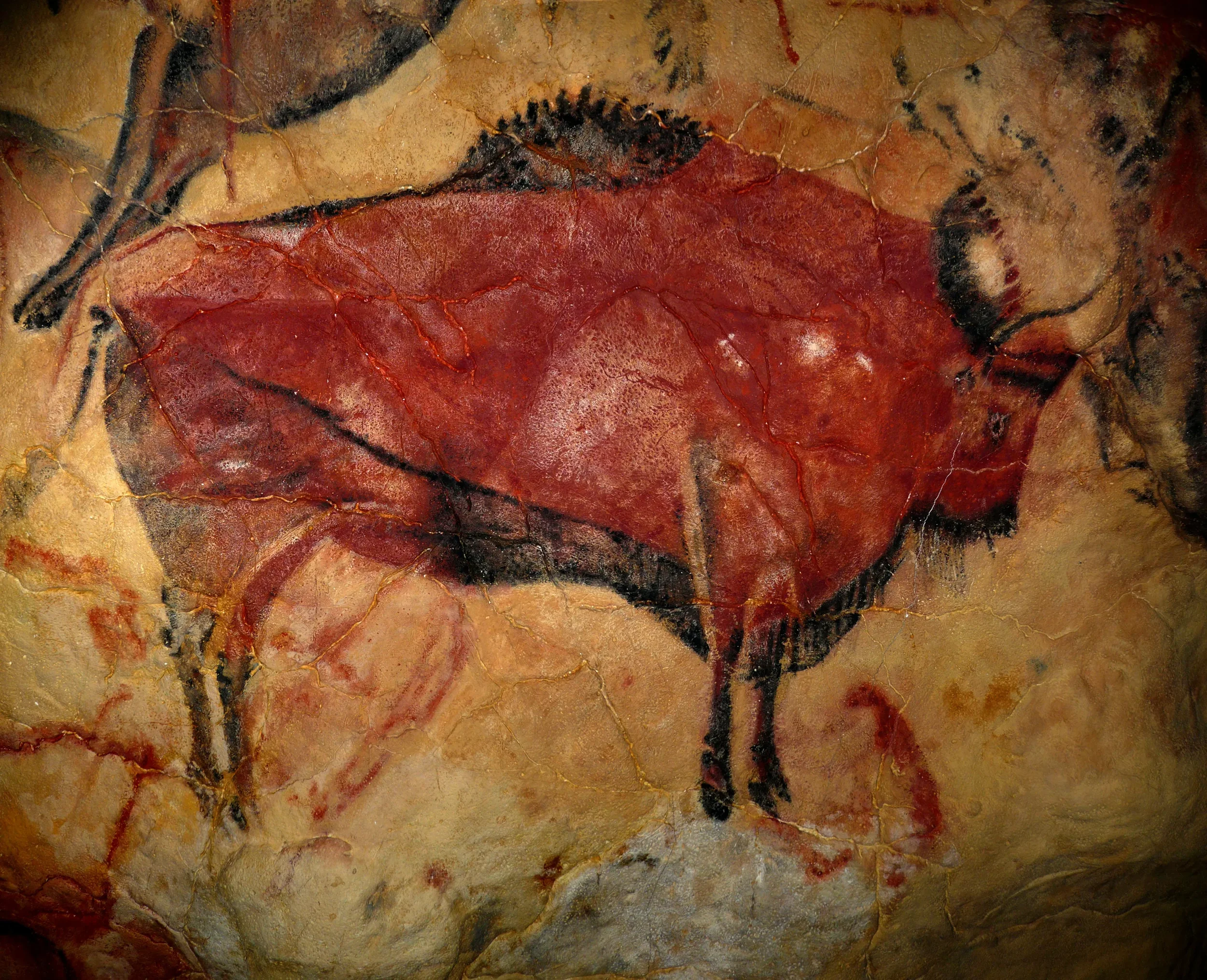
The cave art of Altamira
4. The cave art of Altamira: a gem of Europe’s oldest art — Spain
Location: Cantabria, Spain
Age: 14,000 to 16,500 years old (Magdalenian culture)
The enchanting caves of Altamira are located near Santillana del Mar in Cantabria, about 30 km west of Santander. As is often the case, they were discovered by chance. According to the most widely accepted account, in 1868 a hunter named Modesto Cubillas stumbled upon them but did not attach much importance to his unique discovery.
Today, the Altamira Museum is open to the general public.
After visiting the Altamira Cave in northern Spain and seeing its cave paintings, Pablo Picasso exclaimed, “After Altamira, everything is decadence”.
It was not until 1879 that María de Santuola, the daughter of amateur archaeologist Marcelino de Santuola, began to study the Altamira paintings in detail. She was fascinated and captivated by all the bison, horses, and human hands etched into the rock.
The drawings were so well-preserved and of such high quality that experts long doubted their authenticity. In the early 20th century, they were finally recognized as authentic after similar Stone Age drawings were discovered in the area. The Altamira cave paintings remain the most unique evidence of the Magdalenian culture (between 16,500 and 14,000 years ago) in southern Europe
The Magura Cave petroglyphs in Bulgaria
5. The Magura petroglyphs: a glimpse into the prehistoric world — Bulgaria
Location: Northwestern Bulgaria
Age: Neolithic, Eneolithic, and Early Bronze Age
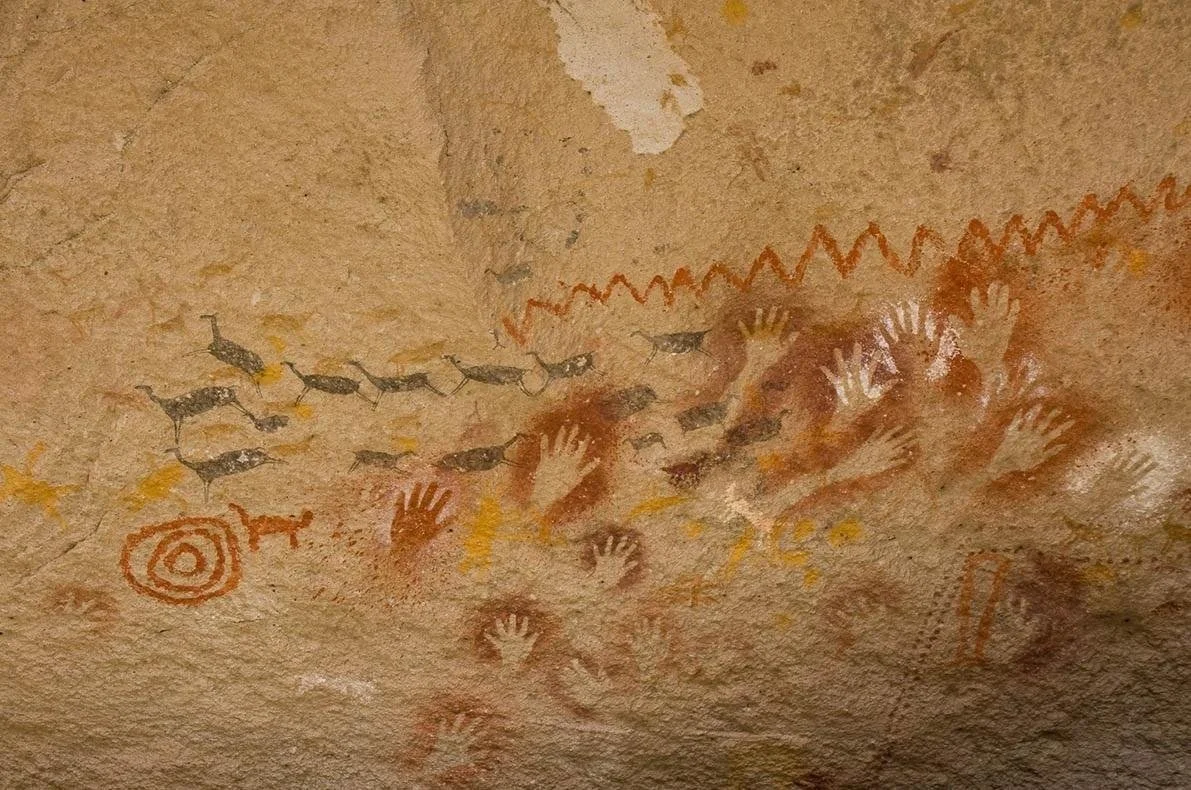
Magura Cave is located in northwestern Bulgaria, about 180 km from Sofia. The cave’s treasures are unique rock paintings created using bat guano. They consist of multiple layers and date from various periods — the Neolithic, Eneolithic, and the beginning of the Early Bronze Age.
The rock art in Magura depicts dancing women, men, hunters, people wearing masks, a wide variety of animals, as well as depictions of the sun, stars, tools, and plants. A solar calendar from the late Eneolithic period, created during the Early Bronze Age and located in the cave, is surprisingly accurate.
6. The Font-de-Gaume petroglyphs: a magnificent example of ancient polychrome art — France
Location: Dordogne Valley, France
Age: Circa 17,000 BCE
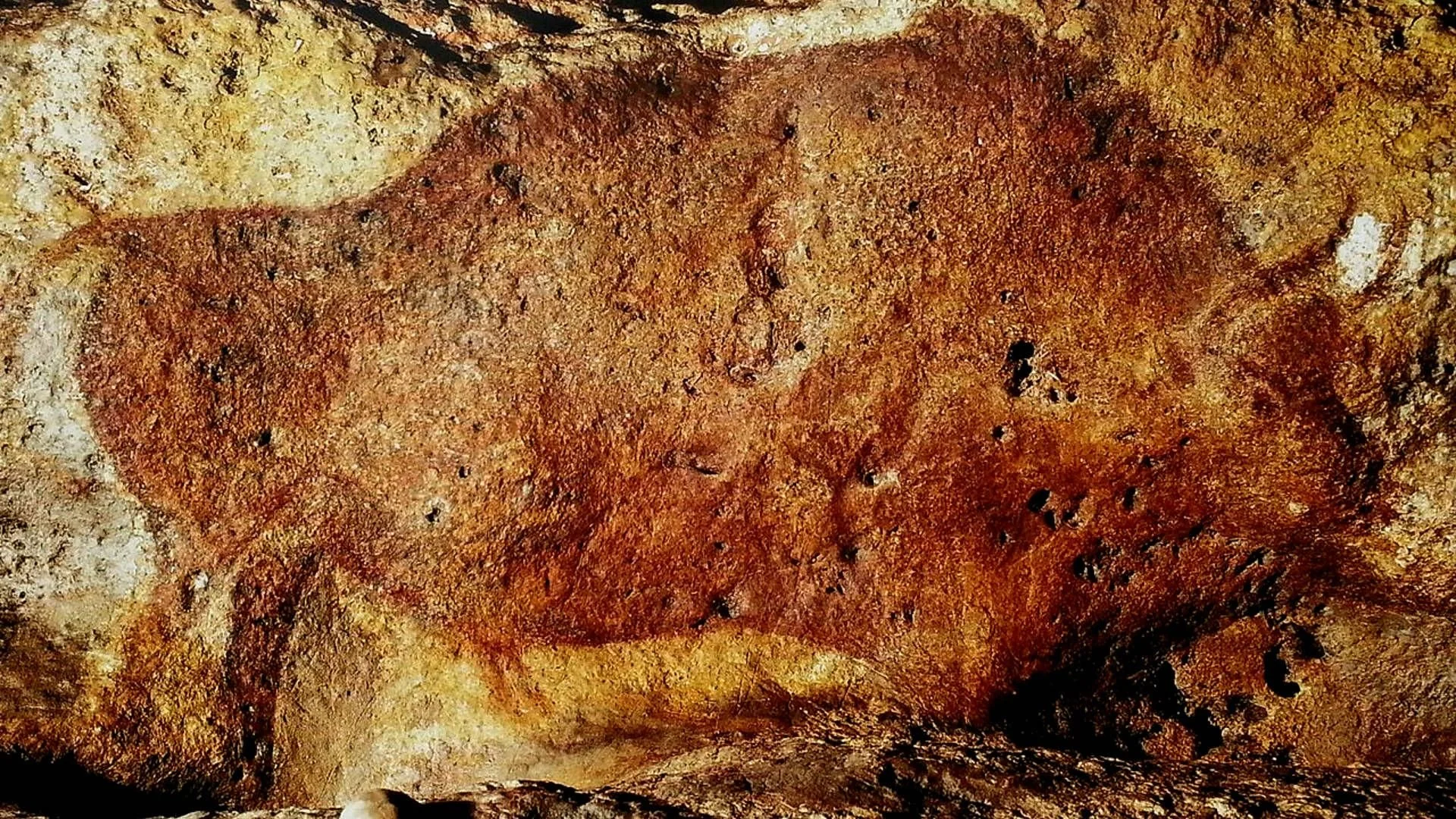
Prehistoric people living in the Dordogne River valley in France first settled at the Font-de-Gome estuary around 25,000 BCE. After the original prehistoric inhabitants left, the Font-de-Gome Cave was forgotten until the nineteenth century, when local residents stumbled upon it by chance. Interest in the cave grew when, in 1901, Denis Peironi, a schoolteacher, discovered the paintings inside.
The paintings date back to approximately 17,000 BCE, during the Magdalenian period. However, many of the cave’s paintings were discovered much later. The cave’s most famous painting — the frieze of five bison — was discovered by chance in 1966 while scientists were cleaning the cave. Fond-de-Gome contains more than 200 polychrome paintings and is considered the finest example of ancient polychrome painting in modern-day Europe.
In total, these drawings depict more than 80 bison, approximately 40 horses, and more than 20 mammoths.
Sulawesi Island’s rock art
7. A discovery that could rewrite the history of human art: rock art in Indonesia
Location: Sulawesi Island, Indonesia
Age: Circa 40,000 years old
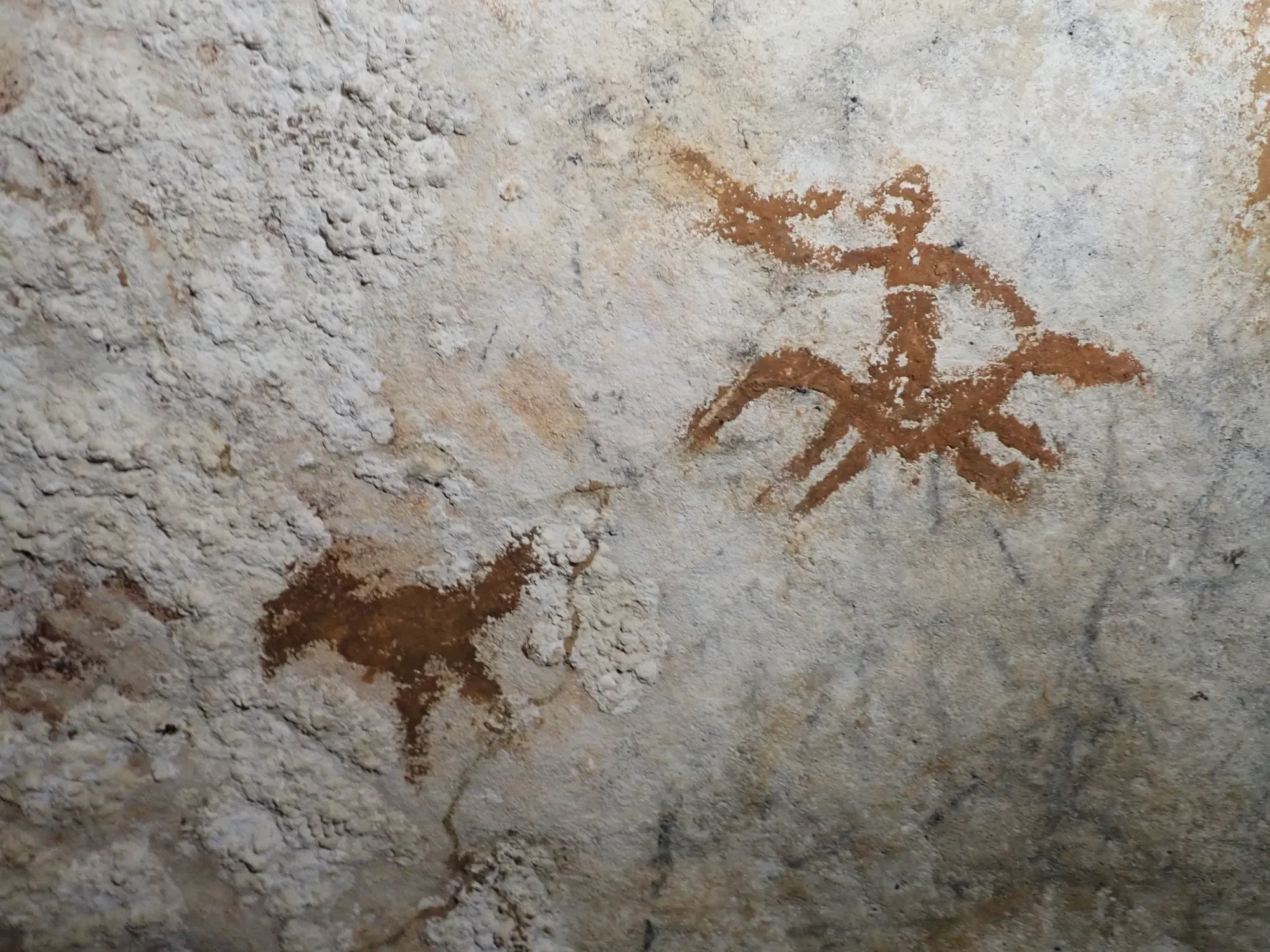
A study published in October 2014 in the journal Nature states that more than 100 ancient depictions of hands and animals, discovered in seven limestone caves on the island of Sulawesi in Indonesia, are roughly the same age as the well-studied prehistoric art of Europe. The study showed that humans were creating the same type of art 40,000 years ago at opposite ends of the Pleistocene Eurasian world.
Maxim Ober, the lead researcher on this study, explained that prior to this discovery, experts held a generally European perspective on how, when, and where humans began creating cave paintings and other forms of visual art. However, the fact that people in Sulawesi were creating art at the same time suggests that either humans began creating art at roughly the same time across the globe, or that when humans left Africa, they had already developed creative thinking through evolution.
Ancient art of Kharga Oasis, Egypt
8. Unusual petroglyphs from Egypt’s predynastic period
Location: Kharga Oasis, Egypt
Age: Circa 4,000 BCE (or earlier)
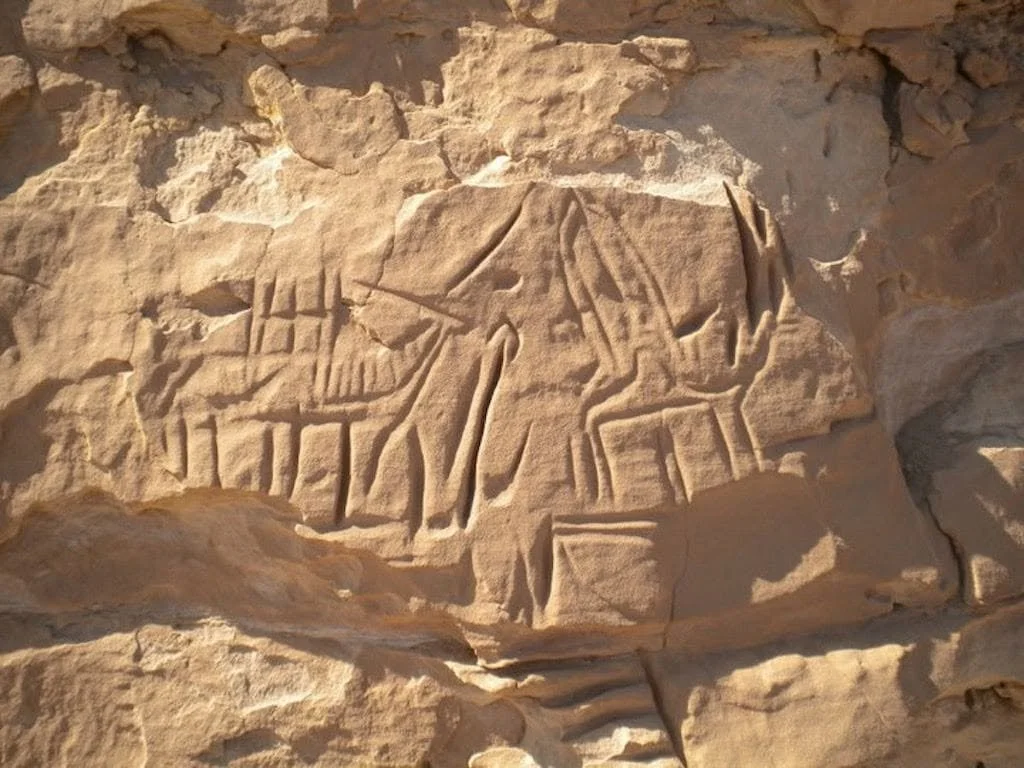
In 2014, archaeologists discovered a group of rock carvings in the Harga Oases, approximately 175 km west of Luxor in Egypt. It is believed to date to the Dodistatic era, around 4000 BCE or earlier. Egyptologist Salima Ikram argued that the rock art in these caves consisted merely of everyday depictions of spiders, spiderwebs, and other insects caught by spiders, and this theory prevailed for a long time.
However, other researchers who have studied these caves have recently arrived at an alternative conclusion. Professor Derek Cunningham, author of the book 400,000 Years of Stone Age Science, suggested that all these linear comb-like patterns are actually an archaic form of astronomical writing.
He discovered that the angular displacement of the “spider’s body” and many of the lines drawn on the walls correspond to astronomical values considered central to the accurate prediction of lunar and solar eclipses. For example, the bodies of the painted spiders are rotated 13.66 degrees vertically, a calculation that corresponds to half a sidereal month.
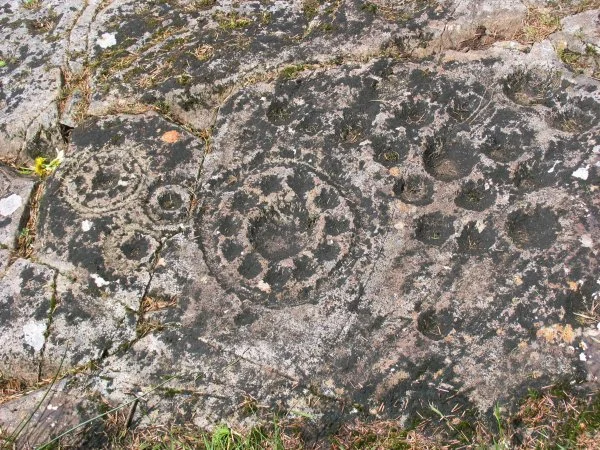
Ancient art in Ross-shire, Scottish Highlands
9. Rare ancient rock art in Scotland: ritual art, territorial markings, or stellar mapping?
Location: Ross-shire, Scottish Highlands
Age: 4,000 to 5,000 years old (Neolithic / Bronze Age)
In that same year of 2014, which was rich in significant archaeological discoveries, archaeologists uncovered a rare example of prehistoric rock art in the North Scottish Highlands, in the Ross-shire region. To this day, scientists have no definitive explanation for its meaning.
Researchers speculate that the images—which consist of rings and deeply carved cells — are either evidence of ritual art, territorial markings, or even indicate attempts by ancient people to map the starry sky.
These drawings are believed to date back to the Neolithic or Bronze Age, meaning they are approximately 4,000–5,000 years old. John Wombell of the Northern Archaeological Society of Scotland (NOSAS) described the find as an “amazing discovery” and explained that it is one of the few painted stones of this kind in Scotland.
