
Lublin, Poland: Centrum Spotkania Kultur — a place where art, architecture, philosophy, and bees come together
There are cultural centers where people go simply to see an exhibition. And then there are those rare, architectural marvels where the building itself becomes an inseparable part of the creative narrative. The Centre for the Meeting of Cultures (Centrum Spotkania Kultur or CSK) in Lublin, Poland, is unequivocally one of the latter.
Table of Contents
From “The theatre under construction” to architectural masterpiece
To truly appreciate the energy of the CSK, you have to understand its deeply symbolic history. For decades, this site wasn’t a beacon of culture; it was Lublin’s most infamous eyesore, that eventually unwrapped into significant art venue.
1974: the project was originally conceived as a monumental opera house boasting the largest stage in Europe.
Communism-era economic collapses halted construction almost immediately, leaving a massive, skeletal concrete frame looming over the city center.
For nearly forty years, locals bitterly dubbed it "Teatr w Budowie" (The Theatre Under Construction).
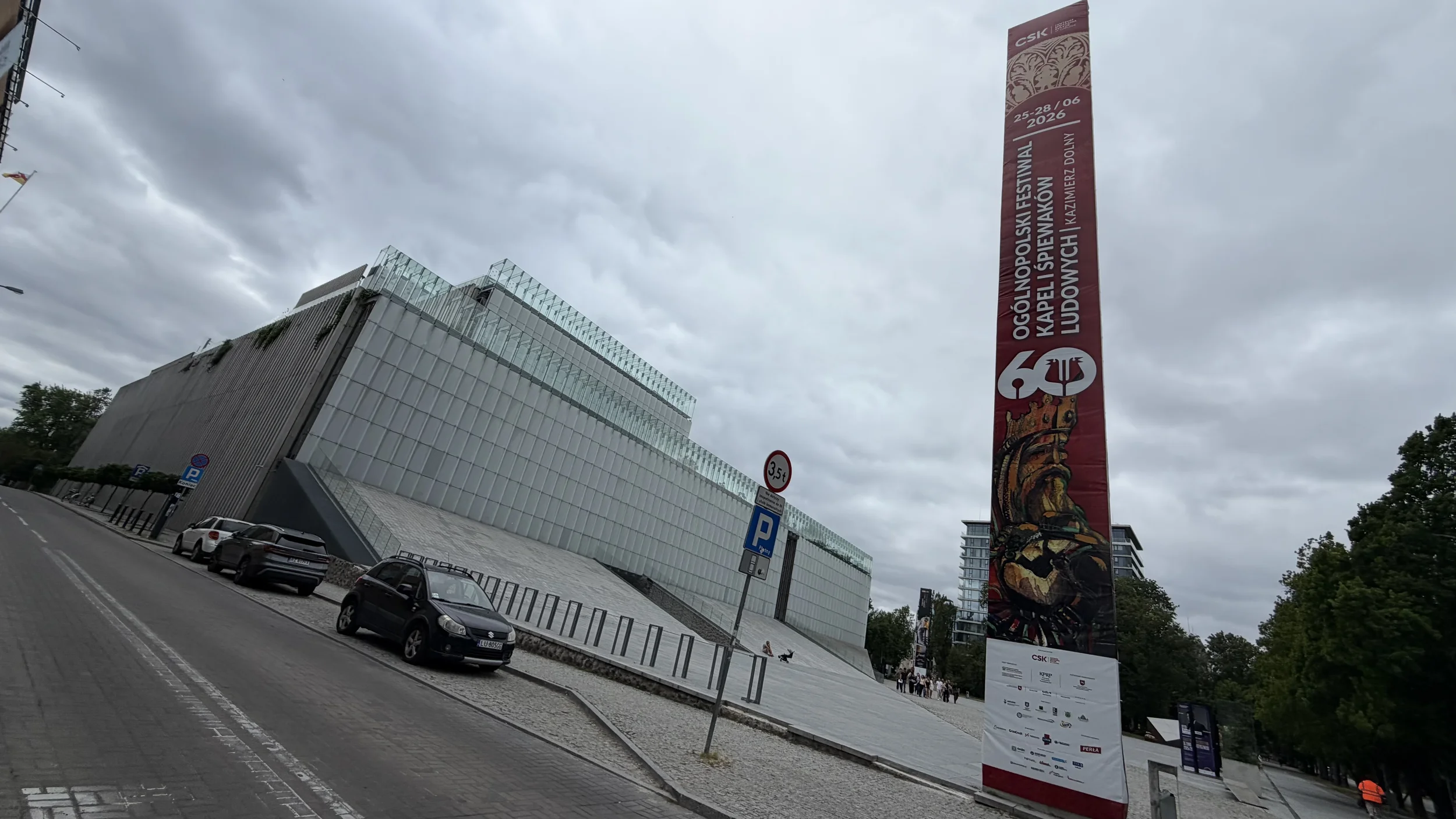
2015: acclaimed Polish architect Bolesław Stelmach completely reimagined the site. Instead of tearing down the painful reminder of the past, he integrated the exposed, historical concrete into a brilliant, ultra-modern design.
When the doors officially opened, the CSK instantly transformed from a symbol of stagnation into one of Poland’s most avant-garde cultural institutions. It is a metaphor for resilience: a scarred, half-finished monument reborn as a world-class temple of contemporary human expression.
The aesthetics of brutalism: glass meets industrial soul
The CSK doesn’t seem or feel like a traditional museum. Inside, Stelmach’s design overwhelms with slightly brutalist aesthetic, where industrial weight aligns with weightless transparency.
The building is full of natural light. Massive glass facades illuminate the inner chambers, throwing long, dramatic shadows that shift constantly throughout the day. The interior walls are raw unpolished concrete. This also is a very metaphorical feature, as it shows the literal ridges and imperfections of the building’s historical bones.
The aesthetics of brutalism
Monolithic concrete blocks are contrasted by sprawling walls of industrial glass, brushed steel, and exposed architectural cables — an interior loft-style trick that was super popular in mid 2010’s.
This deliberate design provides the perfect backdrop for contemporary artwork. The sheer scale of the open spaces ensures that large-scale installations are never cramped; instead, they interact dynamically with the geometry of the building itself.
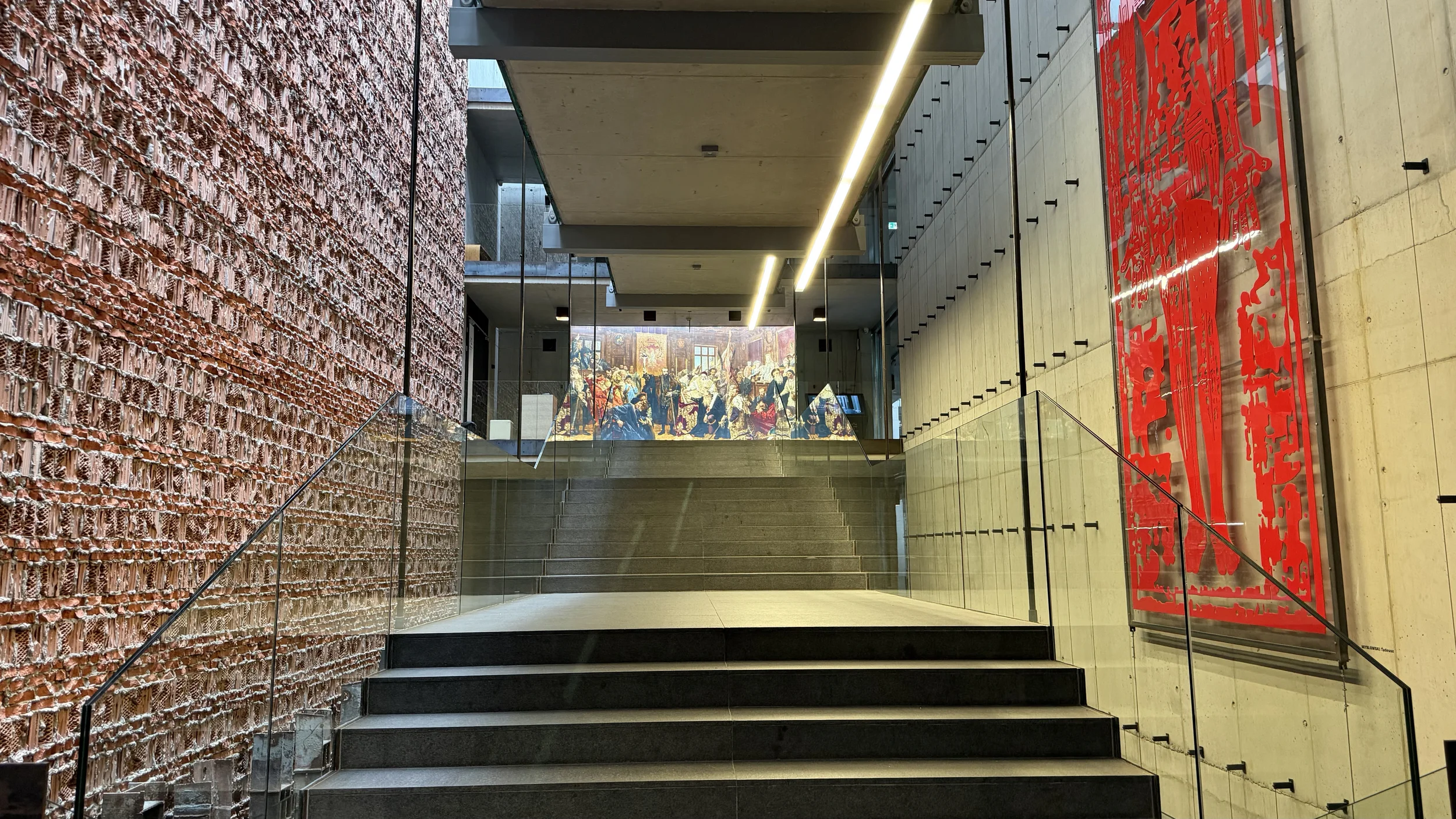
Spotlight exhibition: Michał Jatkowski’s “Contemporary Kalokagathia”
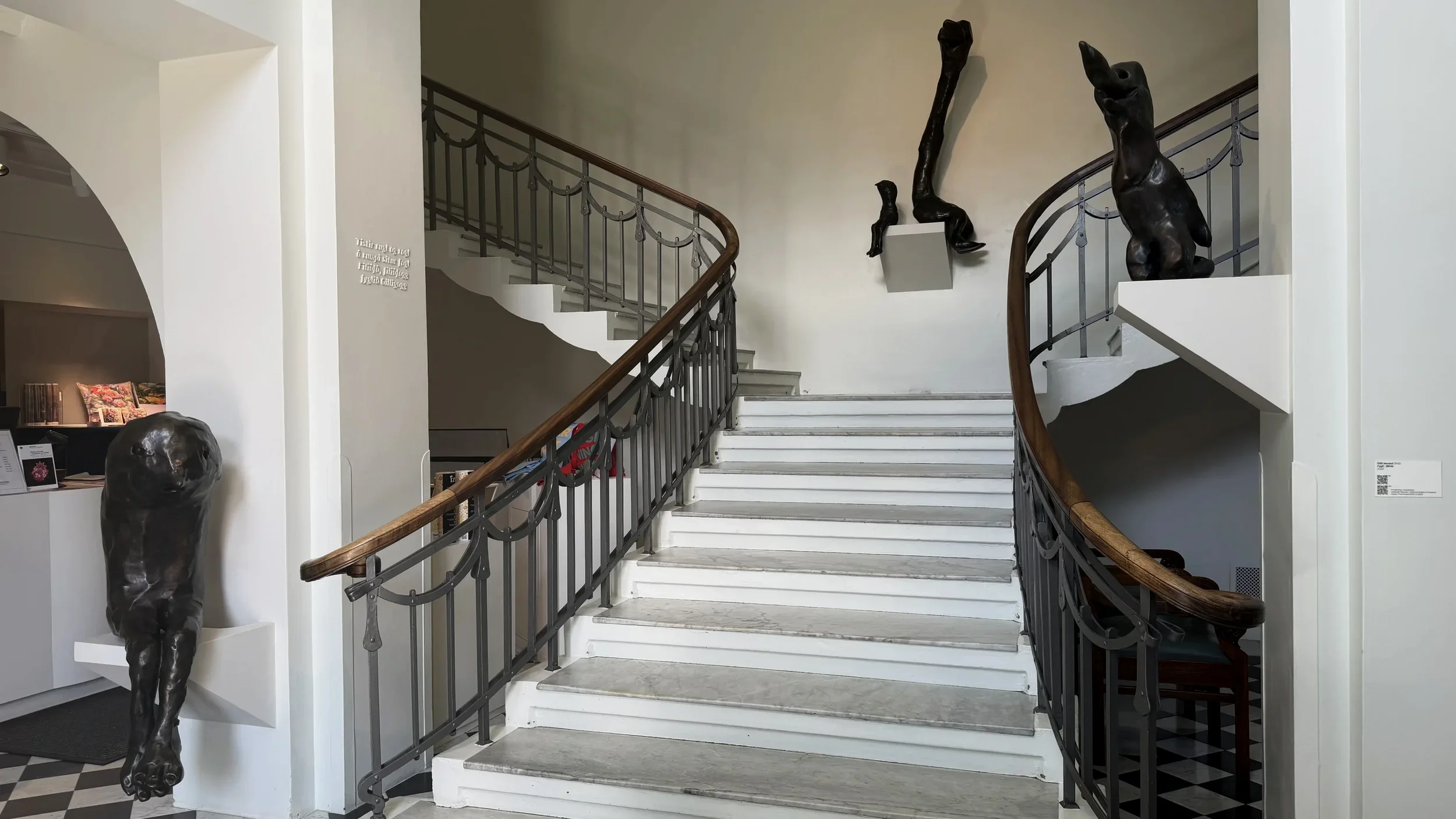
During my visit, the upper-level galleries hosted a profound solo exhibition by contemporary Polish sculptor Michał Jatkowski, titled “Beauty, Goodness… A Fake? Contemporary Kalokagathia”.
The title Kalokagathia is the ancient Greek philosophical ideal that postulates a harmonious, inseparable bond between external physical beauty (kalos) and internal moral virtue (agathos). In antiquity, a beautiful body was inherently expected to house a beautiful soul. Jatkowski’s entire exhibition serves as a sharp, modern interrogation of this concept: Is this classical harmony even possible in our fractured, digital, and hyper-aestheticized world, or has it become a total fake?
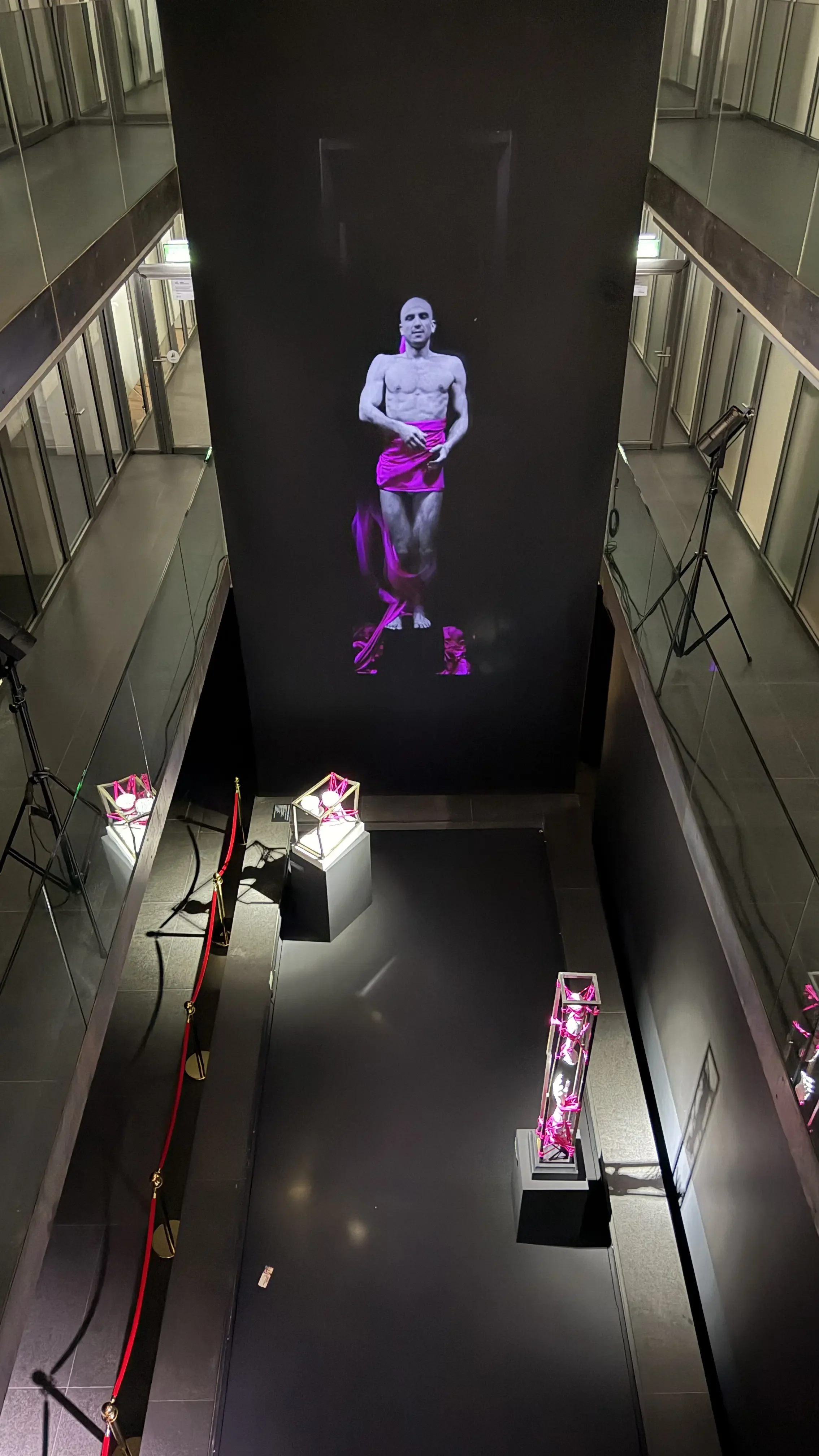
Michał Jatkowski’s “Contemporary Kalokagathia”
Jatkowski’s sculptural forms literally hover between classical antiquity and jarring modernity.
At a distant glance, your eyes feast upon smooth, elegant, and seemingly classical proportions.
Upon closer inspection, the illusion fractures. You begin to notice deliberate ironies, unsettling modern symbols, and structural gashes sliced into the figures.
The materials themselves feel conflicted, mirroring the thematic tension between enduring truths and cheap, modern imitations.
The exhibition intentionally refuses to hand out ready-made, comforting answers. Instead, it leaves the viewer standing in the quiet, cavernous concrete halls of the CSK, entirely alone with their own questions. For me, this visceral tension—staged inside a building that itself had to fight to find its own true form—made the experience profoundly unforgettable.
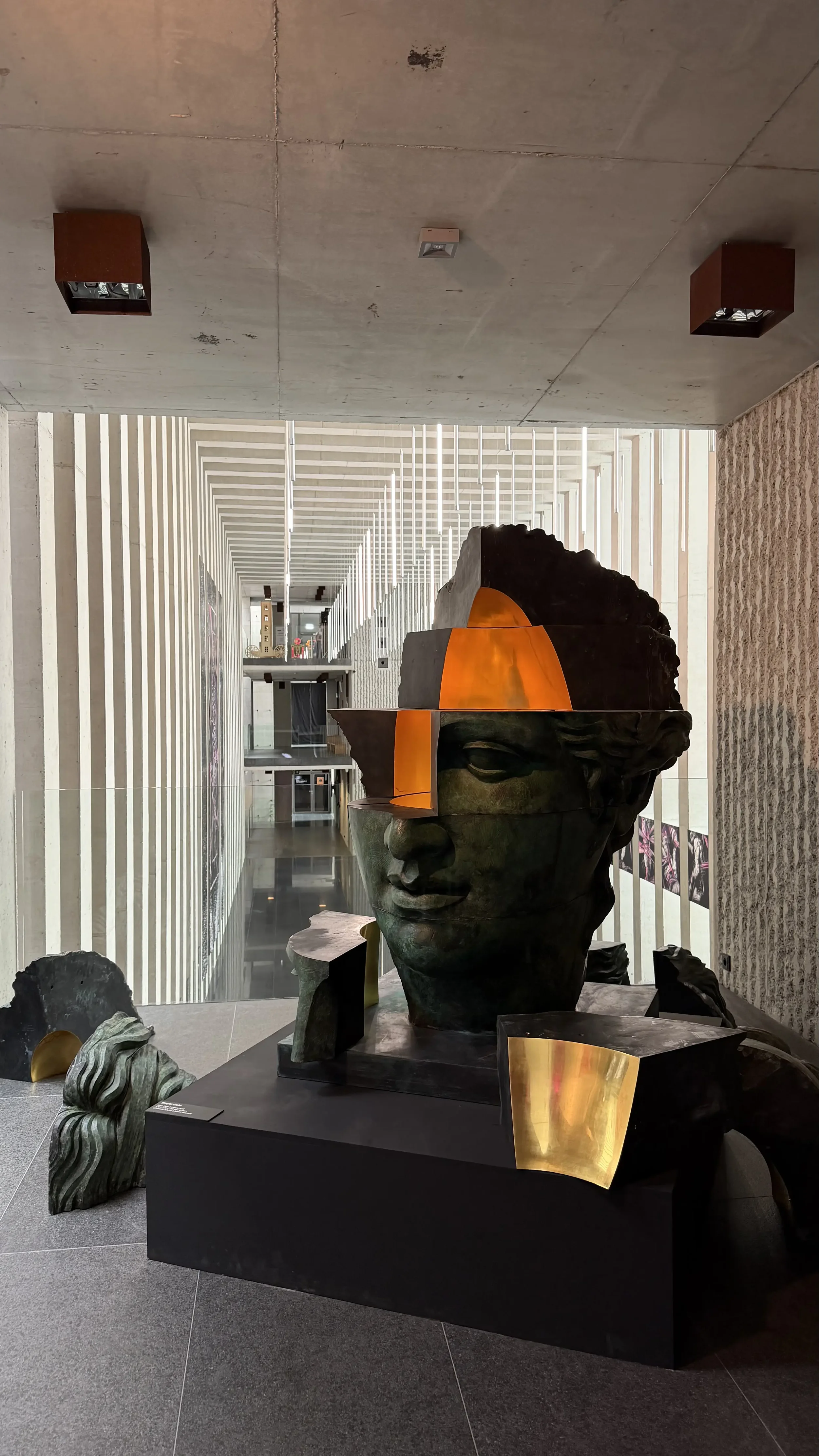
Michał Jatkowski’s “Contemporary Kalokagathia”
The CSK’s secret spaces
An art trip to the CSK is highly incomplete if you only stick to the exhibition halls. The building functions as an open public ecosystem with several hidden layers worth exploring.
The avenue of cultures
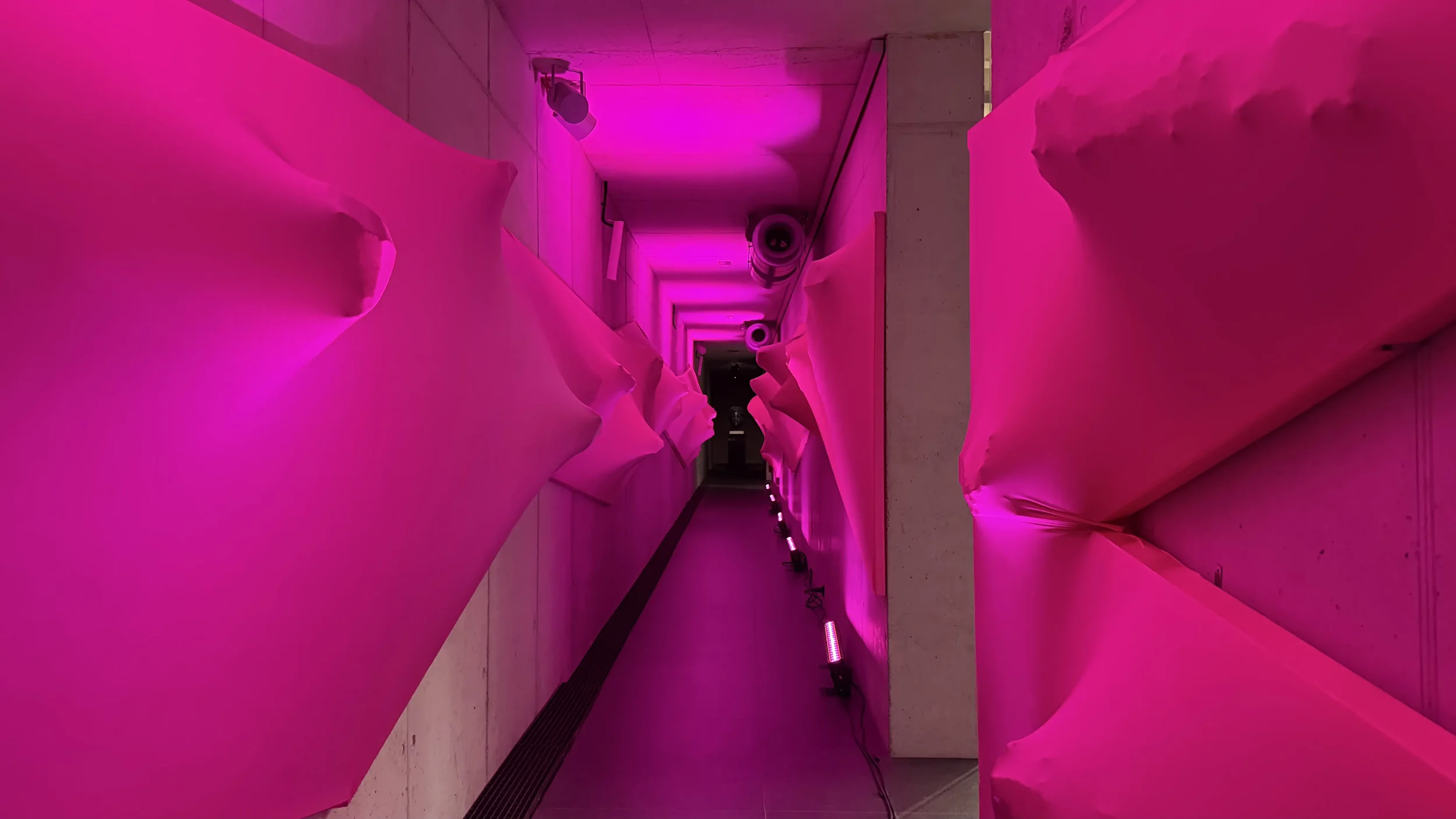
This massive interior architectural artery cuts clean through the structure. It functions as a covered urban plaza where travelers, digital nomads, and local art students cross paths beneath soaring ceilings.
The vertigo-inducing glass roof walkways
Head to the highest floors to experience the CSK’s most thrilling architectural feature: suspended glass walkways. Walking across these entirely transparent floors lets you look straight down into the multi-story industrial chasm of the building's interior, offering an entirely different, dizzying perspective on the layout below.
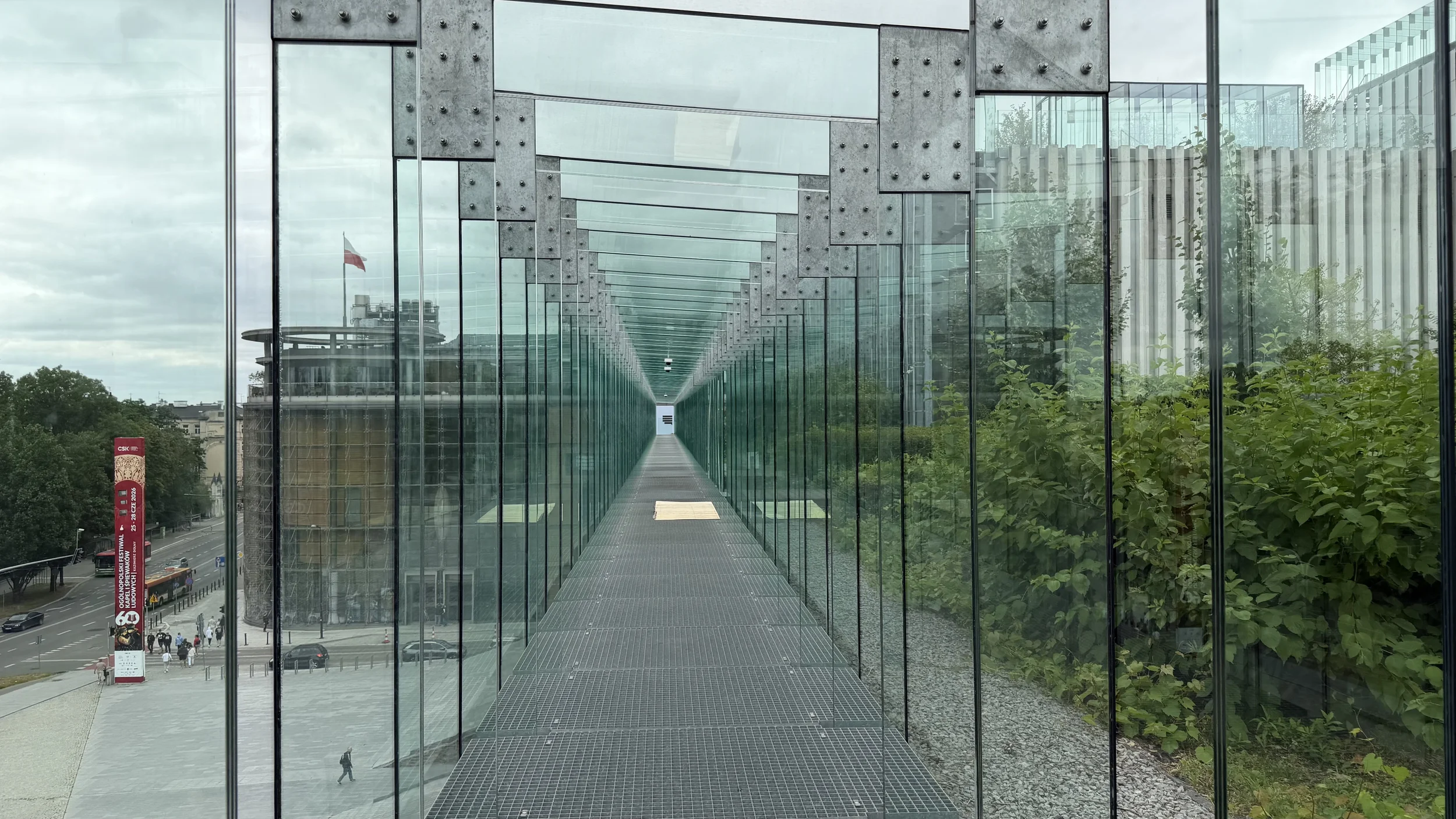
Glass roof walkways
The rooftop greenery & bee orchard
Climb all the way to the top to discover an unexpected ecological oasis. The stepped rooftop gardens are densely planted with local trees, grasses, and wild herbs, providing sweeping, panoramic views of the Lublin skyline and the neighboring Saxon Garden (Ogród Saski). Nestled among the greenery is the Artistic Urban Apiary (Miejska Pasieka Artystyczna), a fully functioning bee orchard celebrating the region's historic beekeeping traditions right atop a brutalist stronghold!
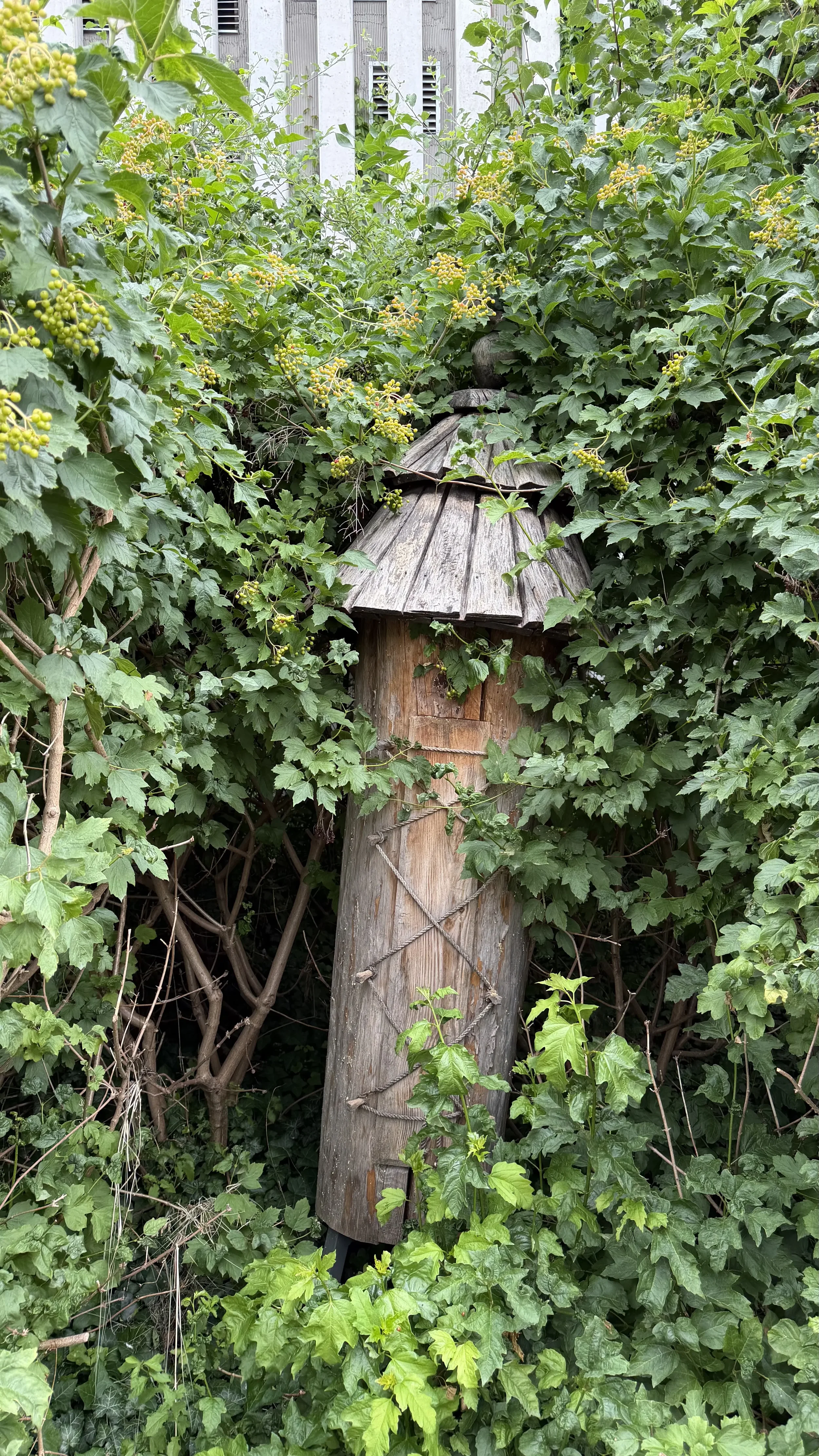
The rooftop greenery & bee orchard at CSK in Lublin
Practical art travel tips to CSK in Lublin
Ready to plan your trip? Here is everything you need to know to maximize your visit to Lublin’s premier cultural hub.
Getting there & around
The CSK is located prominently at Plac Teatralny 1, an easy and highly pleasant walk from Lublin’s historic, cobblestoned Old Town.
Lublin is exceptionally well-connected to Warsaw via frequent, high-speed trains (approx. 1.5 to 2 hours), making it an easy weekend extension from the capital.
Hours & ticketing
Access to the main building, the Avenue of Cultures, and the rooftop terraces is generally free of charge.
Specific temporary art exhibitions (like Jatkowski's sculptures) may require a small ticket fee, easily purchasable at the main ground-floor information desk.
Plan your visit for late afternoon. This allows you to experience the galleries in full daylight, catch the golden hour views from the rooftop terraces, and watch the massive, interactive LED glass facade light up the city square after dusk!
Where to unwind afterward
After hours of digesting intense contemporary art, head straight down to the building's ground floor or the immediate perimeter of Plac Teatralny. You will find excellent, minimalist specialty coffee shops and sleek bistros perfect for sitting down with a notebook to pen your own thoughts on Kalokagathia over a perfectly poured flat white.