
Paris is famous for its beauty, lifestyle, facades and five-star luxuries, but behind the elegant masonry of the Left Bank lies a deeply moving and tragic chapter of literary history.
📍Location: 13 Rue des Beaux Arts.
* * *
Paris is famous for its beauty, lifestyle, facades and five-star luxuries, but behind the elegant masonry of the Left Bank lies a deeply moving and tragic chapter of literary history.
On a quiet, cobblestone street in Saint-Germain-des-Prés sits a modest, historic building that was once known as the Hôtel d'Alsace. Today, it has been transformed into L'Hôtel, a posh five-star boutique hotel. While contemporary guests lounge under its glamorous dome, many remain completely unaware of the heartbreaking drama that unfolded within its walls.
It was here, in Room No. 16, that the most brilliant, witty, and tragic aesthete of the Victorian era — Oscar Wilde — drew his final breath on November 30, 1900.
Table of Contents
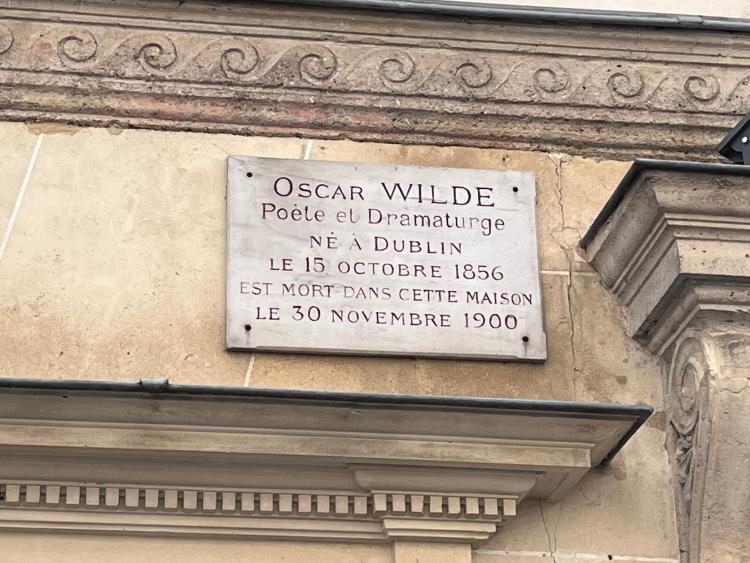
From world fame to utter poverty
The end of Oscar Wilde’s life was a slow-motion tragedy. Just years prior, he had been the toast of London’s high society, packing theaters with The Importance of Being Earnest. But following his ruinous trial, two years of hard labor in Reading Gaol for "gross indecency," and total social exile from England, he arrived in France absolutely destitute. Broken in health and spirit, he adopted the tragic pseudonym Sebastian Melmoth.
At the Hôtel d'Alsace, Wilde lived entirely on credit, surviving through the extraordinary patience of the hotel’s young proprietor, Jean Dupoirier. The legendary wit was reduced to a ‘freeloader’. There are some archival notes about him writing desperate letters to friends begging for small advances.
Dupoirier’s logs reveal the reality of Wilde’s coping mechanisms: the author consumed up to a liter of brandy daily in his room, supplemented by rounds of absinthe, white wine, and cheap tobacco in the smoky corners of local Left Bank cafés.
Even surrounded by peeling walls, Wilde’s signature extravagance never truly faded; he regularly treated his remaining acquaintances to luxurious dinners he couldn't afford, driving himself deeper into debt.
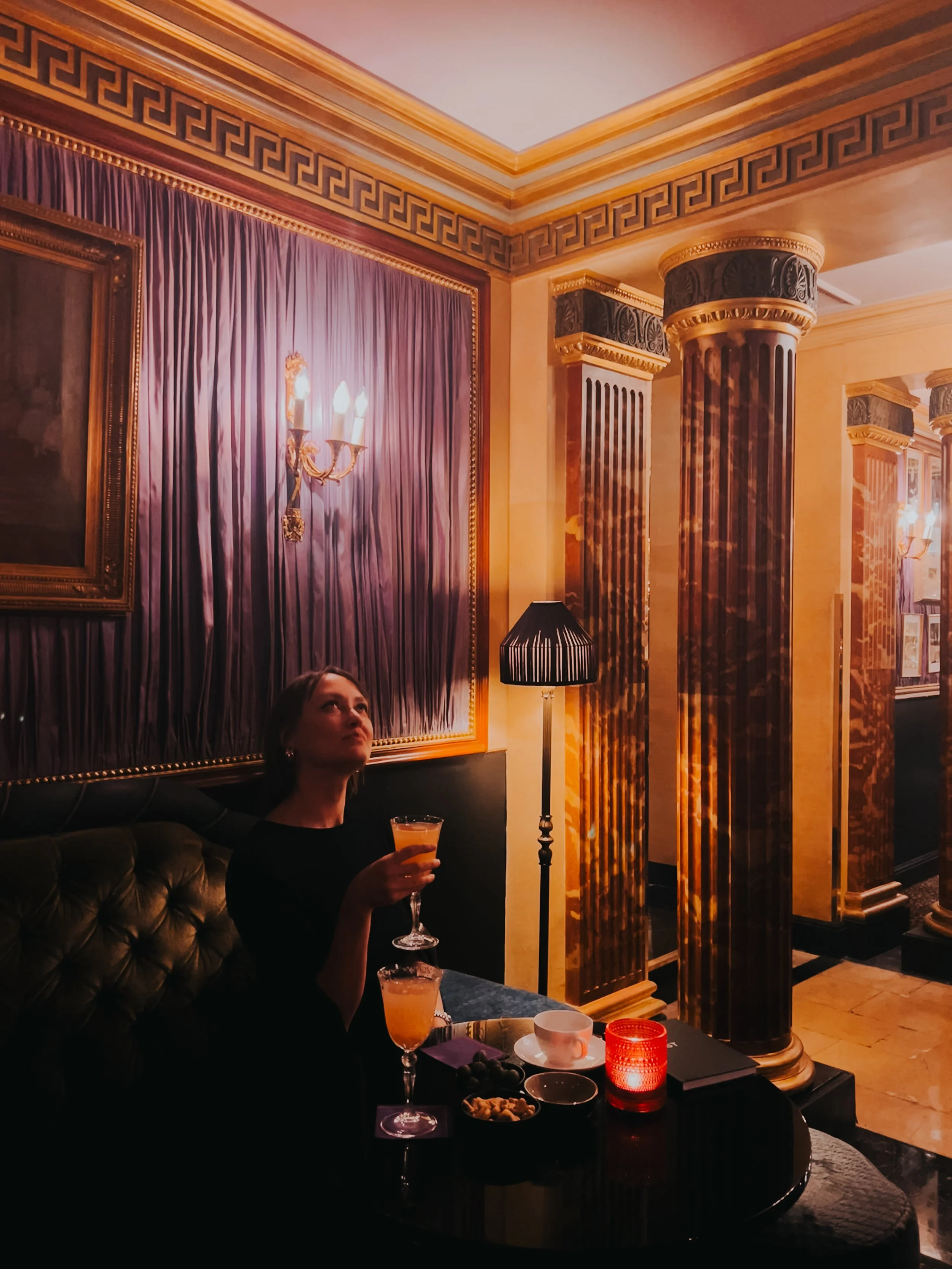
Famous cocktail bar inside L’Hotel.
The deadly duel with the wallpaper
In August 1900, during a rare dinner with his tempestuous former lover Lord Alfred “Bosie” Douglas, Wilde made a chillingly prophetic joke about his fragile condition:
“I don’t think I’ll live to see the next century. If a new century dawns and I’m still alive, the English simply won’t be able to bear it.”
He was right. Douglas never saw him alive again. Just three months later, Wilde contracted a severe ear infection that rapidly evolved into agonizing cerebral meningitis.
Confined to his bed and drifting in and out of consciousness, Wilde looked up at the cheap, garish floral patterns covering his small bedroom walls and uttered the ultimate deathbed epigram that has echoed through art history:
“My wallpaper and I are engaged in a deadly duel. One of us will have to go.”
On November 30, at just 46 years old, the great writer passed away in terrible pain. True to his dramatic life, he was baptized into the Catholic Church on his deathbed, satisfying his lifelong obsession with romantic spiritual absolution.
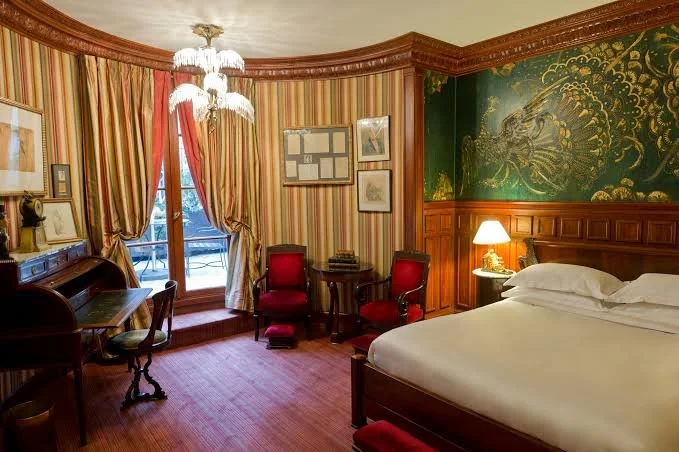
Oscar Wilde’s room
How to explore the hotel today
L’Hôtel is aware that the hotel is very important in historical context, and it welcomes literary pilgrims with open arms — if you know how to navigate it.
Le Bar
You do not need to spend hundreds of euros on a room to experience the atmosphere. Le Bar, the hotel’s cocktail lounge, is open to public. Order a cup of espresso or their signature Wilde cocktail.
From there, you can legally explore the ground floor and marvel at the jaw-dropping circular spiral staircase and central open atrium, which provides the ultimate ‘looking up’ architecture shot for Pinterest or Instagram.
The Oscar Wilde Suite (Room No. 16)
If budget allows, book the exact room where Wilde spent his final days. It was carefully redesigned by iconic decorator Jacques Garcia, and now the suite features authentic period decor, rare photographs of the author, and framed, historical letters from the hotel management politely demanding payment for his mounting bills.
How to get there
13 Rue des Beaux Arts.
Nearest metro stations: Saint-Germain-des-Prés (Line 4) or Mabillon (Line 10). It’s literally a 5-minute walk from either station.
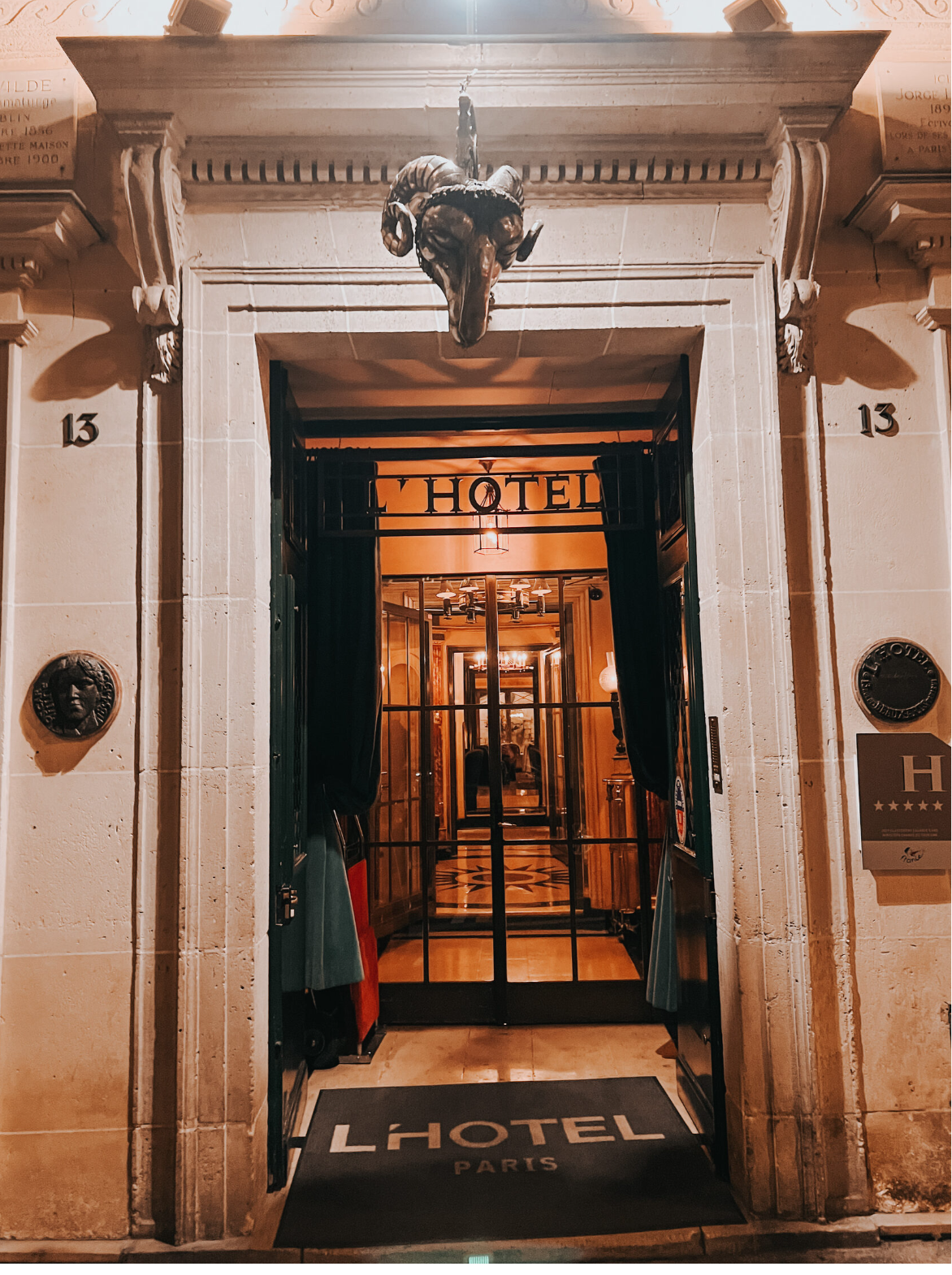
The entrance
Oscar Wilde's left bank itinerary
Located just a short stroll away on Boulevard Saint-Germain, these legendary cafés were where Wilde spent his afternoons sipping absinthe and mingling with the French bohemian elite.
Perched directly on the Seine embankment, this historic culinary landmark was a favorite dining spot where Wilde frequently used his remaining credit to host opulent dinners.
The ultimate resting place of the author. Visit his iconic, modernist tomb carved as a winged sphinx by Sir Jacob Epstein, historically covered in thousands of lipstick kisses and now protected by a glass shield.
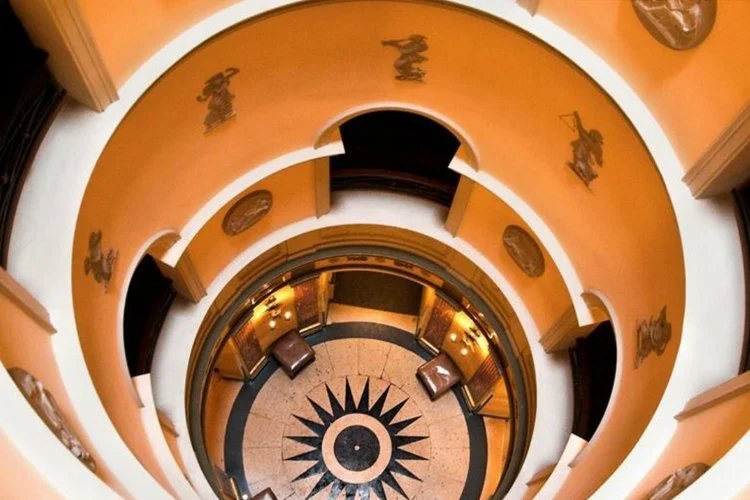
Interactive features and photo tips (for Instagram/Pinterest)
Best spot for photos is the main highlight of L’Hotel’s interior is the stunning circular spiral staircase with an open atrium. It’s the perfect spot for a “looking up” or “looking down” shot.
Also, the famous lobby cocktail bar at the ground floor is absolutely stunning and elegant.
Sources & Further Reading
Explore the official archival legacy of the property, from its origins as the Hôtel d’Alsace to its meticulous redesign celebrating Oscar Wilde’s final residence.
A deep dive into the letters, journal entries, and café receipts documenting the author’s tragic lifestyle and writing process under the alias Sebastian Melmoth.
An illustrated breakdown of Sir Jacob Epstein’s controversial modernist tomb design for Wilde, detailing its cultural impact and restoration history.
A critical scholarly analysis examining how the physical and psychological toll of Wilde’s post-prison exile reshaped late 19th-century aesthetic philosophy.
