
Copenhagen: Christiania free state. What is this?
I had no idea what Christian was when I headed there. My friend only said it was a “art neighborhood”. Oh, lovely — I thought, — let’s go.
When I came there… I was shocked.
Table of Contents
What exactly is Christiania?
So technically yes, it’s a neighborhood in Copenhagen. In practice, it’s something more like a long-running experiment that never ended. It was founded in the early 1970s on an abandoned military base, and soon Christiania declared itself a “free town” and has been negotiating that idea ever since. They even have their own flag.

The Freetown Christiania Flag
Community of Christiania
People live here (about a thousand of them) and the place runs on its own internal logic: collective decisions, alternative housing, a strong emphasis on community. It is like a state within a state. What oroginally began as a spontaneous squat turned into a semi-recognized autonomus zone, equal parts idealism and social compromise.
Communism at its core but with a fleur of tired millenials who left their corporate offices to turn to 21 century hippies.
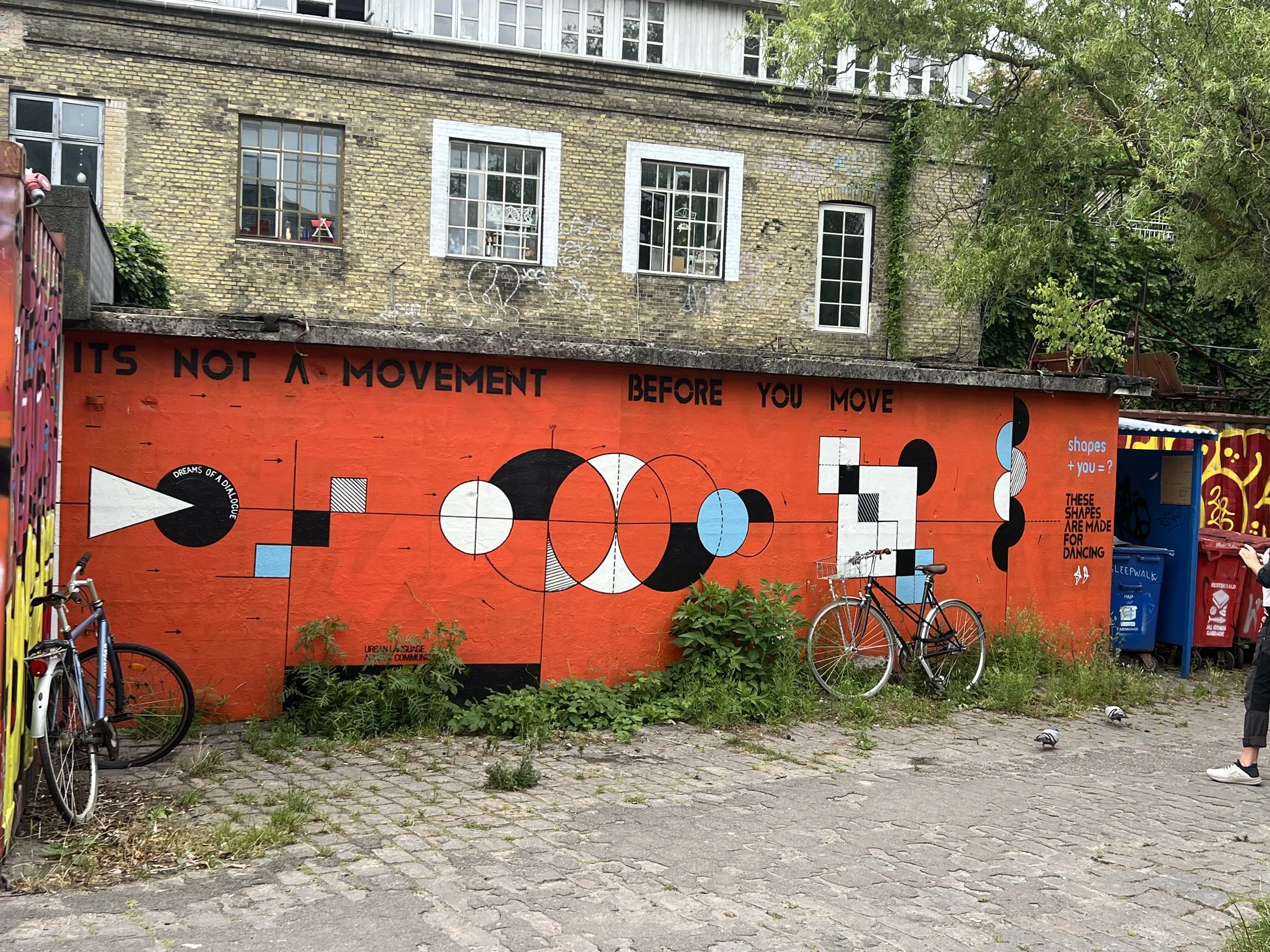
Getting there is easy. A short walk from the center of the city, and suddenly the whole atmosphere changes — you won’t mistake this area to anything else. The canals, the clean lines, the Scandinavian calm change to chaotic, unregulated and at times dirty (run down) environment.
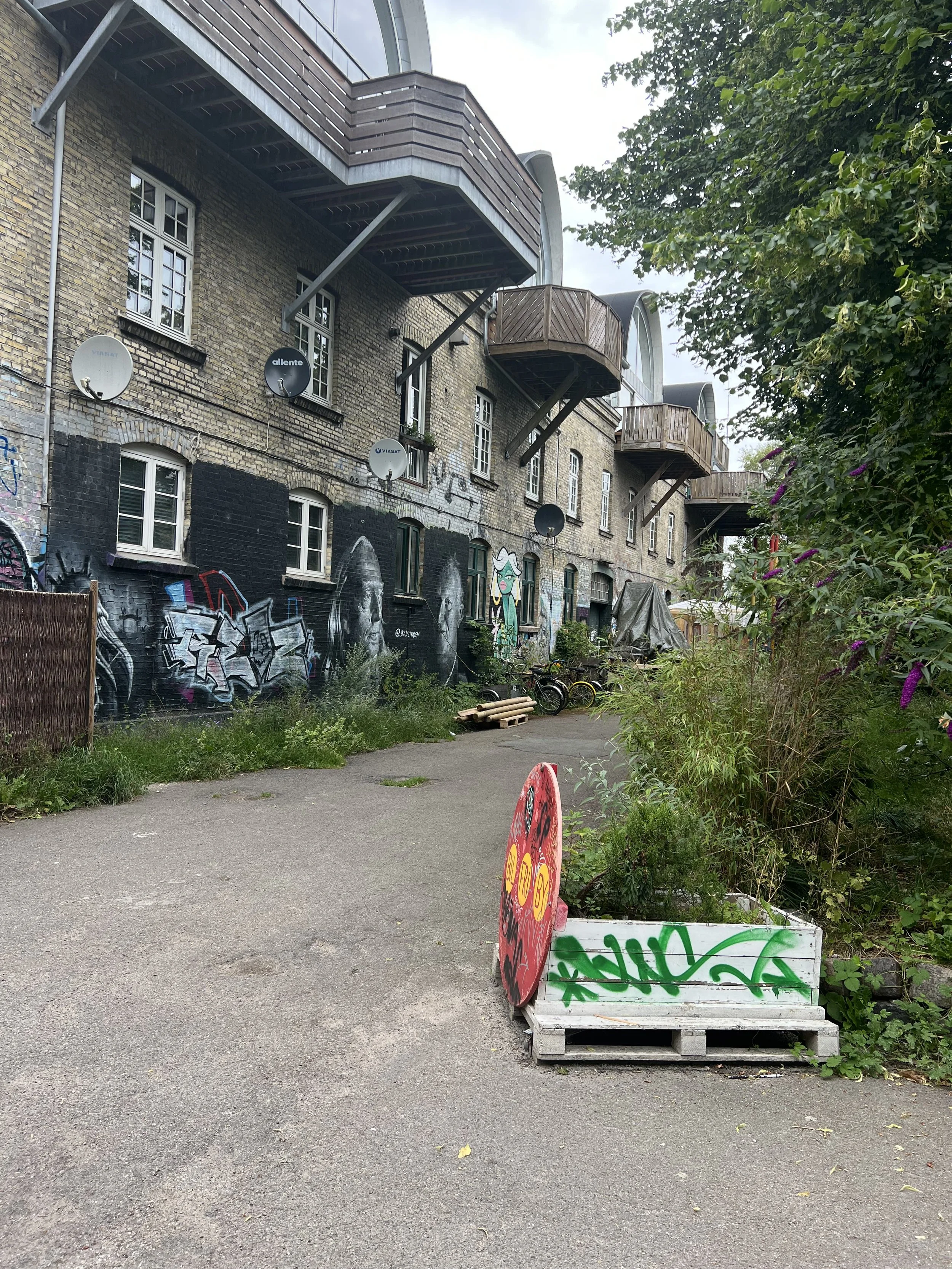
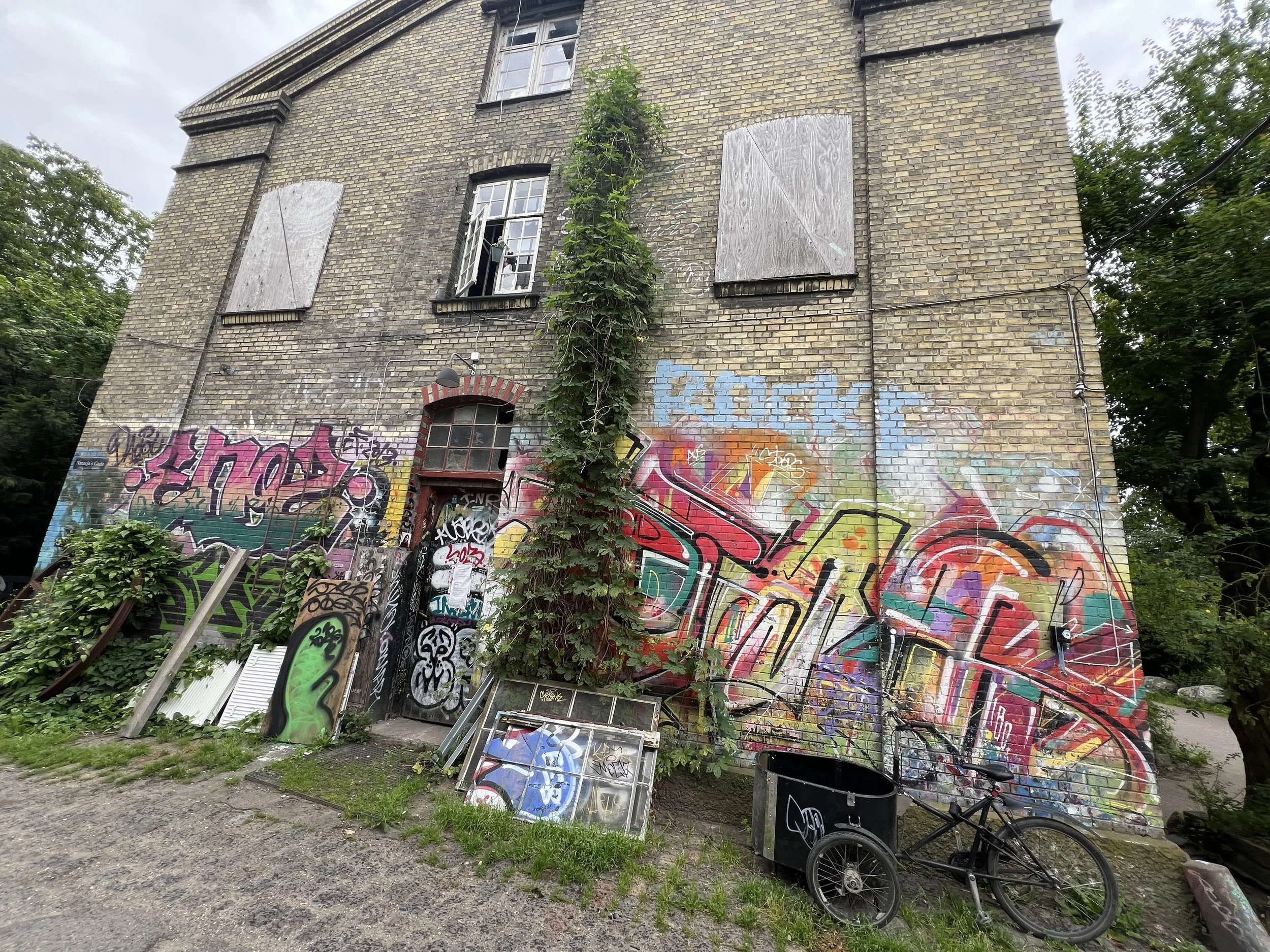
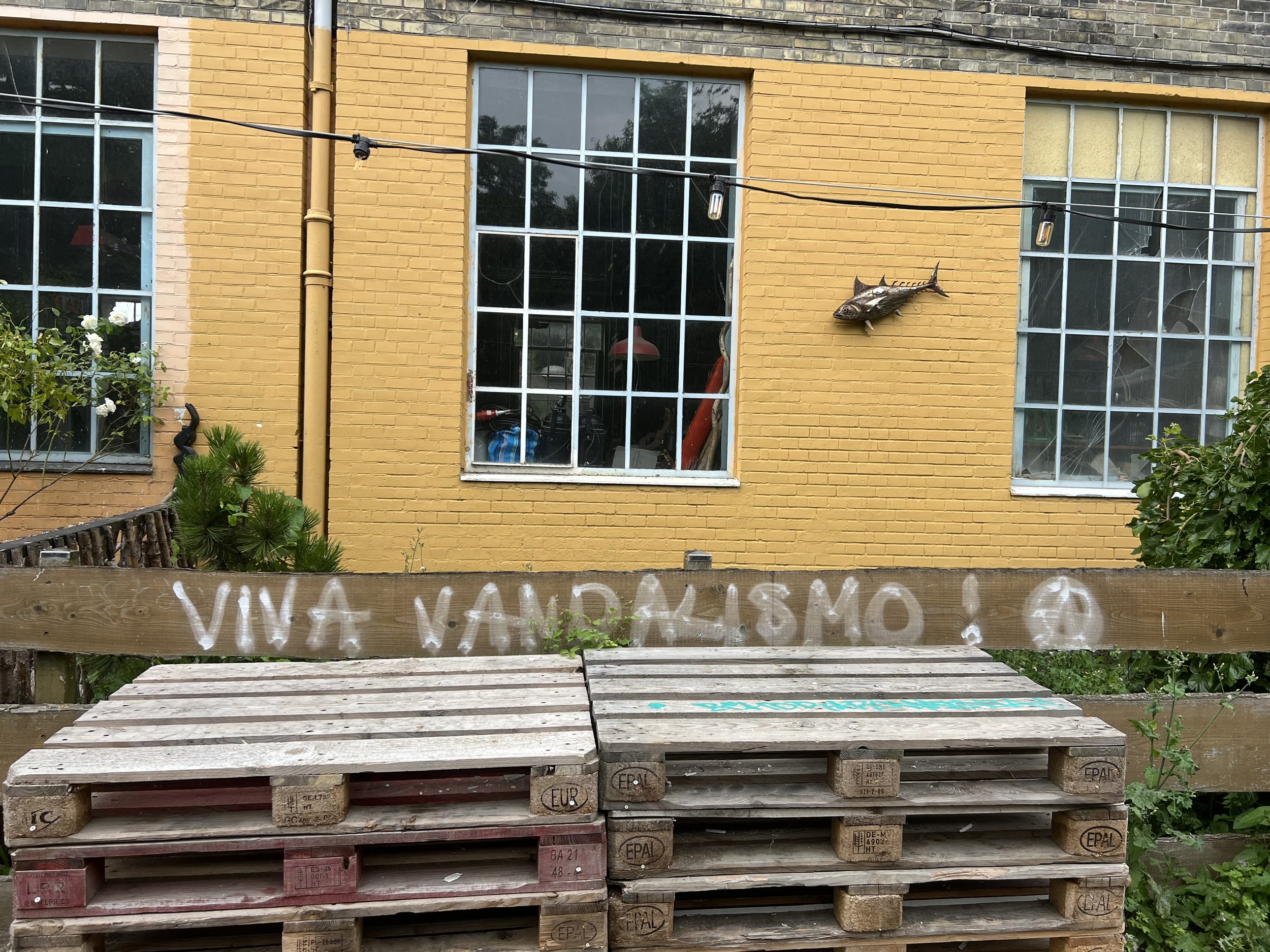
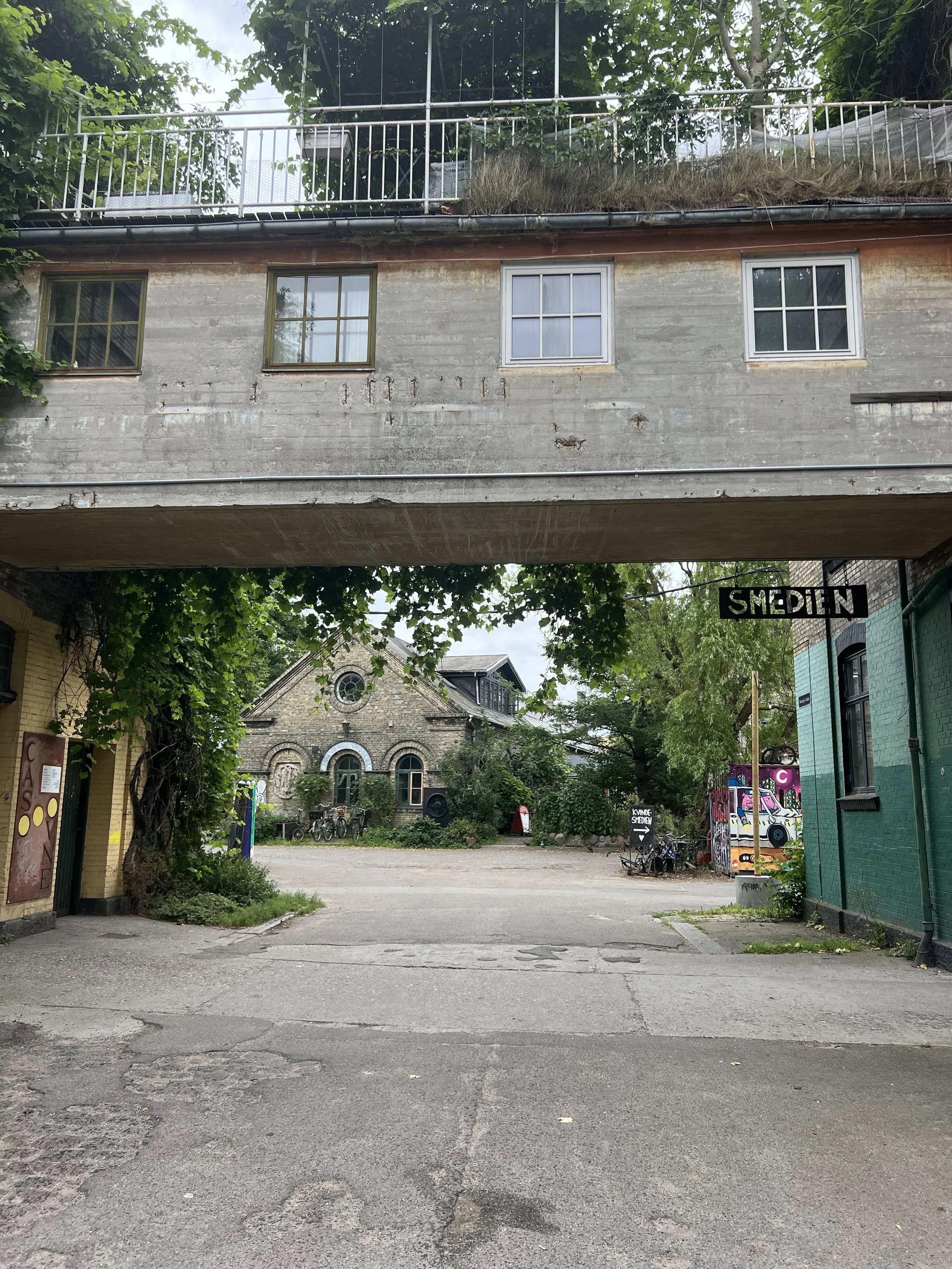
Christiania for decades was associated with an open cannabis trade and periodic violence tied to it. That history still lingers, even as the area has been trying to rebrand itself. It tries its hardest to be more about culture, sustainability and freedom of expression. Not really succesfully so.
Tons of rubbish make me wonder how place like this is possibly in this ecology friendly, hygge country.
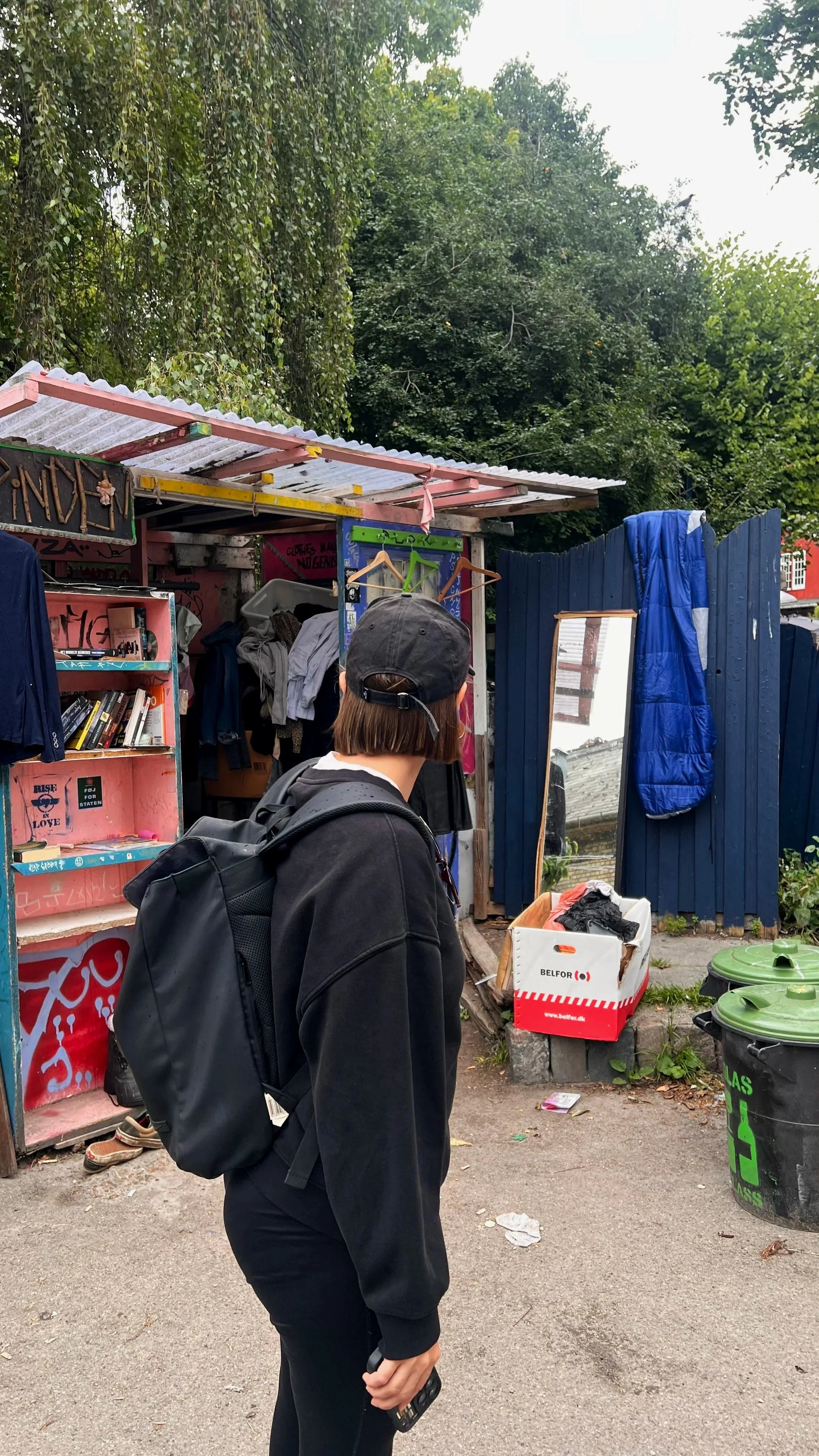
Trash or art — it’s hard to tell. Dilapidated buildings, tiny shops selling vaguely defined craft goods, people drifting around — a mix of tourists and locals. A strange feeling.
Art (is it though?), murals, freedom of expression
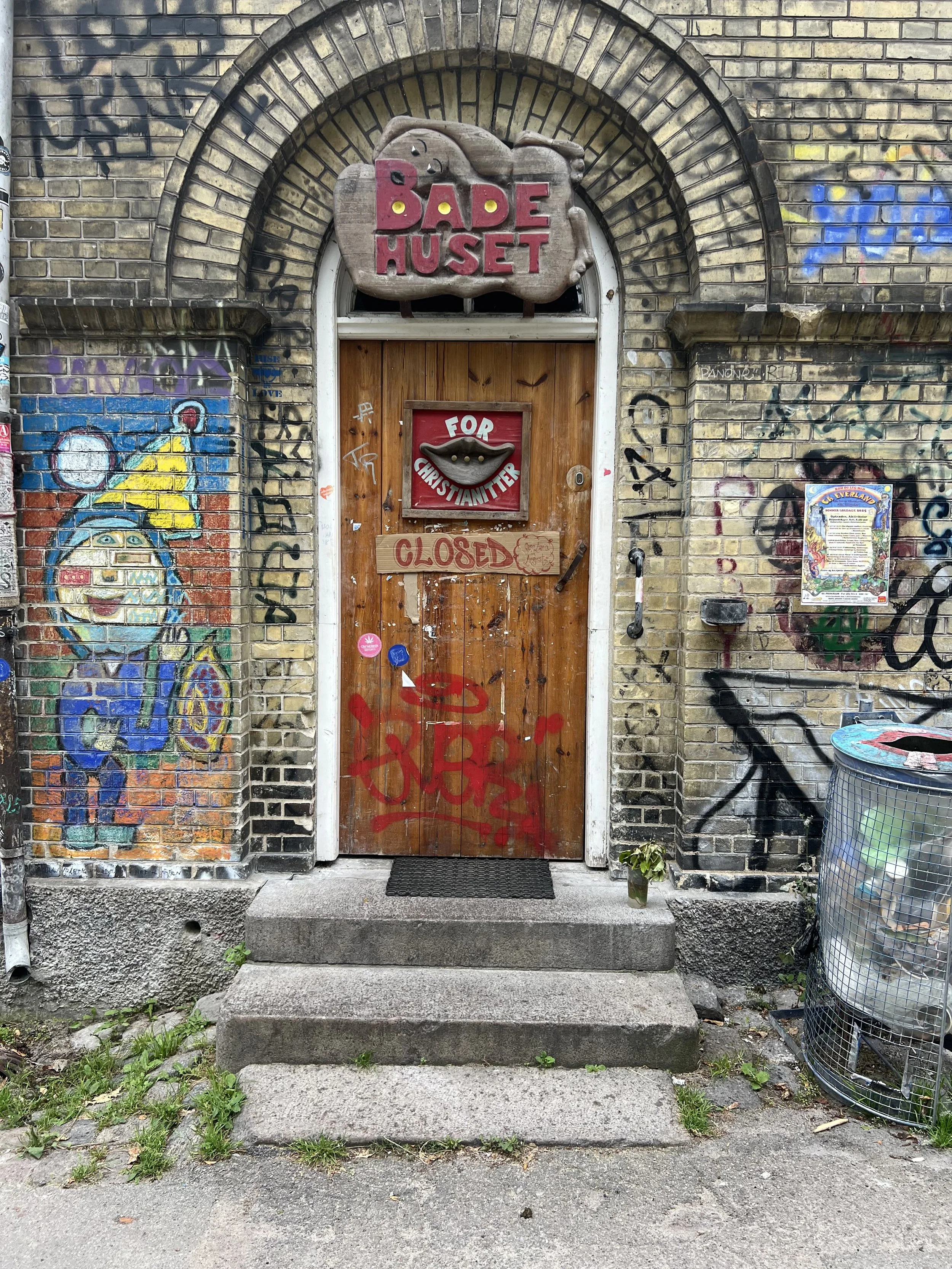
Murals, tags, sculptures, improvised installations are integral part of Christiania. Some works are political, some ironic, some just frankly strange. There’s no unified message, which is the point.
Many buildings are handmade, the spaces are improvised, and the visuals grow out of that same logic, which is in reality no logic at all.
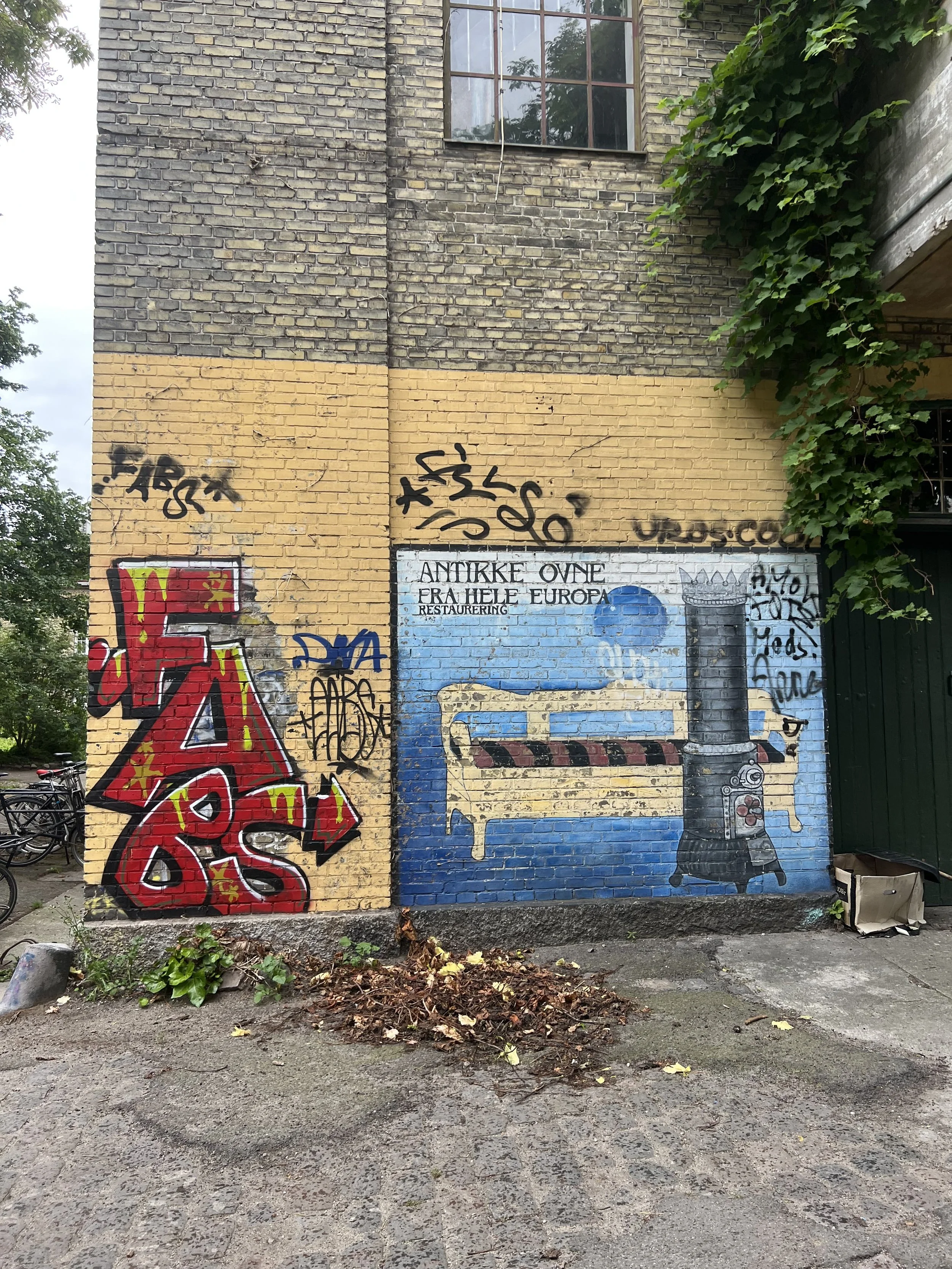
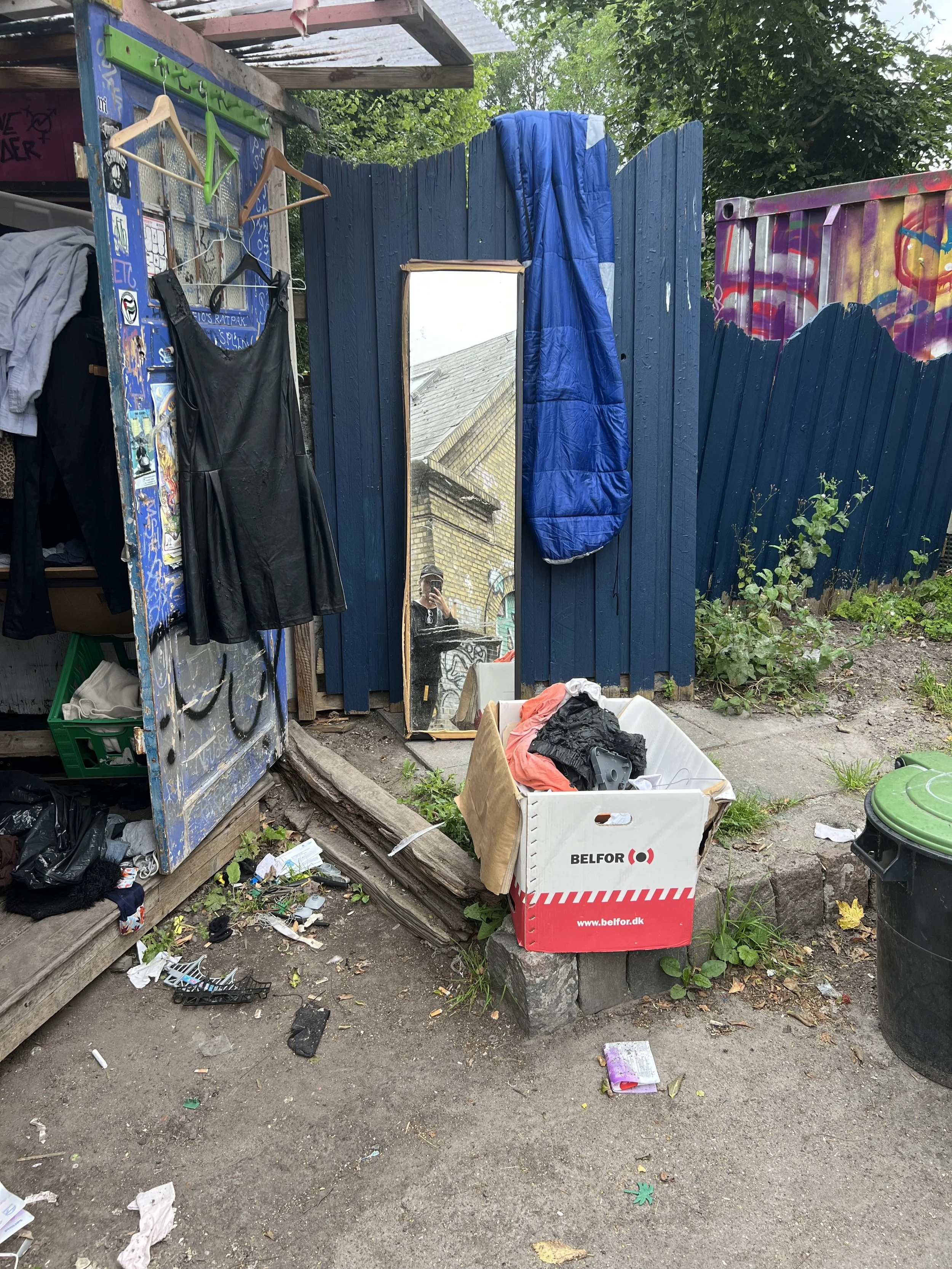
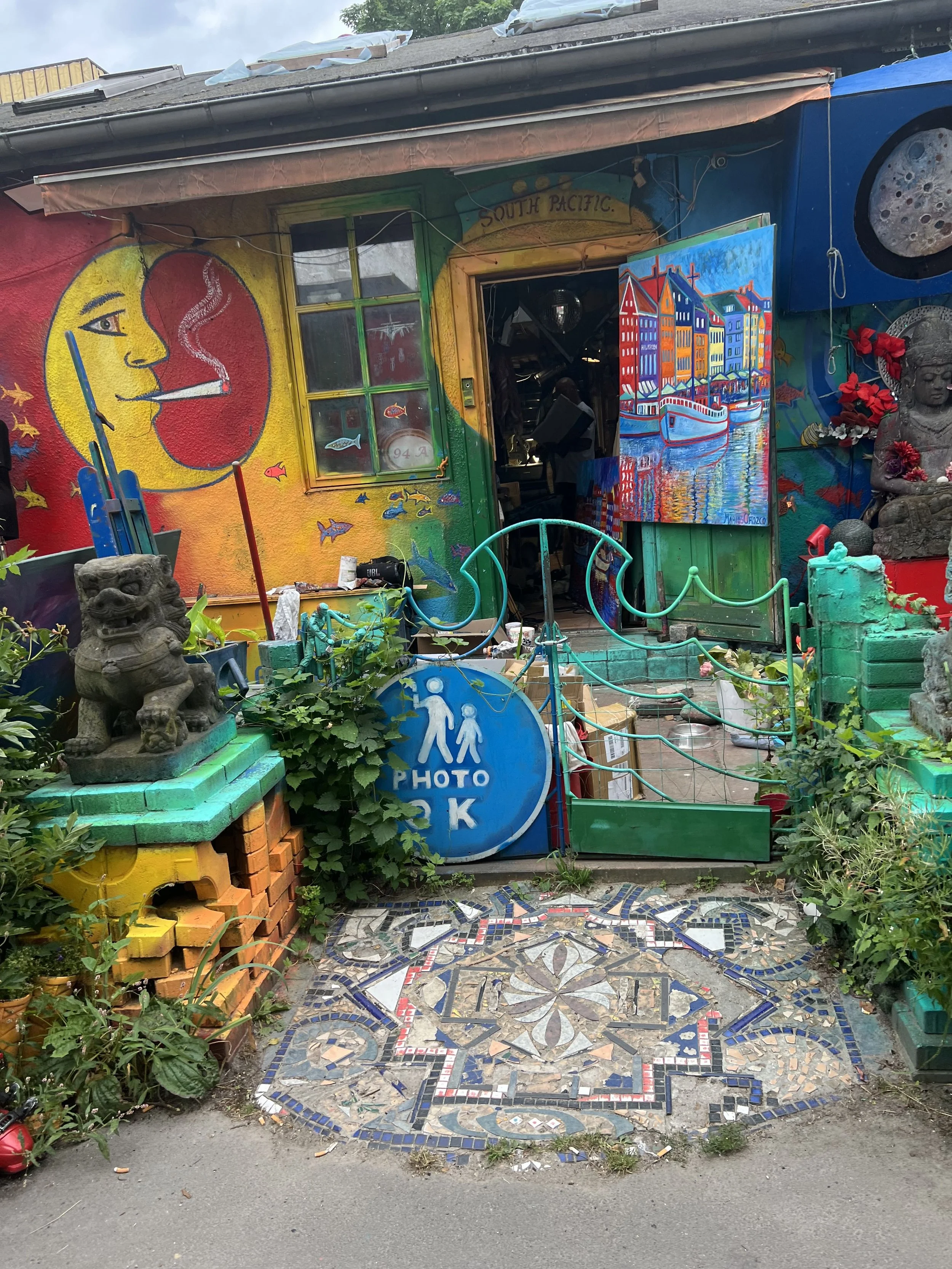
When you walk a little further out, you’ll notice how the density luckily so, drops. You will see quieter paths, overgrown houses, people having lunch in their gardens, doing their usual things around the place where they live, minding their own business. It starts to look less like a radical experiment and more like an alternative suburb. Still unusual, but not performatively so, and way, way more natural.
Which is probably the most accurate way to understand Christiania. You need to look at it not as a fixed, curated idea, but as something that keeps narurally adjusting and growing itself. Life will find a way everywhere, if you know what I mean. Literal grass growing through the asphalt.
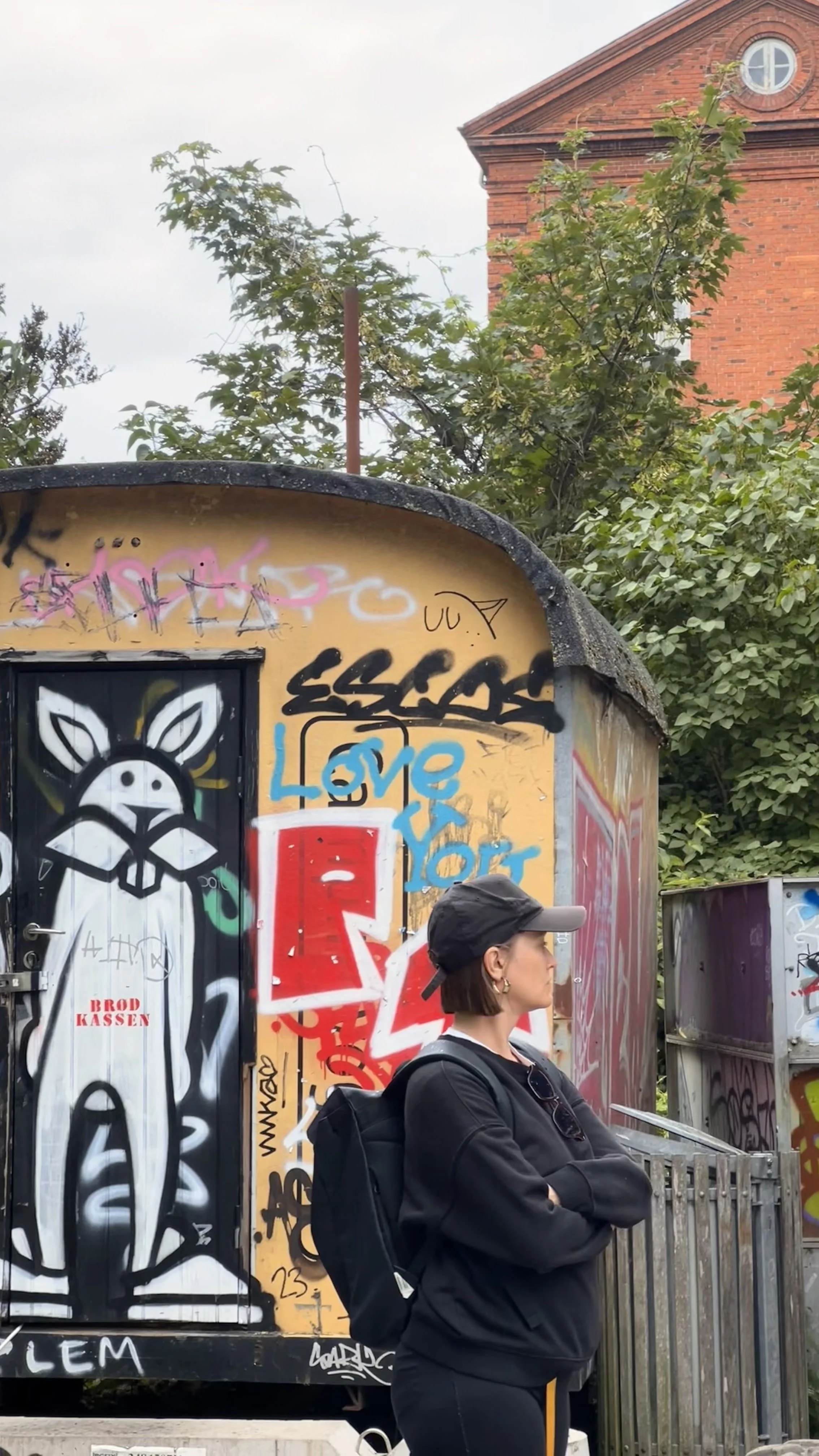
I love the idea of Christiania. I may be a bit skeptical about it, but don’t get me wrong. Possibly the implementation is not clearly well done in this particular place. But I believe places like this should be in every capital or major city.
