
Each time I return to Melbourne, a visit to the National Gallery of Victoria (NGV) is non-negotiable. It was founded in 1861, and today holds one of the most significant art collections in the Southern Hemisphere.
* * *
The scale of the NGV is immense — it houses international masterpieces, contemporary installations, and local heritage. One day would be hardly enough to truly appreciate it.
My tip? If you can, visit twice — once to explore the free permanent collection and another time for any big exhibitions that are on.
Use more tips and all you need to know before visiting alone, with friends or with kids — below.
Table of Contents
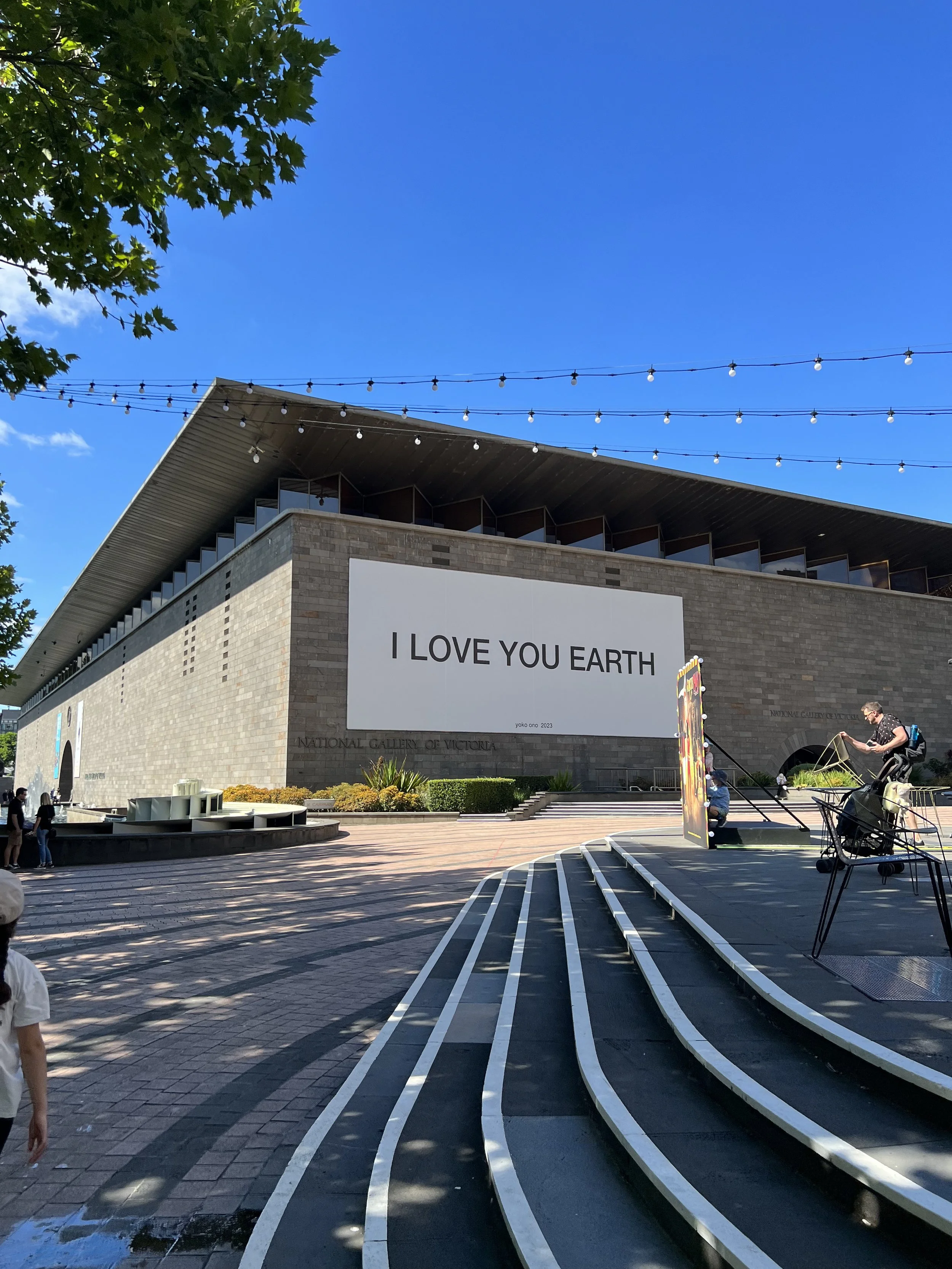
NGV’s building
Why the NGV is a must-visit
The NGV’s collection comprises over 75,000 works. But if you want to understand what makes Australian art unique, skip the European wing first and head straight for the Indigenous collection.
The way the gallery integrates Indigenous art – as a living, breathing dialogue with contemporary design – is simply brilliant. In fact, the NGV’s commitment to this heritage is so strong that the entire ground floor of the Ian Potter Centre: NGV Australia on Federation Square has been permanently dedicated to it.
These works need to be interpreted. Every canvas, every woven piece and every sculpture is imbued with specific stories, tribal traditions and geographical symbolism, reflecting an unbroken 65,000-year history of creativity. This is arguably the most comprehensive and eye-opening part of the entire museum.
The power of the collection is demonstrated by the authentic masterpieces on display. The exhibition flows seamlessly from these ancestral roots to bold, ultra-contemporary expressions – everything is represented here, from traditional bark paintings from Arnhem Land to innovative contemporary installations created from rusted steel, neon lights and photographs.

A fragment of artwork by Lehuauakea, a Native Hawaiian artist. It is part of the their permanent collection of NGV, and also was presented within 2024 NGV Triennial.
🗺️ Your NGV Route Planner
Select your travel style to get a personalized floor-by-floor gallery roadmap:

The NGV Triennial: global art immersion
If your visit aligns with the NGV Triennial, it is an absolute must-see. This massive event completely transforms the gallery space. During the Triennal all types of art come together: contemporary art, experimental design, and large-scale architectural installations from global artists.
Having traveled from Europe specifically during these exhibition windows twice in recent years, I can confirm that The NGV’s Triennal is entirely worth the long-haul journey.
Kids and activities
I, as a mom, always pay attention to creative experiences the museums offer to kids. The NGV warmly welcomes children and families, too. The gallery is very kid-friendly, and it offers many options for kids:
participatory exhibitions & events
self-guided activity sheets
online activities & games to continue learning at home
The self-guided adventure trail
Before you hit the main galleries, head straight to the information desk to collect physical, self-guided activity sheets. These are beautifully designed booklets, that willhelp you and your kids to learn the colletion more efficiently.
They help kids to look closer at artworks, count hidden symbols in 19th-century landscapes, and decipher the rich stories behind First Nations artwork.
(Tip: Keep the learning going after your flight home — the NGV website hosts an extensive ecosystem of free digital games, artist-led video tutorials, and downloadable crafting templates that mirror the physical collection).

International Collection 19th – 20th Century, level 2. My most favourite level.
General info
Navigating one of the largest public art institutions in the Southern Hemisphere requires a small amount of tactical planning. To make your exploration smooth, efficient, and thoroughly rewarding, we have organized everything you need to know about costs, queues, and hidden perks before you step through the gallery doors.
Best used for: Exploring without time constraints or mandatory pre-bookings. You can simply walk straight past the main entrance ticket booth and dive into the four immense levels of heritage.
The downside: Access does not include entry into the heavily guarded, rotating international blockbuster showcases or major temporary architecture commissions.
Best used for: Seeing rare, curated retrospectives brought to Australia from prestigious worldwide collections like the Van Gogh Museum or modern international sensations.
The downside: Tickets are strictly timed and sell out rapidly during holiday windows. Queues at the physical box office can take upwards of 45 minutes on busy afternoons.
Best used for: Gaining expert contextual knowledge and compelling structural backstories directly from passionate, highly trained local volunteer guides without paying for digital audio guides.
The downside: Group sizes can vary depending on daytime museum foot traffic, and tours follow a set path rather than pausing for personal itinerary deviations.
💡 Insider visitor tips
Beat the peak midday rush
The NGV is open daily from 10:00 AM to 5:00 PM, but crowds crest significantly around lunchtime. For a quiet, deeply personal viewing experience, aim to cross the threshold at exactly 10:00 AM on a Monday, Tuesday, or Wednesday morning.
The guide tour meeting spot
You do not need to register online or book tickets in advance for the volunteer-led highlight tours. Simply make your way to the primary information desk in the central ground floor foyer a few minutes prior to the scheduled hour and look for the daily tour signboards.
Secure premium tickets online
If you plan on exploring a ticketed exhibition, always secure your digital passes directly from the official NGV website days before your visit. This allows you to skip the sprawling box-office lines entirely and head straight into the Level 1 scanning gates.
