
Montevideo’s art gem: why you should add MNAV to your Uruguay itinerary
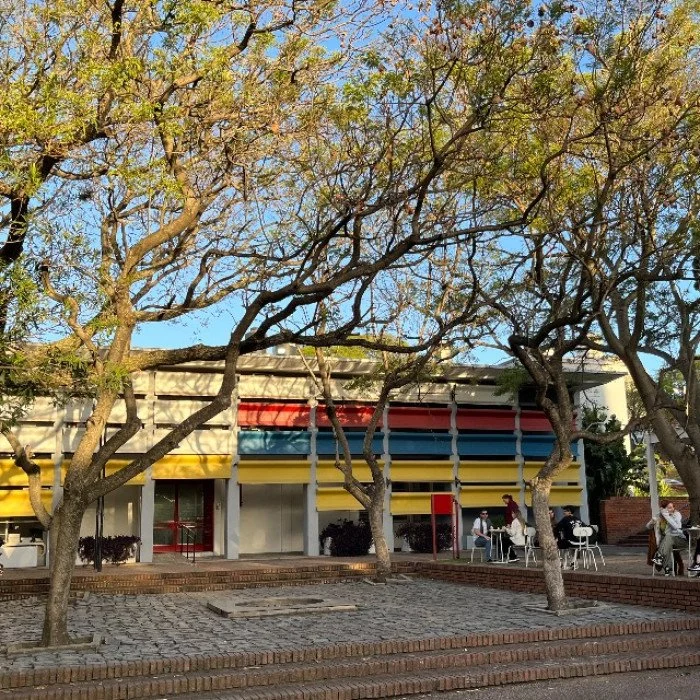
When travelers plan a trip to Montevideo, their itineraries usually include a stroll along the Rambla promenade, a visit to the old town of Ciudad Vieja, and a steak dinner at the Mercado del Puerto. However, hidden in the heart of the city, in the picturesque Parque del Rodó, is a place that reveals the true soul of the country: the National Museum of Visual Arts (MNAV). It is Uruguay’s premier art venue and one of the most welcoming and photogenic museums in South America.
Table of Contents
Highlights: what to see inside
The Museo Nacional de Artes Visuales houses a massive permanent collection of over 7,000 national artworks tracing the evolution of Uruguayan art from 1865 to 1950. The galleries prominently feature world-renowned Uruguayan masters like Joaquín Torres-García, Rafael Barradas, Pedro Figari, and Juan Manuel Blanes.
You can explore a wide variety of mediums here, including historic oil paintings, modern sculptures, graphic prints, and experimental textile art. The museum also proudly preserves a dedicated space for pioneering female modernists, most notably the Planismo movement works of Petrona Viera. Apart from its national art, MNAV regularly rotates high-profile international loans. So quite often they bring works by global icons like Picasso and Klee to the public. You can see their exhibitions for free.
Gems of the collection: 5 paintings worth taking a closer look at
Be sure to look for these key works in the galleries:
“The Voice of Uruguay” (Spanish: La paraguaya) by Juan Manuel Blanes, c. 1879
Despite its title, this is one of the main symbols of Uruguayan identity. The painting depicts a proud yet sorrowful woman standing in the middle of a war-ravaged field. Blanes brilliantly captured the resilience of the local people.
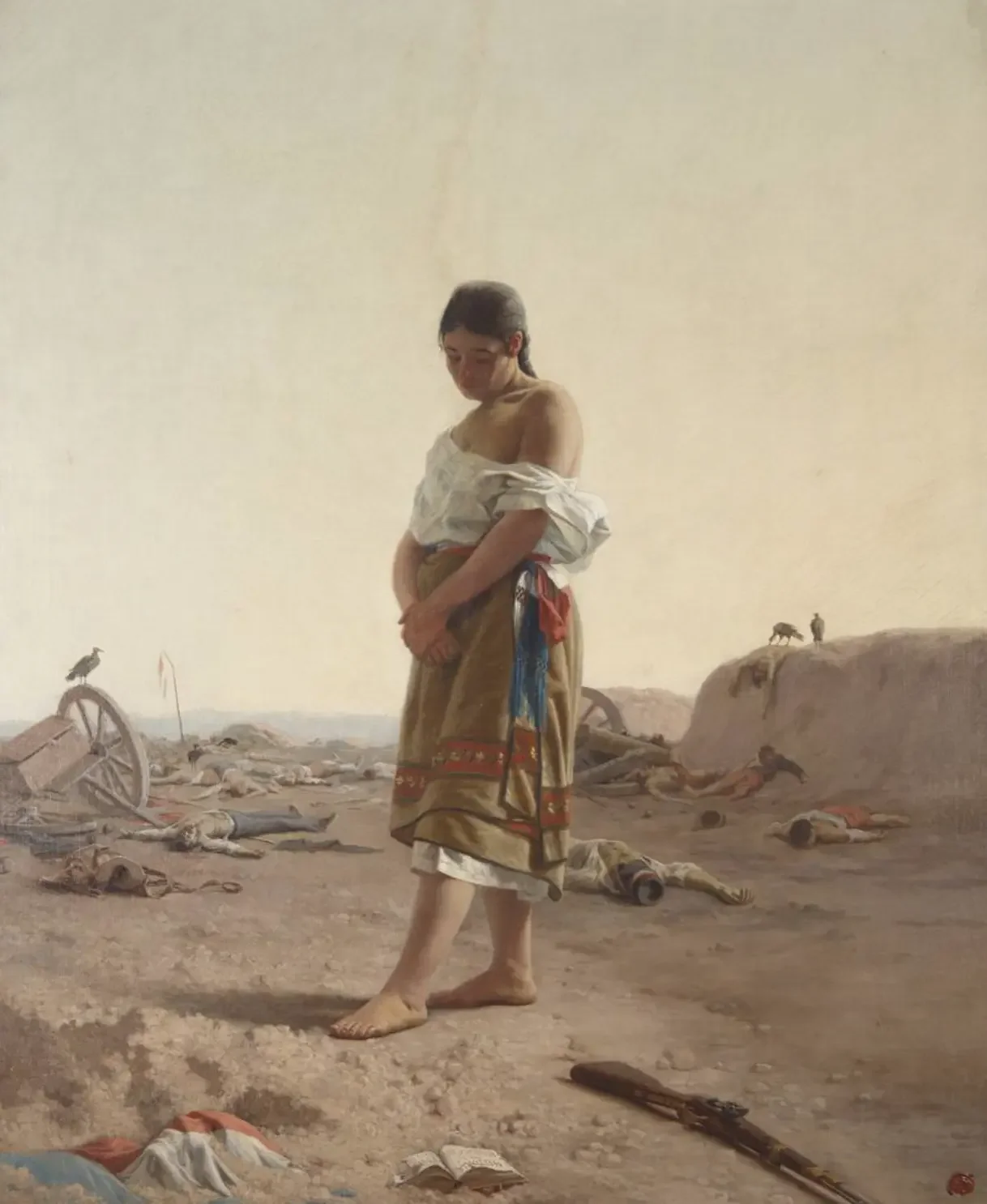
“The Voice of Uruguay” (Spanish: La paraguaya) by Juan Manuel Blanes, c.1879, oil on canvas
“Abstract Composition” by Joaquín Torres-García, 1935
The artist’s signature style is “constructive universalism”. The painting resembles a grid of pictograms: a sun, a person, a boat, and a clock. It represents the artist’s attempt to blend ancient Inca art with European modernism.
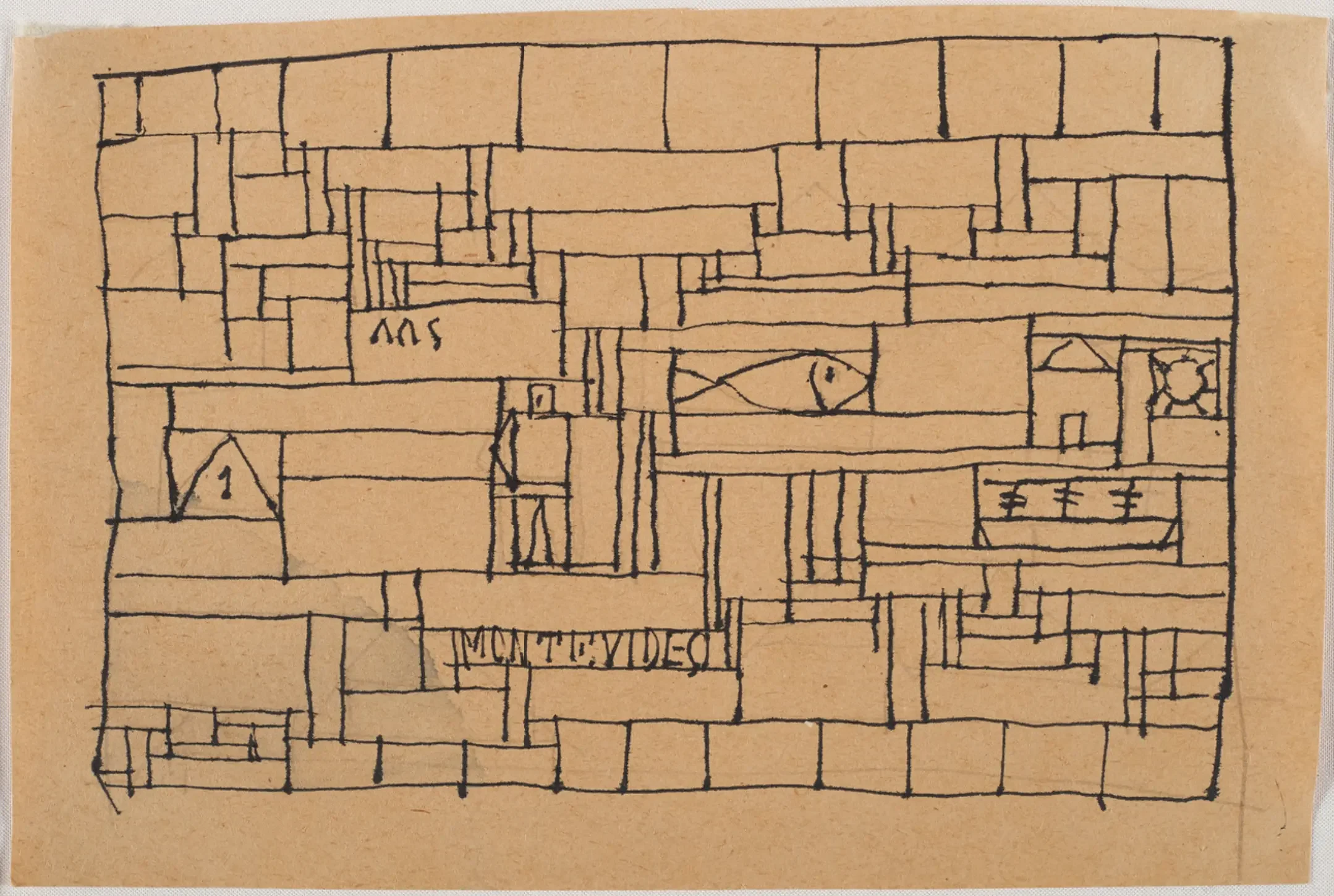
“Abstract Composition” by Joaquín Torres-García, ink on paper, 1935
“Candombe” by Pedro Figari, c.1925
Figari didn’t begin painting until he was 60, but he went on to become a cult figure.
Although Pedro Figari is known worldwide as a “painter of candombes”, he actually painted a wide variety of other subjects, such as rural scenes, Creole dances, circus characters, bullfights, and Venetian landscapes, to name just a few. But the fact is that no one before him (and perhaps no one since) has been able to convey with such conviction through their brushstrokes the bodies in motion, the colorful costumes, the general joy, and the profound wisdom that nourish this festival. For Candombe is festive music and dance, but also a sacred rite and a form of liberation.
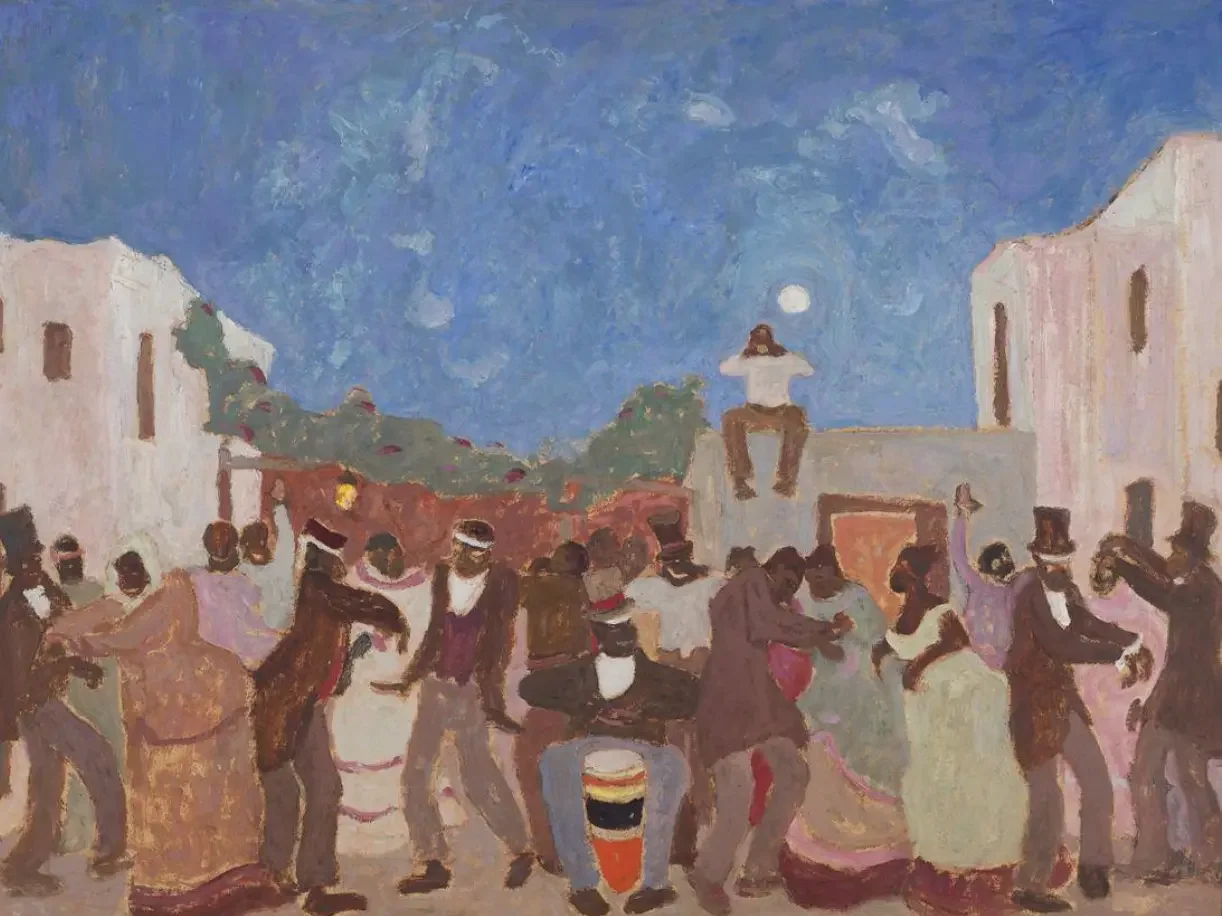
“Candombe” by Pedro Figari, oil on cardboard, c.1925
“Portrait of Mr. Juan Carlos Muñoz, 1899” by Carlos Federico Saez
Saez lived only 22 years, but managed to revolutionize Uruguayan painting. This portrait is striking for its bold, expressive technique, which was decades ahead of its time.
Young Sáez drew inspiration from the vigor of a local movement such as that of the so-called Macchiaioli, one of the most prestigious trends in the late 19th century. Sáez expresses this influence through his handling of the brushstroke, as seen in the portrait of Juan Carlos Muñoz. The brushstroke in Sáez’s work creates the composition. The piece, like almost all his portraits, is defined by rapid brushstrokes, giving the impression of an action painting. As far as is known, the artist did not paint on commission. Most of his portraits feature casual subjects, family and friends. The artist deepened his friendship with the Muñoz family in Italy, especially with Juan Carlos, a companion on bohemian outings.
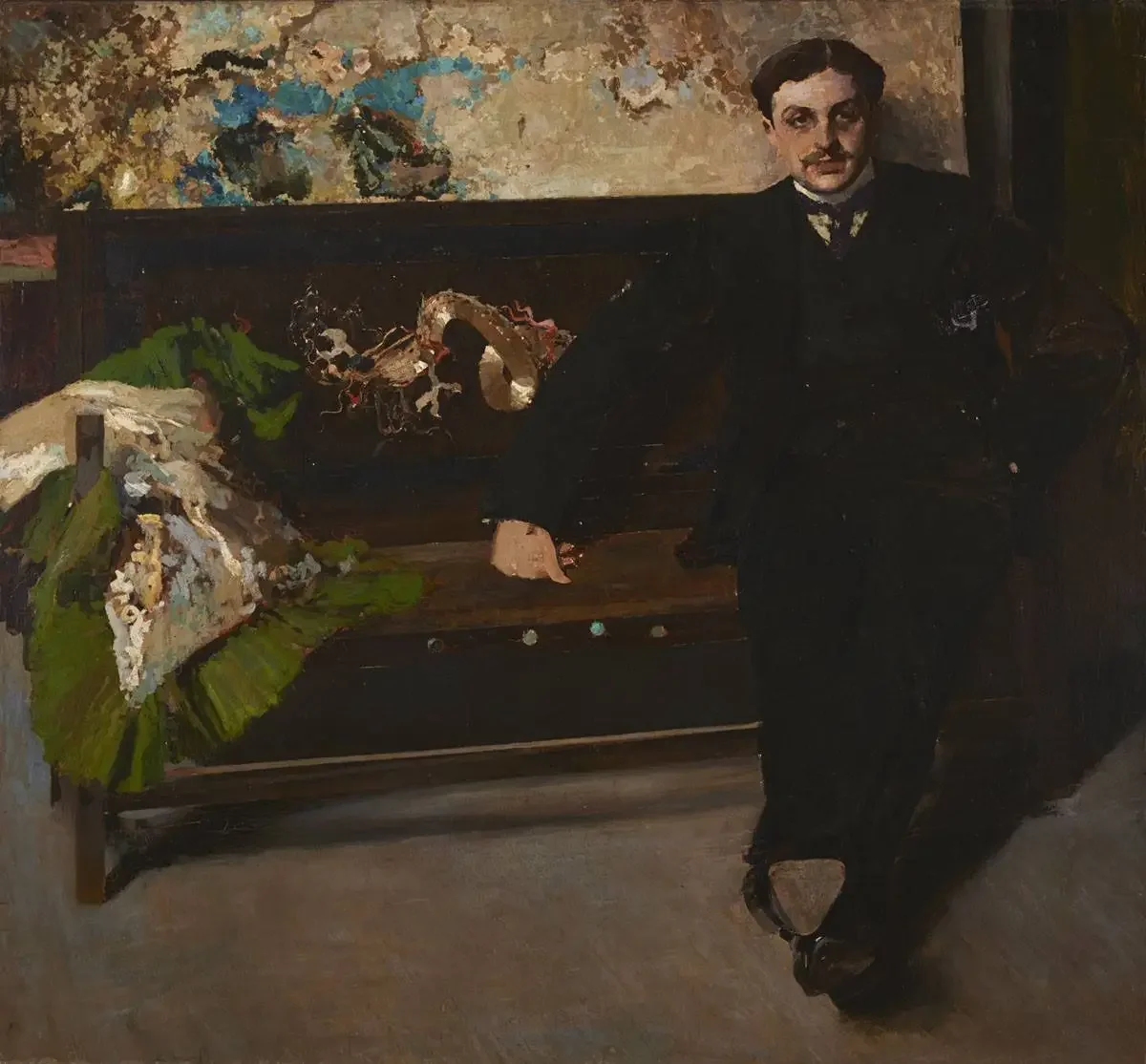
“Portrait of Mr. Juan Carlos Muñoz, 1899” by Carlos Federico Saez, oil on canvas
“Composición” by María Freire
A powerful example of Uruguayan concrete art and geometric abstraction from the mid-20th century. Freire uses sharp lines and vivid contrasts to explore pure form and space without reference to reality.
Maria Freire is a key figure in the geometric abstract art movement in Uruguay. She formed a duo with her partner José Pedro Costigliolo (1902–1985), and together they led one of the most significant movements, which began in the 1950s and continued to evolve in various forms over time through the work of diverse national artists.
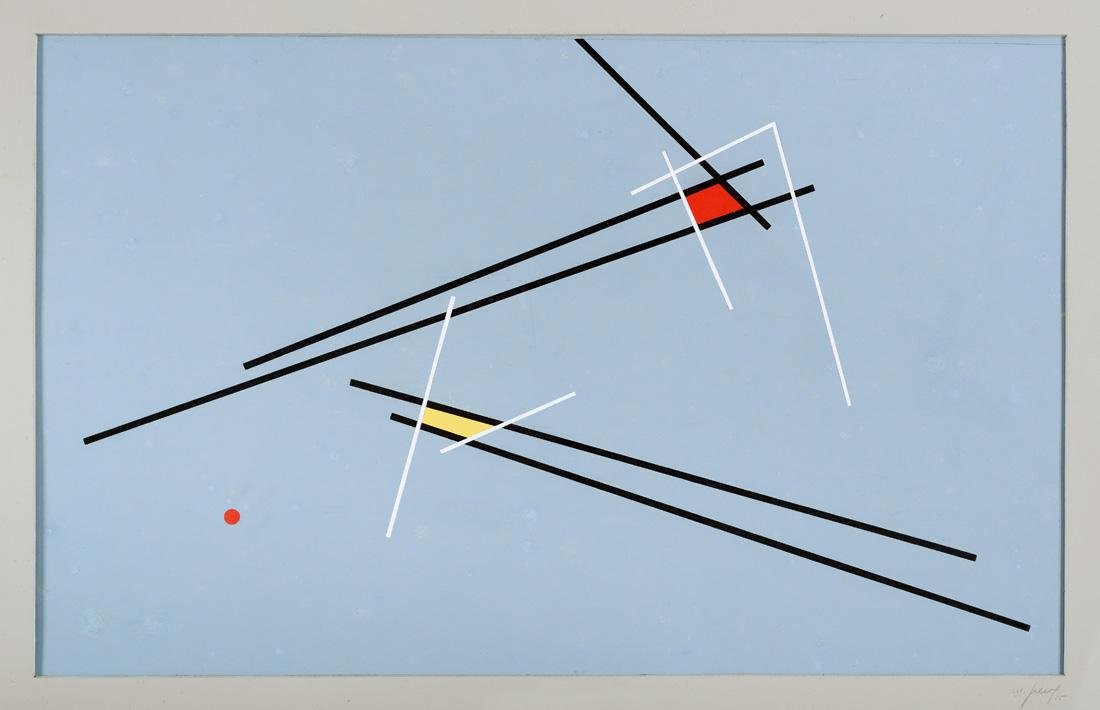
“Composition” by María Freire, gouache on cardstock, 1955
Architecture and a secret garden for bloggers
The museum building is a fine example of minimalist modernism, but its main highlight is hidden within the grounds. Be sure to check out the courtyard. The sculpture garden here was designed by the famous Uruguayan landscape architect Leandro Silva Delgado.
It’s the perfect oasis of tranquility, with well-manicured paths, conceptual sculptures, and a stylish café where you can enjoy a cup of espresso or traditional Uruguayan mate after touring the exhibition. It’s a great spot for taking minimalist photos for social media.
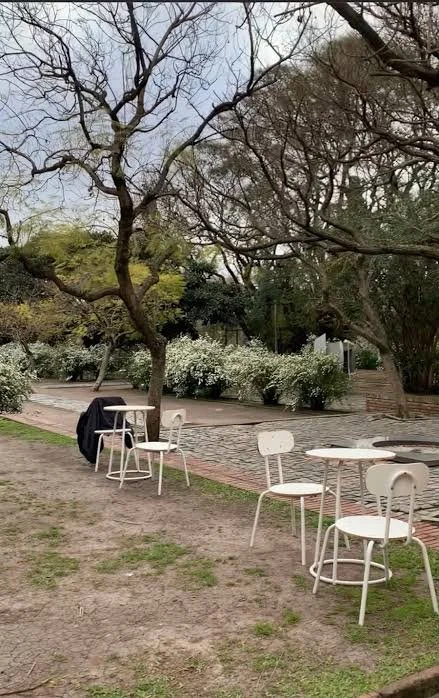
MNAV garden
Travel Tips: insider information
✔ The golden hour for photography and the best time to visit the museum is around 4:30–5:00 p.m. At this time, the sun begins to set, and the panoramic windows of the modernist building let in the perfect soft light for interior shots.
✔ Plan your visit for the afternoon. The museum opens late (at 1:00 PM). Spend two hours enjoying the art, then relax in the sculpture garden, and afterward, walk to the nearby Ramírez Beach (Playa Ramírez) to watch Montevideo’s most beautiful sunset right on the waterfront. ✔ The museum doesn’t always have brochures in English or Russian. Download the official MNAV app in advance or use the QR codes on the walls, this will give you access to detailed exhibition descriptions on your smartphone.
MNAV vs. Museo Blanes: which one to choose if you have to choose?
If you have limited time in Montevideo, you might find yourself choosing between the city’s two most famous museums: the National Museum of Visual Arts (MNAV) and Museo Blanes (The Museum of Fine Arts).
Both are great, both celebrate Uruguayan art, but they offer completely different vibes. See for yourself which one is more interesting for you/
Choose MNAV if you want scale, diversity, and an open-minded modern atmosphere. MNAV offers a chronological narrative through the country’s entire artistic evolution — from historic 19th-century oil paintings to experimental 21st-century contemporary installations. Plus, its charming sculpture garden is a cool spot to just sit and absorb the local rhythm.
Choose Museo Blanes if you prefer a romantic, old-world aesthetic. It is housed in a stunning late 19th-century palladian villa in the Prado neighborhood, which is already intriguing to see with your own eyes. Museo Blanes holds artworks of Juan Manuel Blanes (Uruguay’s most celebrated national painter) and Pedro Figari. As a bonus, it features an incredibly peaceful, authentic Japanese Garden right behind the villa.
So which one? If you are an absolute art history buff like me, with an afternoon to spare, visit both. But if you want a comprehensive, vibrant, and smoothly accessible dive into the true soul of Uruguayan visual arts, MNAV should definitely take priority on your Uruguay itinerary.
General info
Address. Av. Tomás Giribaldi 2283, 11300 Montevideo, Uruguay (inside Rodo Park, a 10-minute walk from Ramírez Beach).
Admission is completely free for the permanent exhibition (tickets may be required for certain unique traveling exhibitions).
Hours. Tuesday–Sunday: 1:00 PM–8:00 PM. Closed on Mondays.
Amenities. Free Wi-Fi is available on the premises, there is a coat check, and the space is fully accessible for visitors with limited mobility.
