
7 Berlin Wall murals — and how to actually look at them
In 2026, the world marked the 37th anniversary of the fall of the Berlin Wall – it was torn down on 9 November 1989. The East Side Gallery – a 1,316-metre-long section of the surviving Berlin Wall – has become the world’s largest open-air gallery. From time to time, reports appear in the media that the city authorities are discussing the demolition of the remaining sections.
Moreover, despite mass protests, a small section of the Wall was already demolished in 2013 to make way for the construction of luxury apartments. In 2017, the East Side Gallery was once again under threat: plans were drawn up to build a luxury hotel on the site. Civil society activists launched a new wave of protests and a petition drive.
Table of Contents
Today, the Berlin Wall is a historical landmark attracting millions of tourists every year. It is both a symbol of freedom and a reminder to humanity that such events must never be repeated. Let’s go through some of the most famous and significant murals at the East Side Gallery. These murals are real street art. Don’t confuse it with vandalistic tagging that overwhelmed Europe.
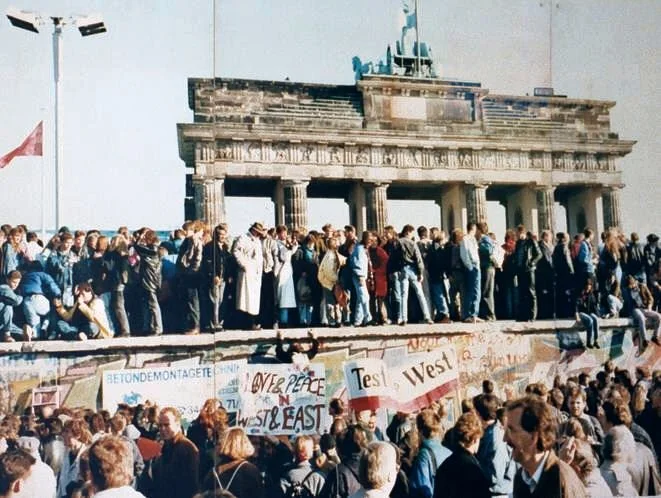
Photo: Wikipedia
My God, help me survive this deadly love
Official Title: Mein Gott, hilf mir, diese tödliche Liebe zu überleben
Artist: Dmitry Vrubel
The Story: This is perhaps the most famous piece of graffiti on the Wall. It is also better known worldwide as the ‘Brotherly Kiss’ or ‘The Fraternal Kiss’. In 1990, Dmitry Vrubel painted this graffiti based on a photograph taken in 1971 by Barbara Klemm during a meeting between the leader of the GDR, Erich Honecker, and the General Secretary of the Central Committee of the Communist Party of the Soviet Union, Leonid Brezhnev, at Sheremetyevo Airport.
In 2009, this graffiti, like others, was painted over as part of the restoration of the Wall, after which Dmitry Vrubel restored his legendary mural in just three weeks.
How to actually look at it: Don’t just focus on the lips. Look closely at the eyes of the two leaders. Vrubel painted them with a distinct glaze that makes them look almost dead, empty, and hollow. It’s a brilliant critique of the cold political machinery behind the embrace.
Art Traveler Tip: Because this is the most famous spot on the wall, it is heavily protected by a metal fence to prevent vandalism and people sticking chewing gum on it. To capture a photo without the annoying glare or shadows from the fence, you’ll want to get there before 8:30 AM.
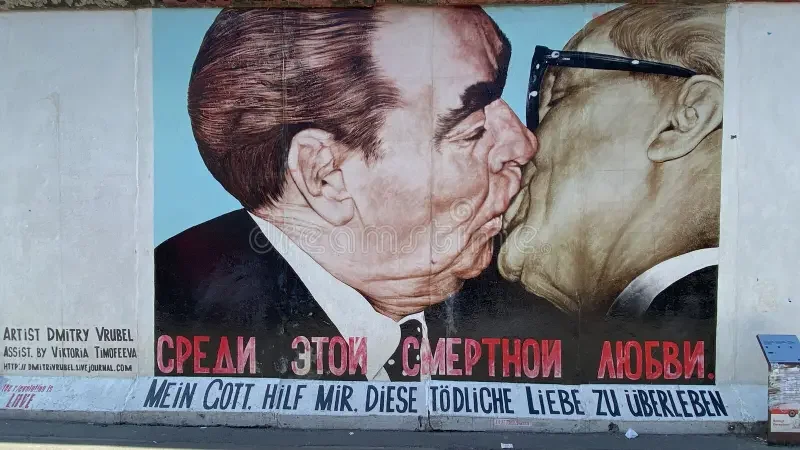
Dmitry Vrubel, My God, help me survive this deadly love
2. Cartoon heads
Official Title: Hommage aux Jeunes Générations
Artist: Thierry Noir
The Story: Thierry Noir was the first person to start painting on the Wall, back in 1984. At the time, he was putting his freedom and even his life at serious risk by painting on it, as the border area belonged to the GDR, and any image on the wall was considered illegal. He had to paint quickly, before the border patrol spotted him.
Over the course of five years, he managed to cover 5 km of the Wall with his drawings, marking the beginning of a creative process that continues to this day. Noir’s work is characterised by his signature style – bright, ‘cartoonish’ colours and characters. Thierry draws inspiration for his pop art-style works from the art of Pablo Picasso and Joan Miró, Jean-Michel Basquiat and Keith Haring.
How to actually look at it: Look at the sheer speed of the lines. Noir’s style was born out of survival. He had to paint incredibly fast to avoid being caught by East German border guards. Notice how the shapes are continuous and simple; that's the visual language of a street artist working against a ticking clock.
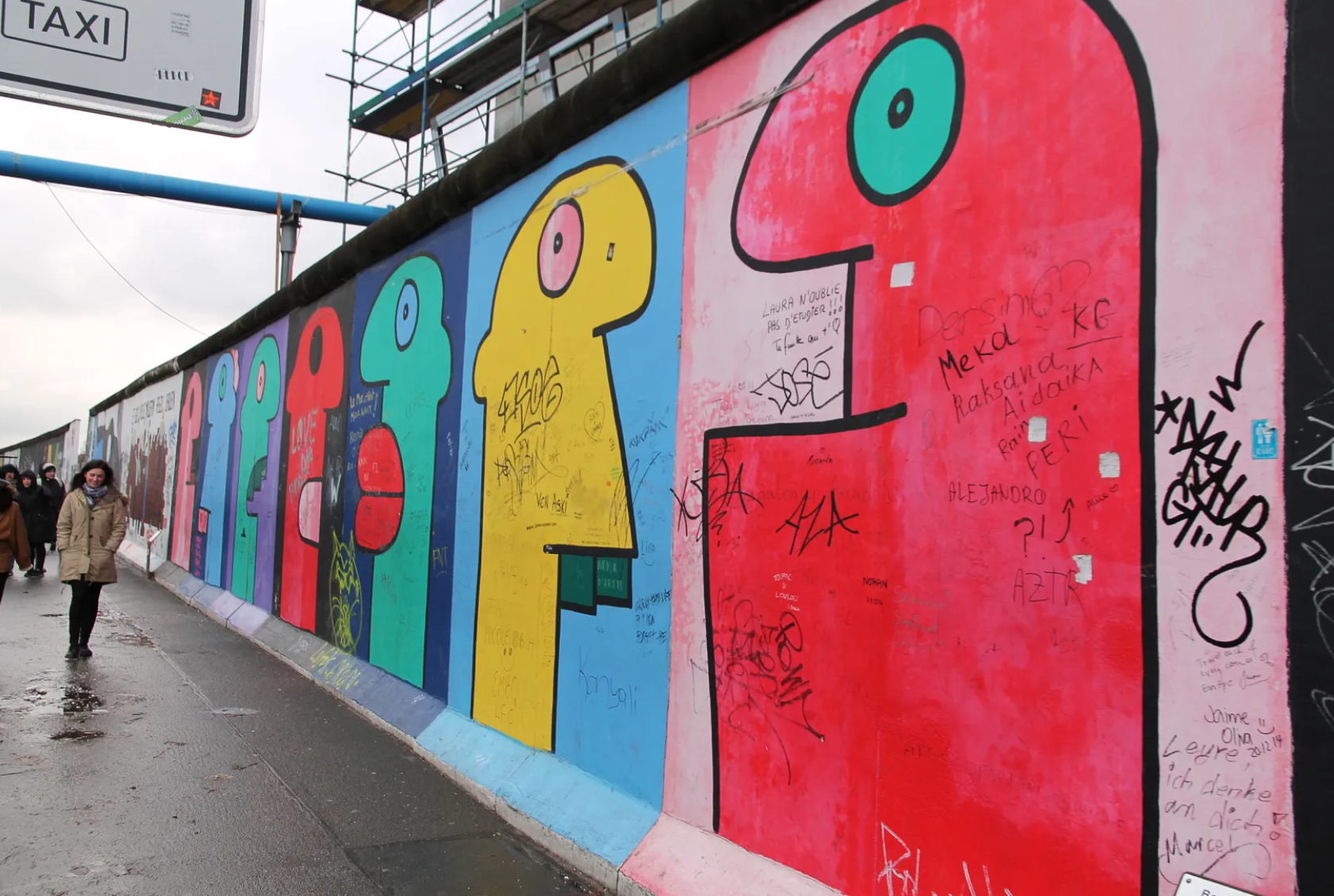
Thierry Noir, Hommage aux Jeunes Générations
3. Trabant breaking through the Wall
Official Title: Test the Rest
Artist: Birgit Kinder
The Story: This graffiti depicts the iconic Trabant car literally breaking through the Berlin Wall. The Trabant is a well-known symbol of communist East Germany, as it was the most affordable and popular car among its citizens.
This work is a striking reference to the past: hundreds of Germans attempted to climb over the barbed wire or break a hole through the wall to get from East Germany to West Berlin – to their family members, their loved ones and their relatives. Most of the defectors were killed by police bullets.
How to actually look at it: Look at the painted cracks in the concrete. Kinder rendered the jagged, explosive shattering of the wall with incredible texture. It perfectly mimics the real-world frenzy of November 9, 1989, when citizens took hammers and chisels to the concrete.
Art Traveler Tip: Check out the license plate on the car: NOV 9-89. It is a direct nod to the exact calendar date the border gates finally opened.
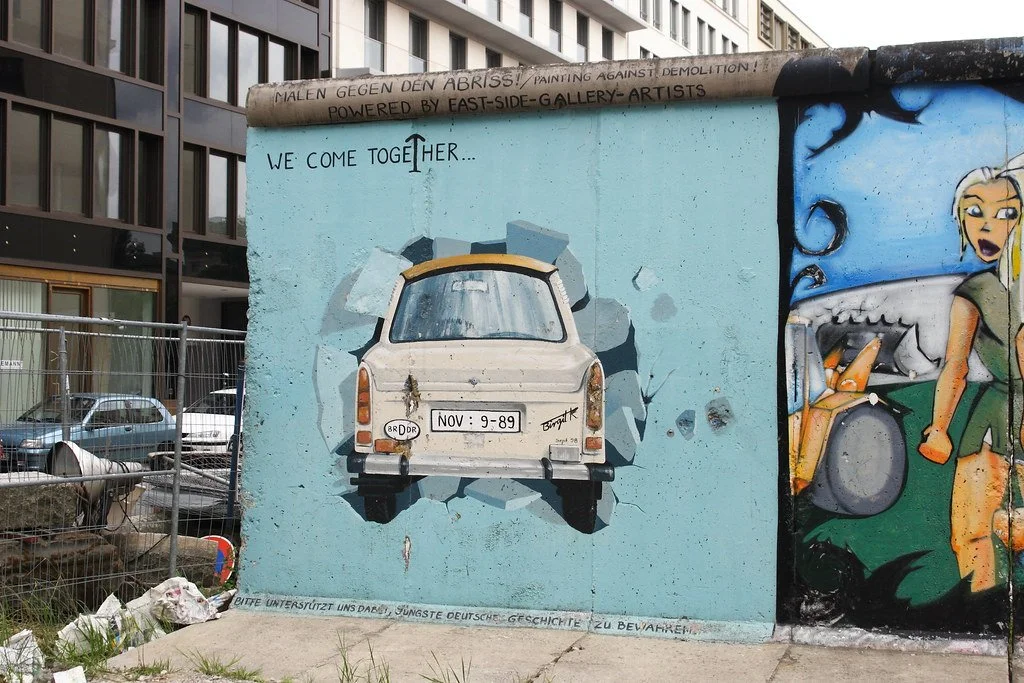
Birgit Kinder, Trabant breaking through the Wall
4. It happened in November
Official Title: Es geschah im November
Artist: Kani Alavi
The Story: The Berlin-based artist Kani Alavi painted this graffiti in 1990. The abstract painting, rendered in cool tones, depicts Checkpoint Charlie on the day the Wall fell – 9 November 1989.
In this work, Kani Alavi depicts the people of East Germany ‘floating’ across the checkpoint into the West. Look closely at their faces. We see a range of emotions that, taken together, capture the mixture of confusion, excitement, joy, trepidation and the sense of long-awaited freedom that people felt on that day.
How to actually look at it: Step back a bit and look at the emotional gradient of the faces. The faces are a raw, blurred mix of total shock, disbelief, and sheer exhaustion. It captures the exact, overwhelming psychological reality of that night, people were completely stunned.
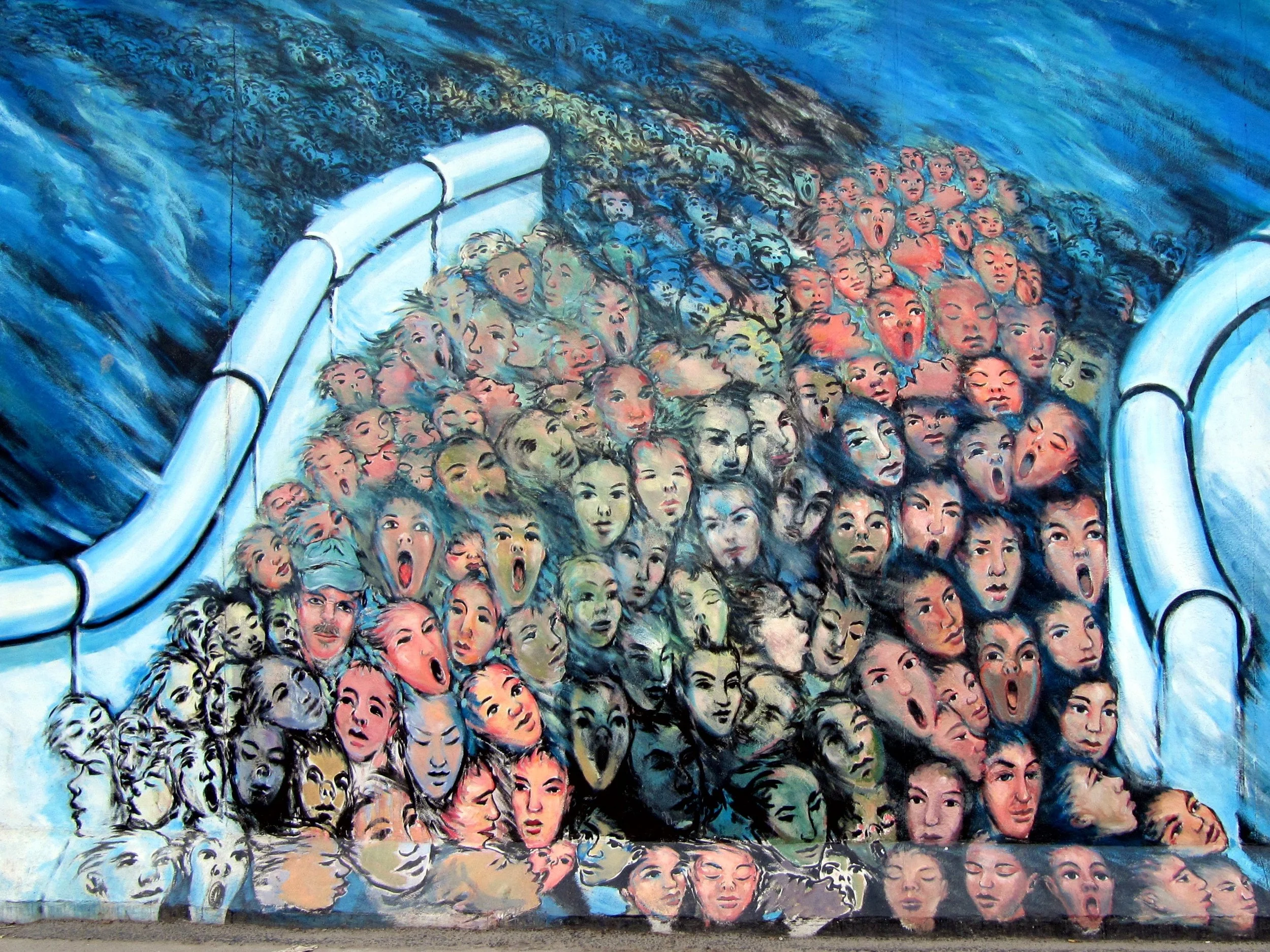
Kani Alavi, It happened in November
5. A diagonal solution to the problem
Official Title: Diagonale Lösung des Problems
Artist: Mikhail Serebryakov
The Story: In his work entitled ‘A Diagonal Solution to the Problem’, Mikhail Serebryakov depicts a thumb held in place by a chain to keep it in an upright position. This forcibly raised ‘thumb up’ is a metaphor for a society living under the pressure of the East German government, which tried by any means to preserve communist views and ideals in the country.
How to actually look at it: Look at the tension in the chain. It is the physical strain of forced optimism. This artwork is a metaphor for life under strict state censorship. The East German government demanded total compliance and public enthusiasm for communist ideals, and this piece shows exactly how that “positivity” was manufactured, by force.
Art Traveler Tip: This is one of the best examples of pure political satire on the wall. When standing in front of it, consider the irony of how we use the “thumbs up” today on social media versus the heavy, state-mandated illusion of happiness Serebryakov was mocking in 1990.
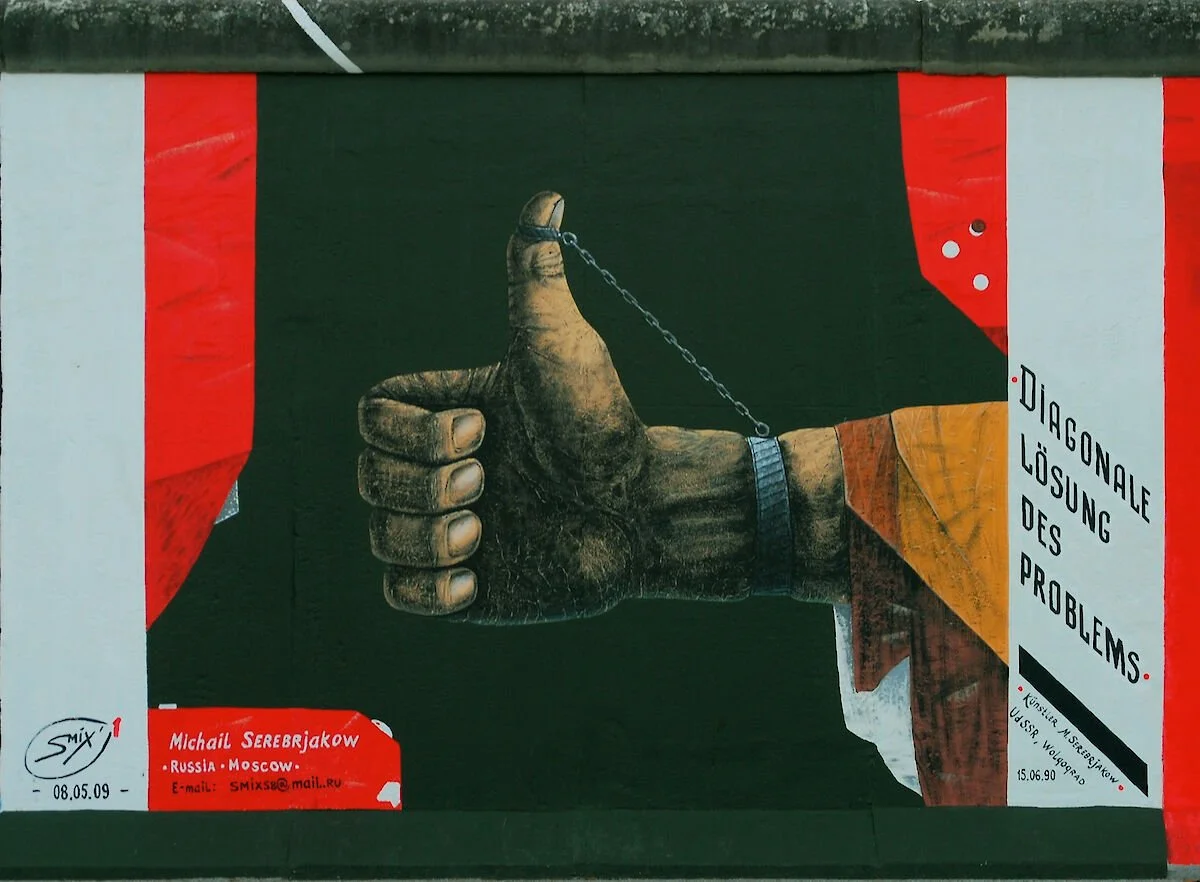
Mikhail Serebryakov, A diagonal solution to the problem
6. The Wall Jumper
Official Title: Der Mauerspringer
Artist: Gabriel Heimler
The Story: People who attempted to climb over the Wall from West Berlin to East Berlin were known as ‘wall jumpers’. GDR citizens who decided to cross the Berlin Wall without authorisation were usually referred to as fugitives. Gabriel Heimler depicted precisely a ‘wall jumper’, rather than a fugitive from the GDR to the FRG.
In this context, this ‘West German’ leap to the East is interpreted not merely as a symbol of the quest for freedom, but also, more broadly, as a symbol of protest by an individual — a victim of political actions — against the division of the country and its people into two parts.
How to actually look at it: Notice the sheer physics of the jump and the bold, graphic colors. Heimler purposefully depicts a “wall jumper” (Mauerspringer) rather than a traditional East German fugitive. Look at the determination in the figure’s posture. It represents the frustration of everyday people who were completely fed up with politicians treating their city and families like a giant chess board.
Art Traveler Tip: This piece is a great reminder that the Wall was a tragedy for people on both sides. It honors the individuals who chose to break the law not just to run away, but to actively protest the forced division of their country. Take a moment to appreciate and honor these people.
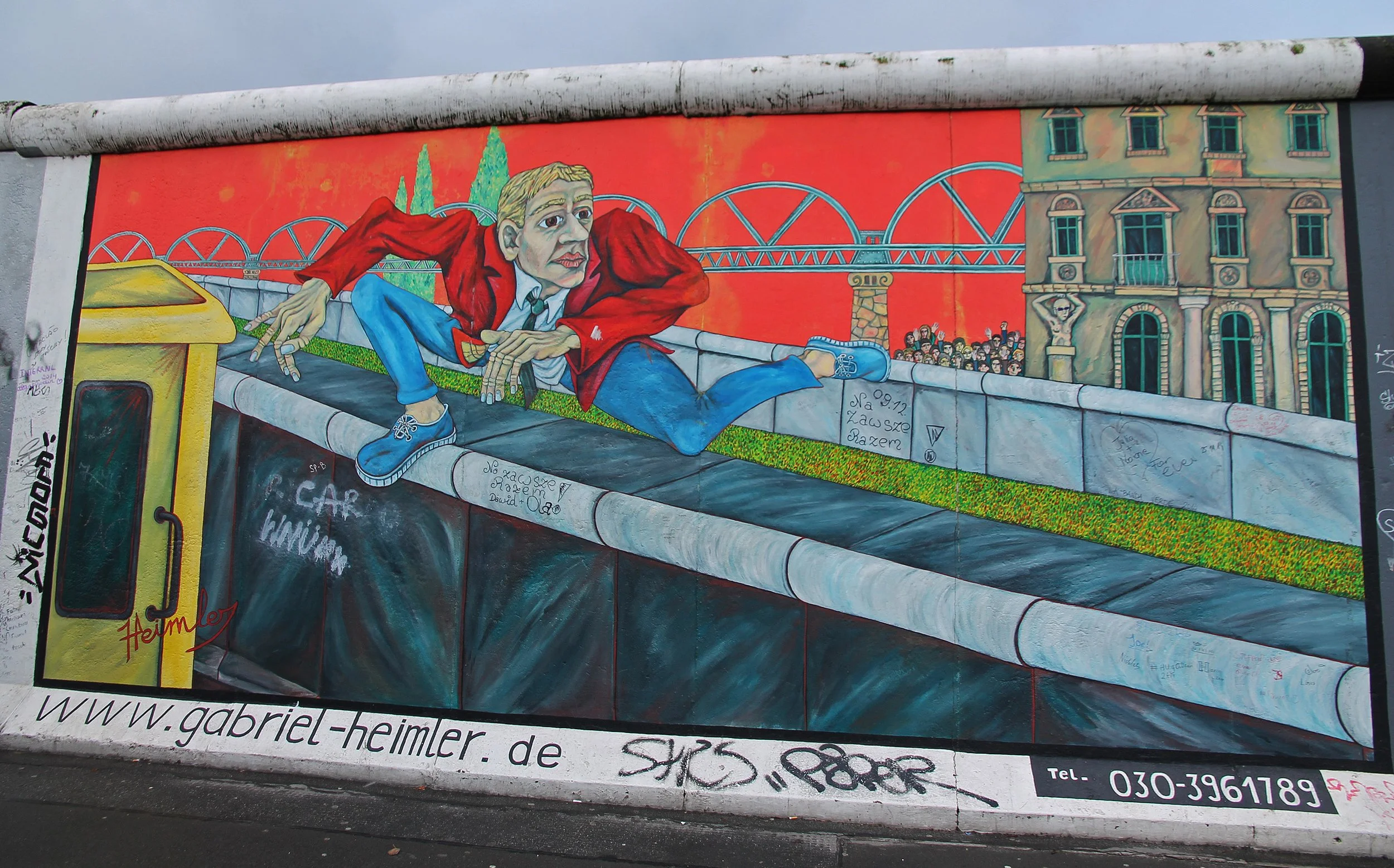
Gabriel Heimler, The Wall Jumper
7. Thank you, Andrei Sakharov
Official Title: Danke, Andrej Sacharow
Artists: Dmitry Vrubel and Victoria Timofeeva
The Story: This simple yet beautiful portrait on the Berlin Wall was made in honour of Andrei Sakharov, the Soviet nuclear physicist, dissident and human rights activist. Sakharov, an outstanding scientist and champion of freedom and human rights, died in 1989, a few weeks after the Wall fell.
How to actually look at it: Look past the simplicity of the portrait and focus on the quiet dignity the artists gave him. While most of the wall is loud, chaotic, and filled with graffiti, this piece uses a muted, almost reverent color palette. The words “Danke, Andrej Sacharow” are painted simply and cleanly. It forces a moment of silence along a very loud stretch of concrete.
Art Traveler Tip: This mural is the perfect artistic bridge between science and humanity. Take a moment to appreciate the irony that the man who helped build one of the world's most destructive weapons is celebrated here on a wall of peace for his work as a human rights activist.
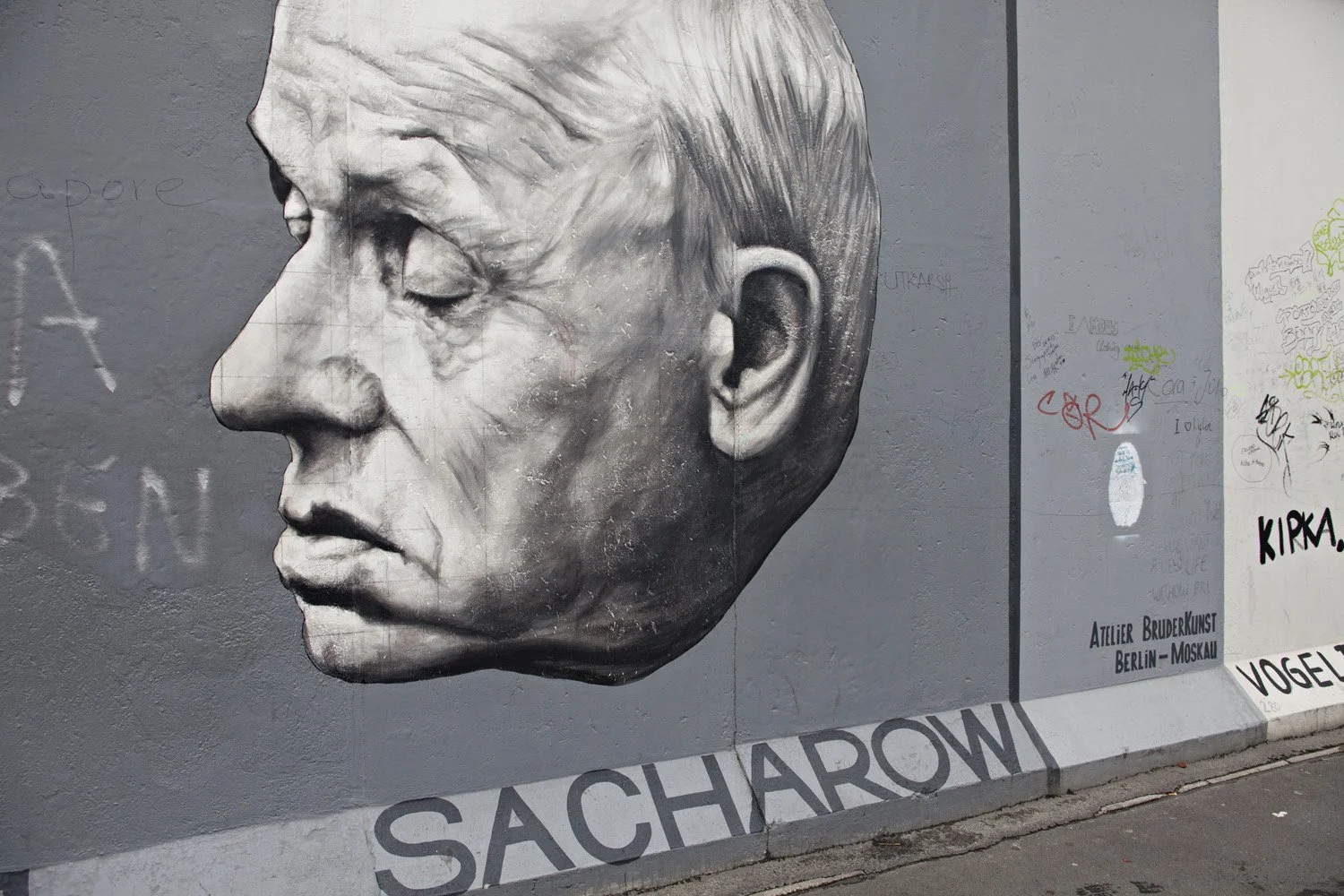
Dmitry Vrubel and Victoria Timofeeva, Thank you, Andrei Sakharov
How to get there and where to start
The Wall is long, exactly 1.3 kilometers. To avoid walking in circles and wasting your energy, use this exact route.
Take the U-Bahn or S-Bahn to Warschauer Straße station. Get out, grab a coffee, and walk toward the river and the Oberbaumbrücke bridge. Start your walk along the Wall from this end.
By starting at Warschauer Straße, you will finish your walk right at the Ostbahnhof train station. This is perfect because you can jump straight onto a train to the city center without having to turn around and walk the 1.3 km all the way back.
Remember that the Wall has two sides. The famous murals face the noisy main street. But if you walk behind the concrete barrier, you’ll find yourself on a grassy riverbank along the Spree. Go back there, as it has a great view and is filled with raw, constantly changing illegal street art painted by locals.
Final Thoughts
The art doesn’t have to live inside a quiet museum behind protective glass. Sometimes, the most powerful pieces are right on the sidewalk, on a crumbling piece of concrete in the middle of a noisy city.
Don’t rush past the murals to check them off your list. Look closely at the small details, like Thierry Noir’s fast brushstrokes or the hidden text on the Trabant’s license plate. Those little hidden details are the exact reason why art travel is worth it.
