Groeninge Museum Bruges: must-see masterpieces
I visited Bruges in the cold days of December. Even locals say that the town, normally super bustling in the summer, has a completely different character during winter time. The streets were literally dusted with frost and decorated with the glow of Christmas lights.
The crowds of tourists are not too big, and so the medieval town stands in its glory and Christmas delight. When in Bruges, visiting Groeninge Museum is a must. It is for lovers of Flemish art and for anyone who wants to know more about Belgium.
Table of Contents
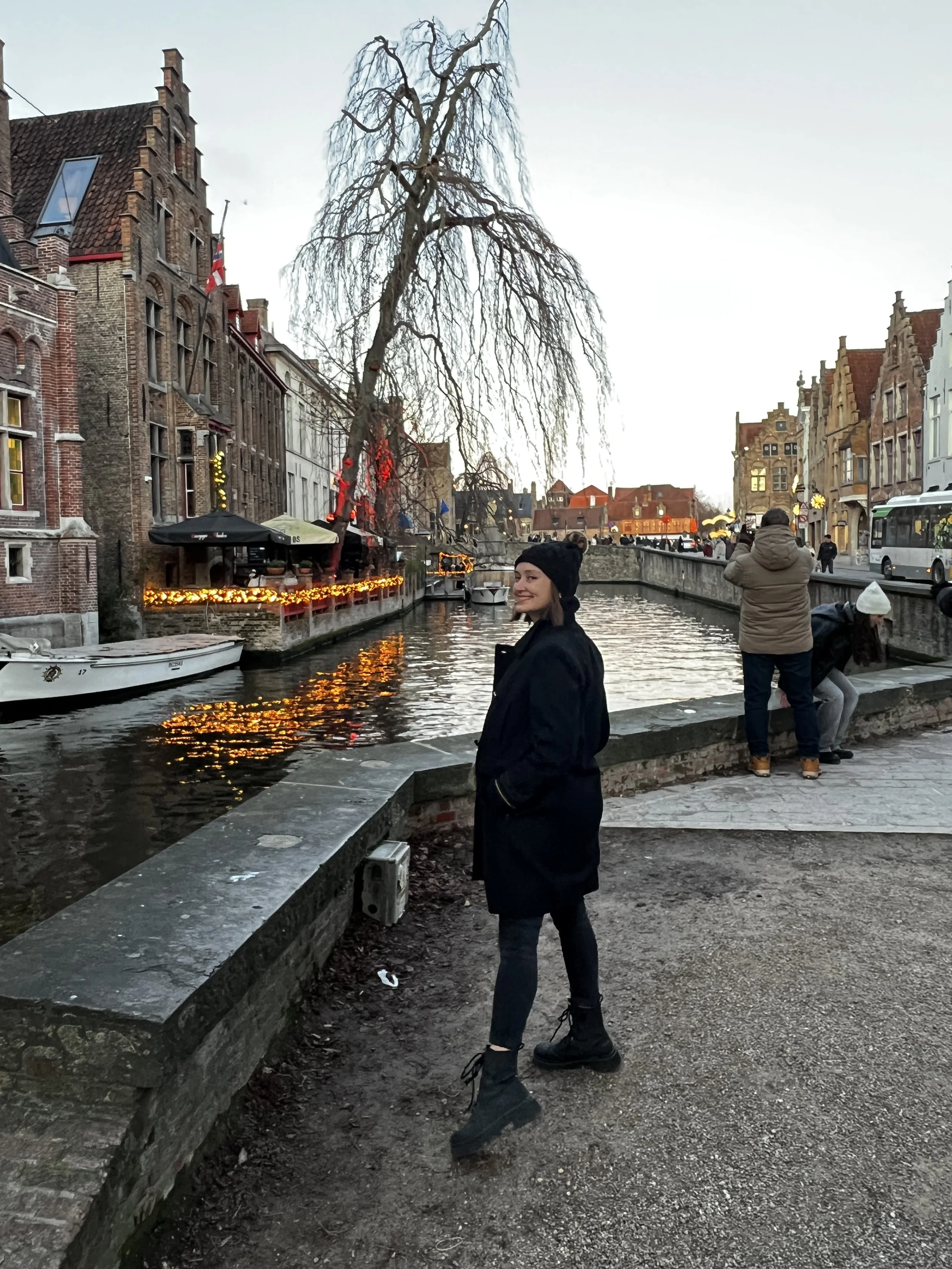
At the heart of this treasure box of Bruges there is Groeninge Museum with its Flemish masterpieces.
What is Groeninge Museum?
The Groeninge Museum was opened in 1929 and situated on the Dijver canal in the historic center of Bruges. The collection covers 6 centuries of visual art in the region. It is, without hyperbole, one of the finest museums in Belgium for understanding the evolution of Flemish painting.
Highlights you cannot miss: from Flemish primitives to expressionism
The collection is shown in logical and chronological order, so you can trace the evolution of art of the region perfectly. You move from the spiritual intensity of the 15th century to the chaotic energy of the Flemish Expressionists like Constant Permeke. The museum expertly curates this journey, showing how the Flemish eye for detail and raw emotion has persisted through the ages.
Here, you will see masters who defined our very perception of light and detail in art. You witness the birth of oil painting, the meticulous attention to texture, and the devotion that characterizes the work of artists like Jan van Eyck and Hans Memling.
For anyone visiting Bruges, the Groeninge Museum is a mandatory visit. But especially if, like me, you love Flemish art.
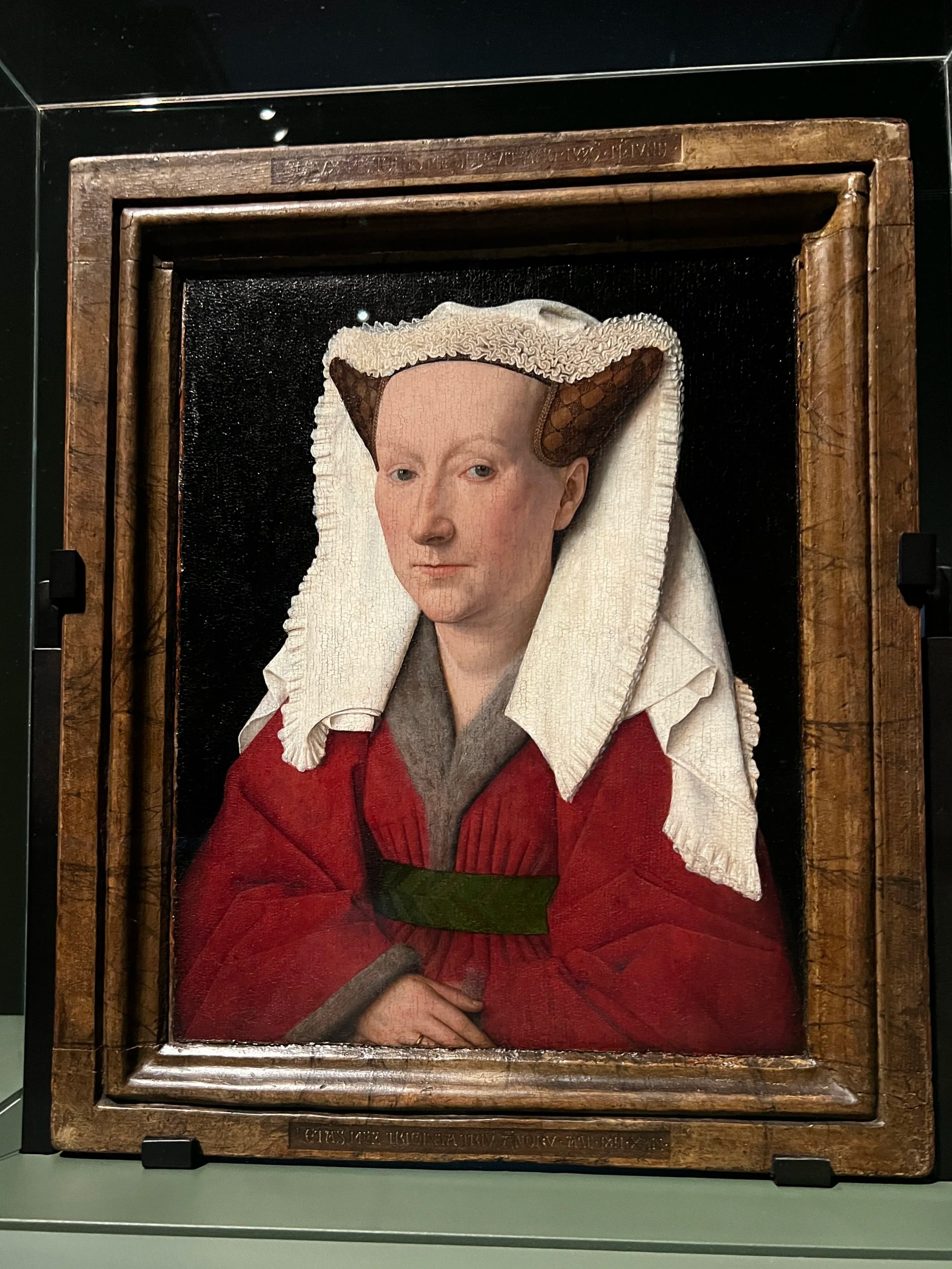
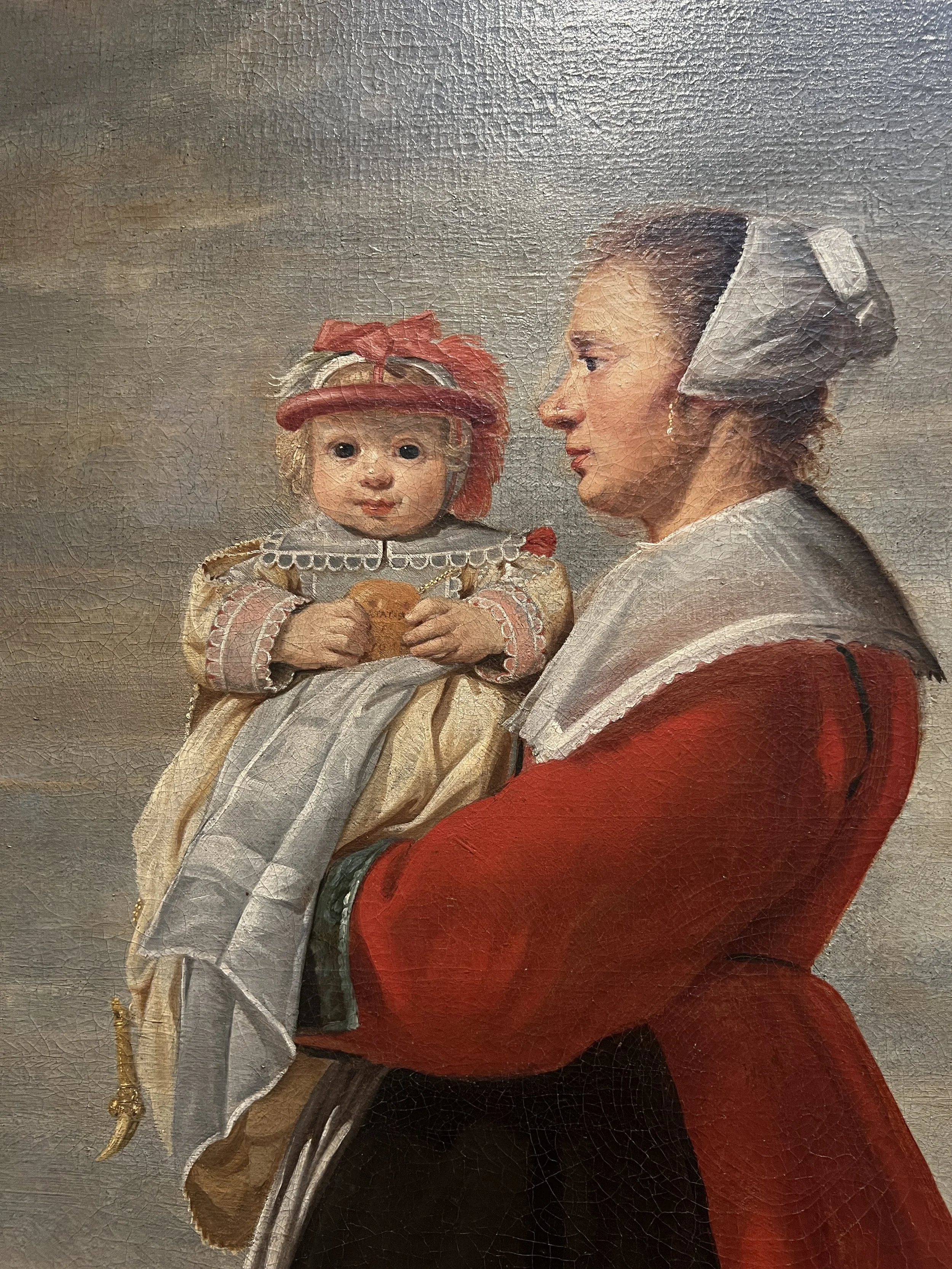
Jan van Eyck, Portrait of Margaret van Eyck, 1439, oil on wood
Portrait of Margaret van Eyck (1439)
Among the museum’s most captivating treasures is the intimate portrait Jan van Eyck painted of his wife, Margaret. It is one of the earliest recorded European portraits of an artist's spouse, capturing her with striking realism from her meticulously draped lace headscarf to her thoughtful, steady gaze.
Pay attention at the original frame, where Van Eyck painted his famous personal motto in Greek lettering: “Als ich kan” (As I can / As best I can). This inscription is a mix of immense pride in his craft and genuine humility. It adds a deeply personal, touching layer to the painting. It transforms a 15th-century masterpiece into a rare window into the artist’s private life.
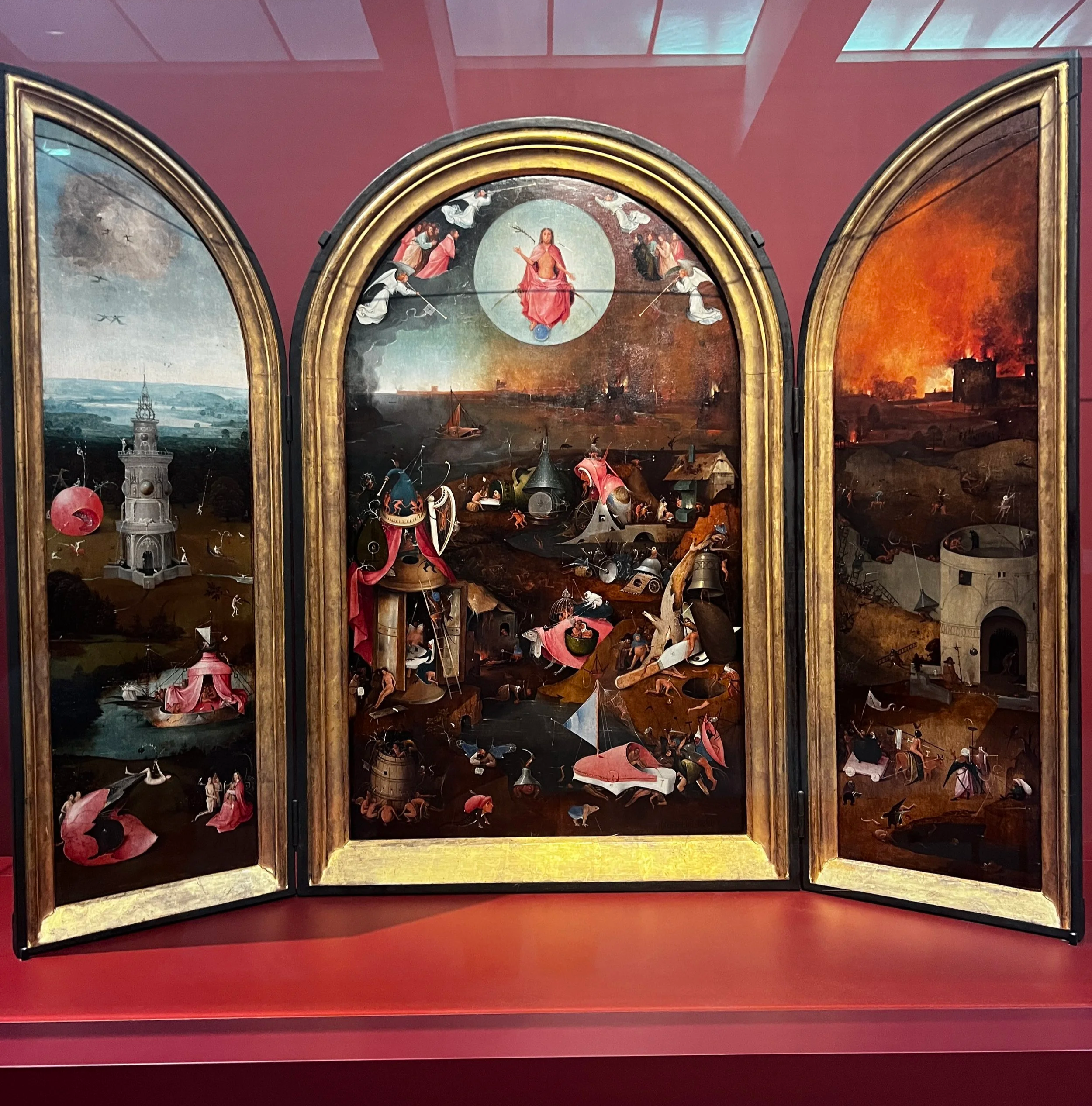
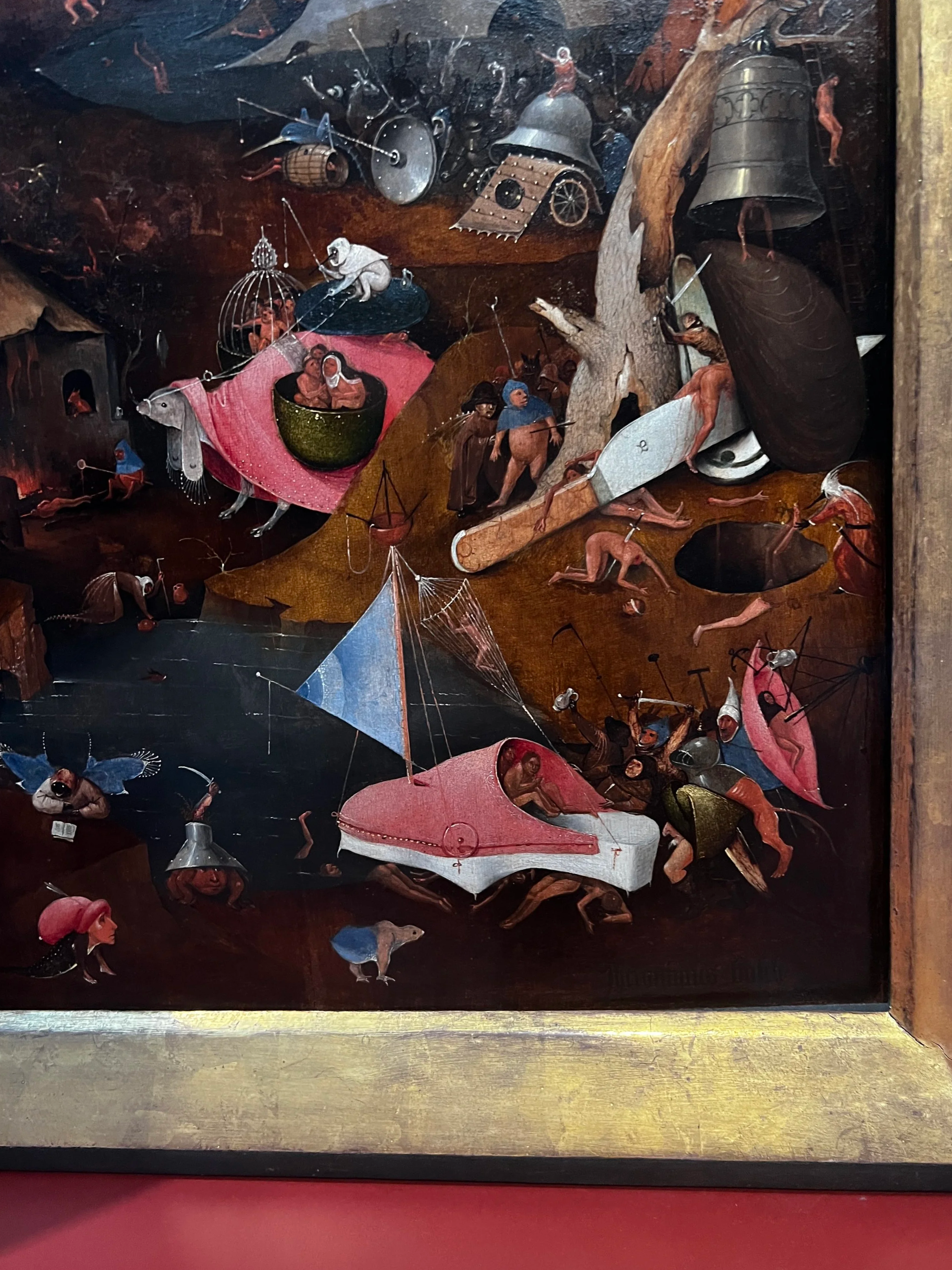
Hieronymus Bosch, The Last Judgement, between 1500 and 1505, oil on panel
Hieronymus Bosch’s The Last Judgment (c. 1482)
Stepping away from the calm, orderly world of Jan van Eyck, the Groeninge Museum throws you directly into the chaotic brilliance of Hieronymus Bosch. His triptych The Last Judgment provides a jaw-dropping contrast to Van Eyck’s serene, hyper-realistic portraits.
Where Van Eyck offers quiet perfection and mathematical balance, Bosch unleashes a terrifying, hallucinatory nightmare of hellfire, bizarre monsters, and apocalyptic dread. Seeing these two masters under the same roof beautifully demonstrates the museum’s immense stylistic breadth. You move seamlessly from the divine, peaceful order of 15th-century faith into the wildly inventive, untamed psychological depths of the human mind.
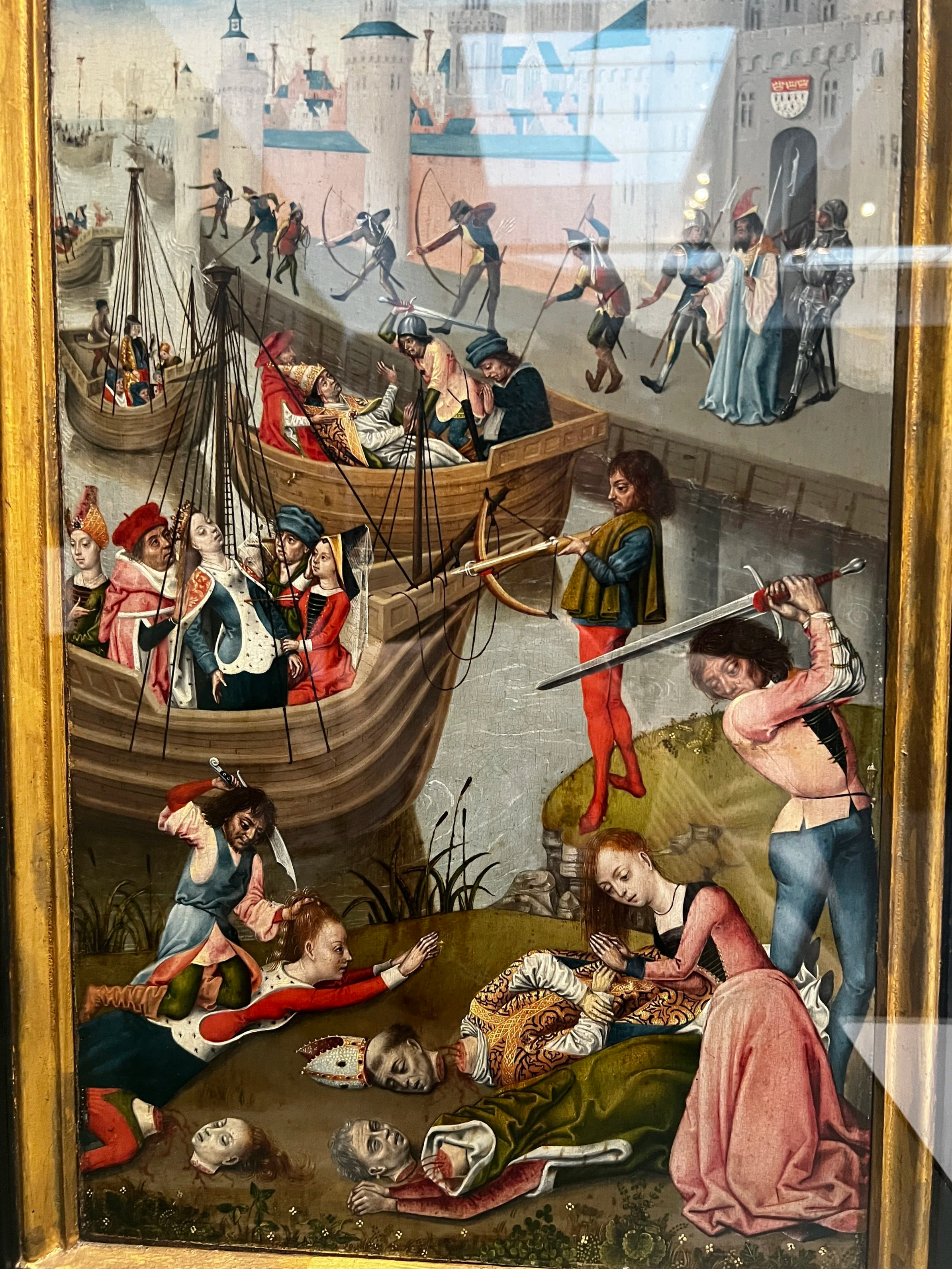
St. Ursula’s Scenes from the Life of St. Ursula (c. 1482)
St. Ursula’s Scenes from the Life of St. Ursula (c. 1482)
For a masterclass in late 15th-century visual storytelling, you cannot pass by the striking multi-panel altarpiece by the anonymous Master of the Saint Ursula Legend. Originally painted for a local convent of Augustinian nuns, this series acts like a vivid Renaissance comic strip, guiding you through the dramatic life, pious pilgrimage, and ultimate martyrdom of Saint Ursula alongside her 11,000 virgins.
Take a notice of how the artist anchored a legendary narrative in real-world Bruges. If you look closely at the backgrounds, you will spot familiar local landmarks, including the city’s famous Belfry tower. In a brilliant finale, the eighth panel completely breaks character, shifting away from the saint to give us an intimate, fascinating glimpse into the lives of the 15th-century nuns and their wealthy local benefactors kneeling at the altar.
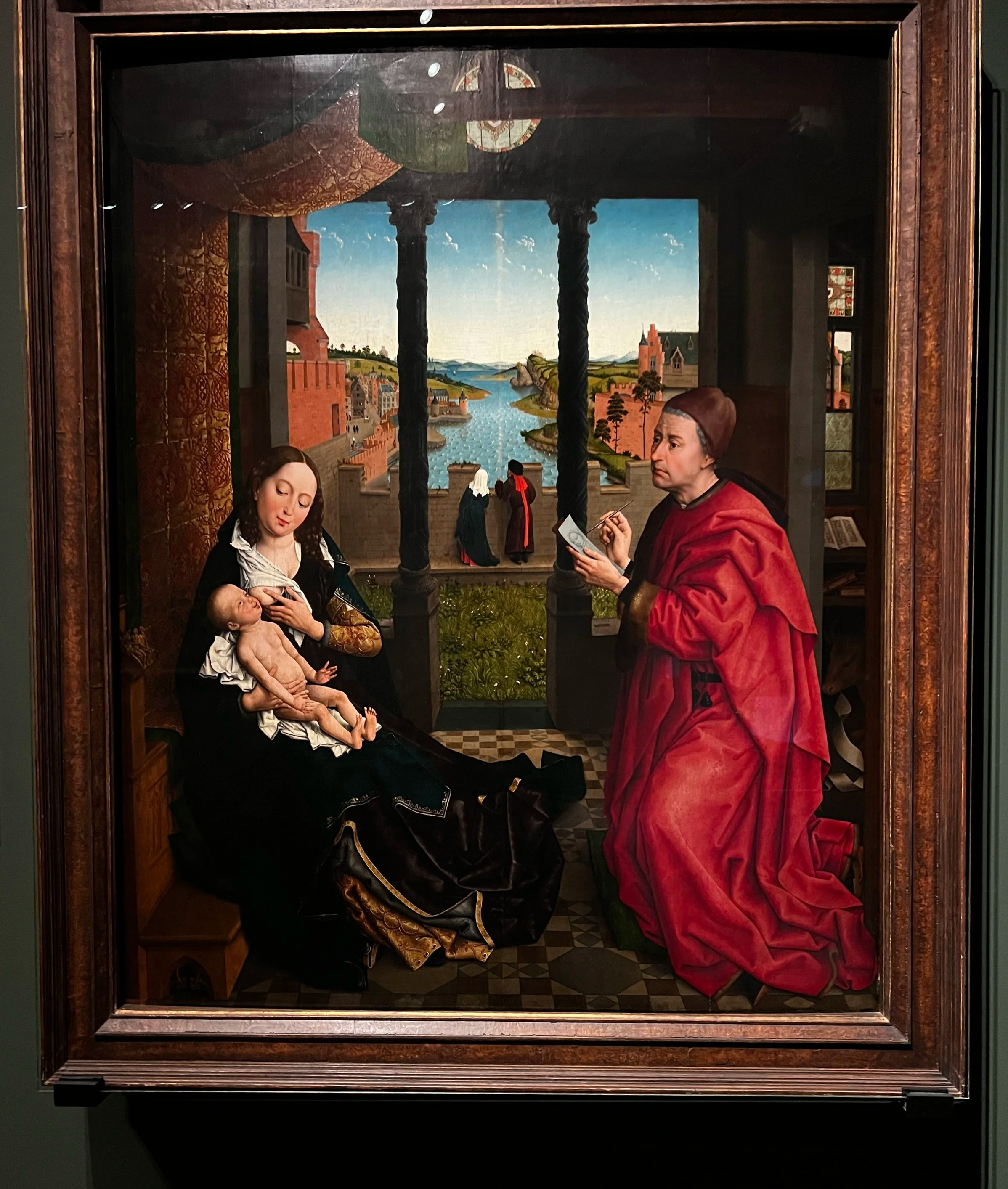
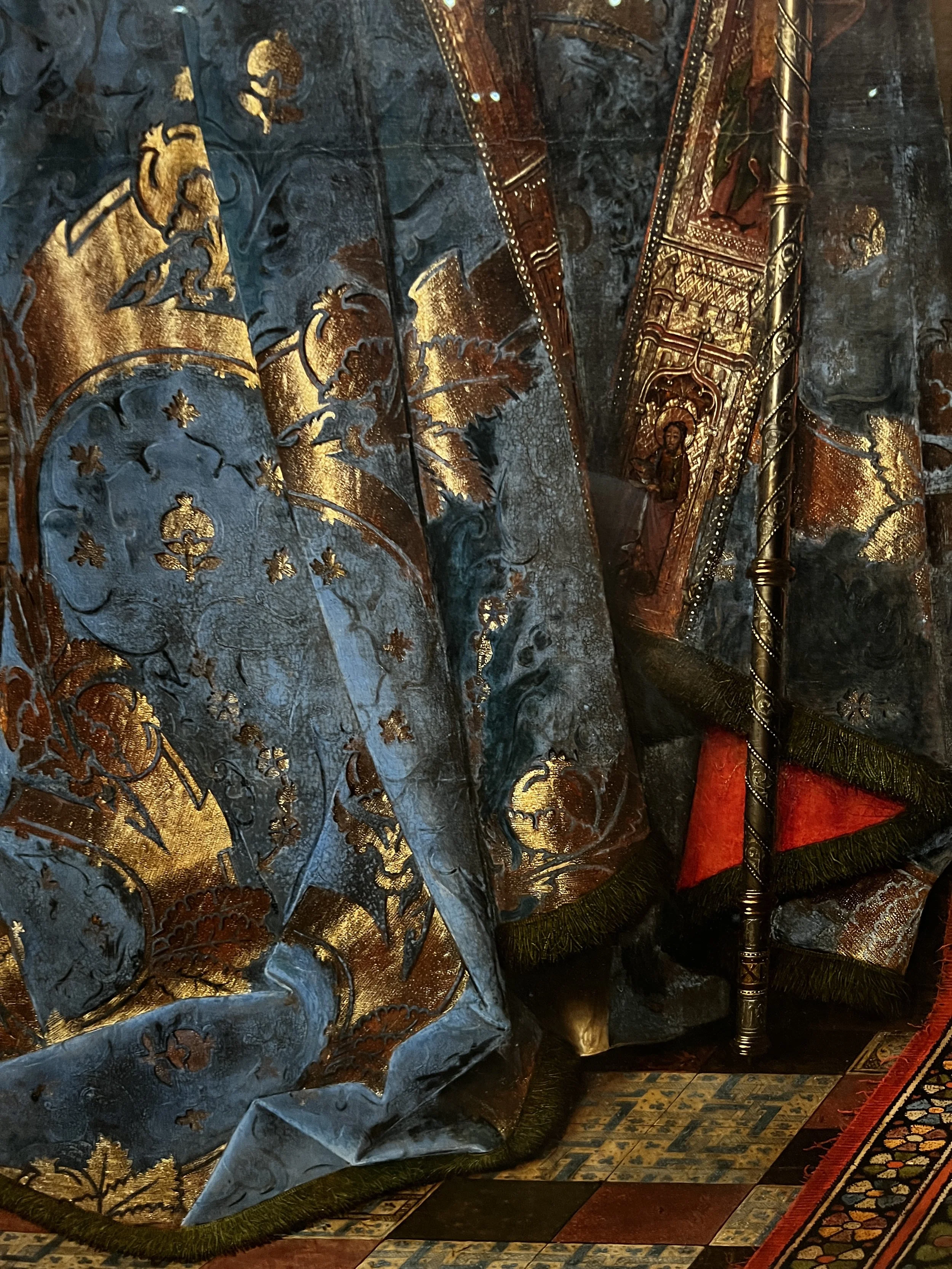
After Rogier van der Weyden, Saint Luke Drawing the Virgin (c. 1491–1510)
After Rogier van der Weyden, Saint Luke Drawing the Virgin (c. 1491–1510)
While the original masterpiece resides across the Atlantic in Boston, the Groeninge Museum displays an exceptional, incredibly well-preserved late 15th-century contemporary version. The scene serves as a beautiful tribute to the act of creation itself: Saint Luke (the patron saint of artists) kneels before the Virgin Mary, carefully sketching her likeness with a silverpoint stylus on a small wooden tablet.
Look at the sheer abundance of miniature detail. Behind the saint, you can spot his symbolic ox tucked quietly into a study, while the background opens up into a sweeping, bustling medieval cityscape bisected by a winding river. It provides a fascinating, self-reflective window into how 15th-century painters viewed their own craft as a divine, holy calling.
After Groeninge stepping back out onto the streets of Bruges is a unique experience. You see the city with new eyes.
So, if you are a true lover of Flemish art, I recommend to plan your trip for the winter. Come for the fairy-tale charm of the cozy town in Christmassy December, and don’t forget to see the pearls hanging quietly in the Groeninge.
General info
The Groeninge Museum is hidden away in a quiet courtyard at Dijver 12, 8000 Brugge, just a scenic walk past the famous Bonifacius Bridge. The museum changes its hours depending on the season, operating from 10:00 AM to 6:00 PM during the summer months (April 1 – November 2) and closing slightly earlier at 5:00 PM during the winter season.
Standard tickets cost €15.00, while discounted youth tickets are available for those aged 13 to 25. The entire museum is closed on Mondays, but it remains fully operational on Wednesdays throughout the summer tourist peak.