

Why you now have to pay to see the Trevi Fountain
One of the most heavily debated consequences of globalisation is the total commercialisation of everything within reach. Global tourism is growing every year. Obviously, governments are trying to profit from this. It’s weird how, when billions are at stake, officials and corporations somehow instantly forget their own lofty slogans about the environment, sustainable consumption, and the preservation of cultural heritage.
Table of Contents
The most striking example of this blind greed is Mount Everest. Year after year, the Nepalese government sells hundreds of expensive climbing permits (costing between $11,000 and $15,000 just for the permit). As a result, the great mountain has turned into the highest garbage dump on the planet, buried under tons of plastic, abandoned tents, and oxygen tanks.
Sadly, a similar tragic fate has now befallen the legendary Trevi Fountain in Rome. The Baroque masterpiece has turned into a tacky tourist attraction.
Baroque Aesthetics vs. Mass Chaos
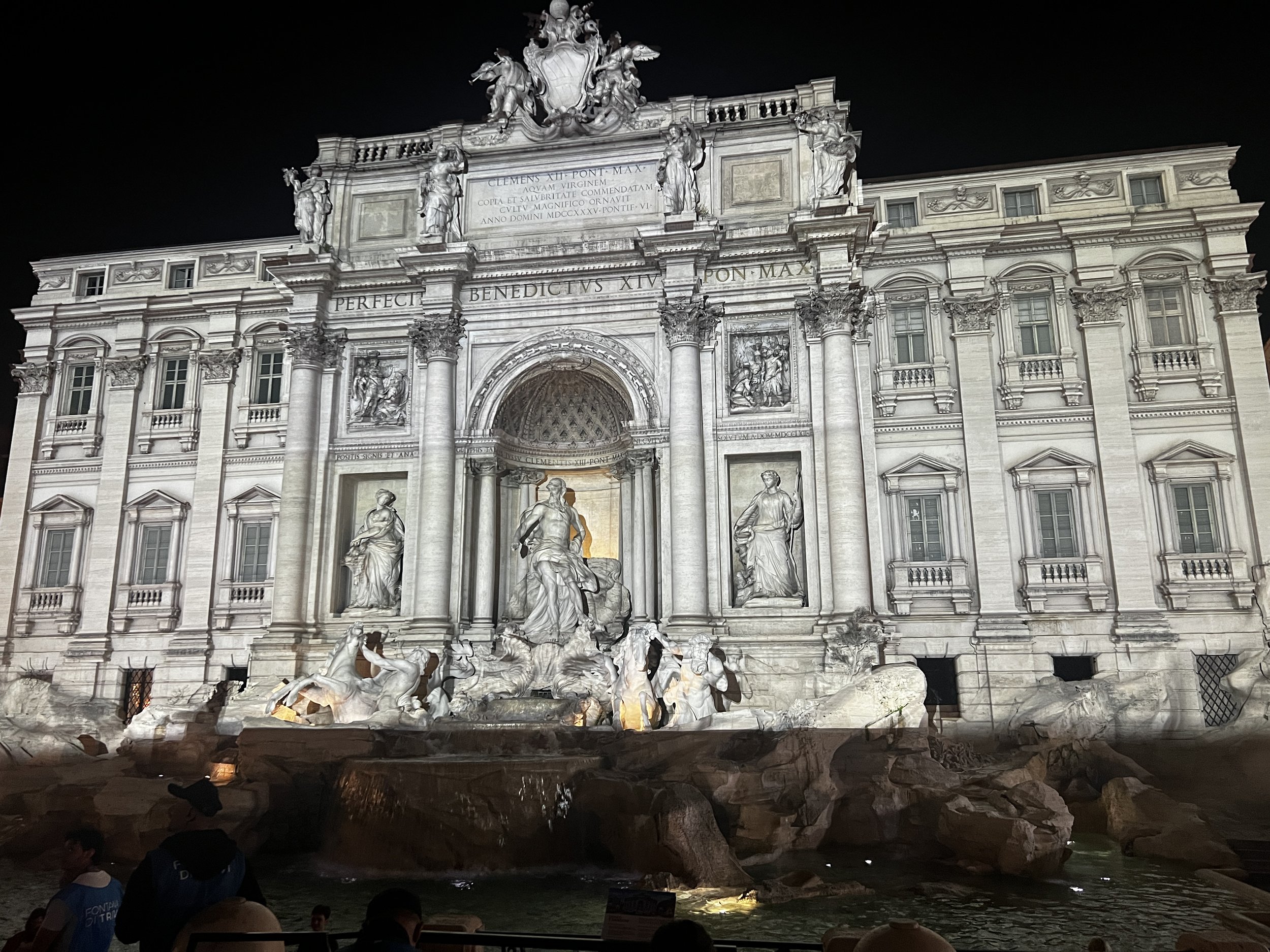
The Trevi Fountain was designed by architect Nicolo Salvi in the 18th century. Baroque is meant to evoke catharsis, wonder, and awe, and Salvi did exactly that. He ingeniously incorporated the surging streams of water precisely in this way — into the enclosed, intimate space of the tiny Piazza della Poli — to create a striking effect on a viewer.
According to the architect’s vision, a person was meant to emerge from the narrow Roman streets and suddenly encounter the power of a raging ocean, frozen in stone. In the 21st century, this artistic vision has been completely destroyed.
Unfortunately, you can no longer hear the sound of the water there because of the roar of thousands of voices. The Trevi these days is something more reminiscent of a train station or a market, rather than a sacred place.
Mountains of trash accumulate around the monument around the clock: plastic bottles, coffee cups, and fast-food wrappers. Baroque architecture was created for thoughtful, contemplative observation, but under such circumstances, it becomes virtually impossible to truly appreciate architecture.
And the actions of the authorities have finished off the Trevi’s sacredness.
Pay to see the Trevi Fountain, or pass
In an alleged attempt to rein in the chaos, in February 2026 the authorities of Rome introduced a €2 fee for access to the lower observation deck closest to the water. In the very first month of controlled access, more than 229,896 paid tickets were sold resulting €435,000+ in revenue to the treasury.
The problem is that this doesn’t solve the issue of overtourism whatsoever. What it does — it simply legalises it, basically turning the monument into a paid attraction. Oh, old good money-making. I suspect that limiting the flow of visitors might be a sugarcoated ploy; and the main idea was to monetise every square foot of historic spaces.
Good news! The €2 entry fee and security fencing are officially removed daily at 10:00 PM (the light show might change that hours, check before visiting at fontanaditrevi.roma.it ).
So you still can enjoy the free, unrestricted access to the lower basin without booking or queuing.
Where does the money Go? The life of Trevi’s coins
You possibly already know that trhowing a coin into Trevi Fountain is a real ritual. But have you ever wondered what happens after your €1 coin hits the water?
Every single morning, before the tourist crowds descend, city workers use specialized vacuums and brooms to collect the harvest of wishes. We are talking about a staggering €1 to €1.5 million annually. This money apparently, as reported in multiple official sourses, goes to a remarkably noble cause.
Since 2006, the Roman Catholic charity Caritas has been the sole recipient of Trevi’s wealth. The funds are directly used to finance social supermarkets where low-income families can get groceries for free, fund homeless shelters, and run soup kitchens across Rome. So, if you are frustrated by the newly introduced entry fee to the lower tier, remember: your tossed coins are actually helping feed Rome’s most vulnerable citizens.
Trevi Light show
Now let’s talk about “THE” wonderful light show at Trevi and see if it is worth seeing. The buzz about the light show at the Trevi Fountain is impressive. This light show is all over travel guides and social media. The projections run from late April through the first half of May, from 9 p.m. to midnight, and the guides are screaming “hurry up to see the magic event”.
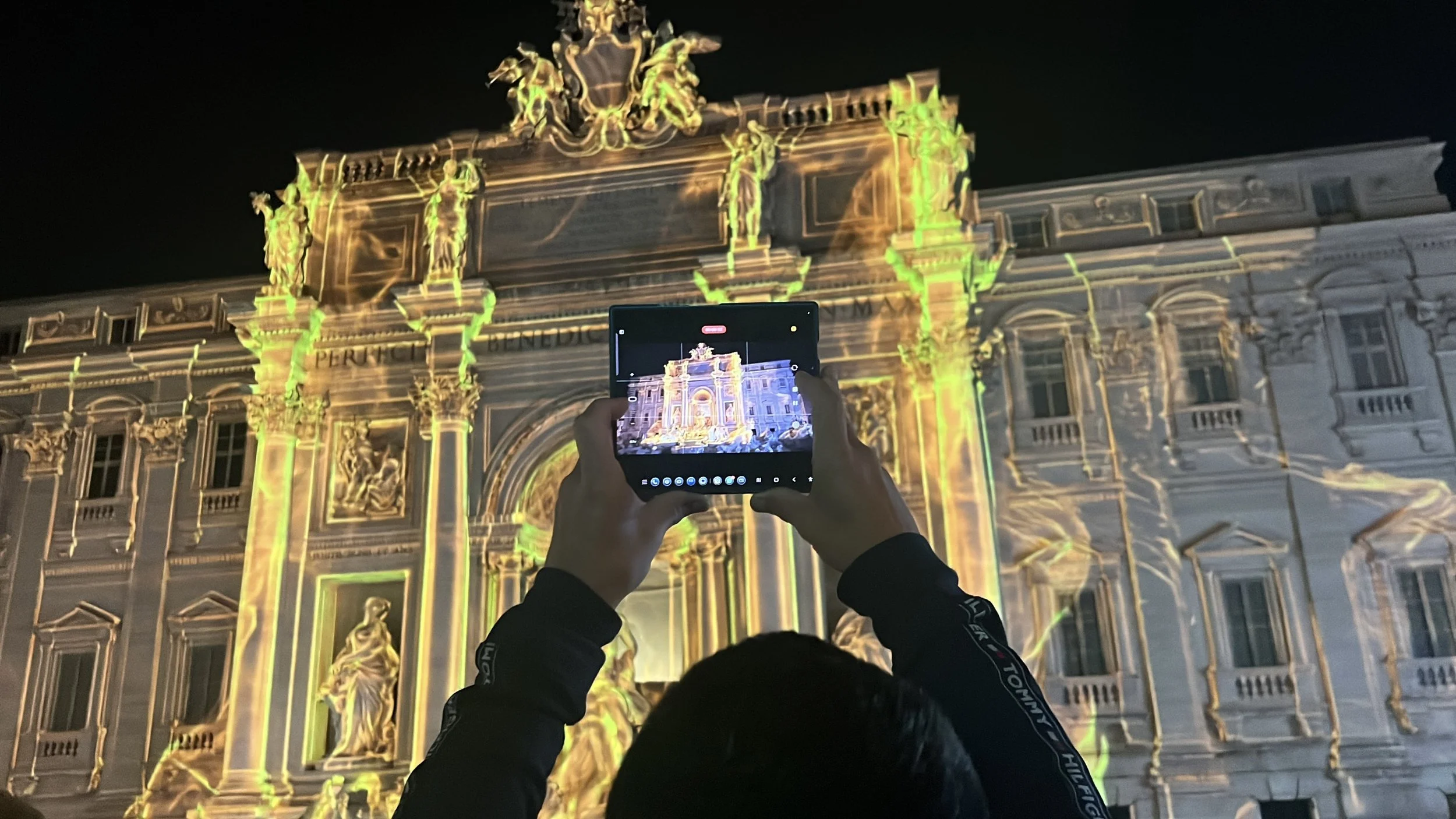
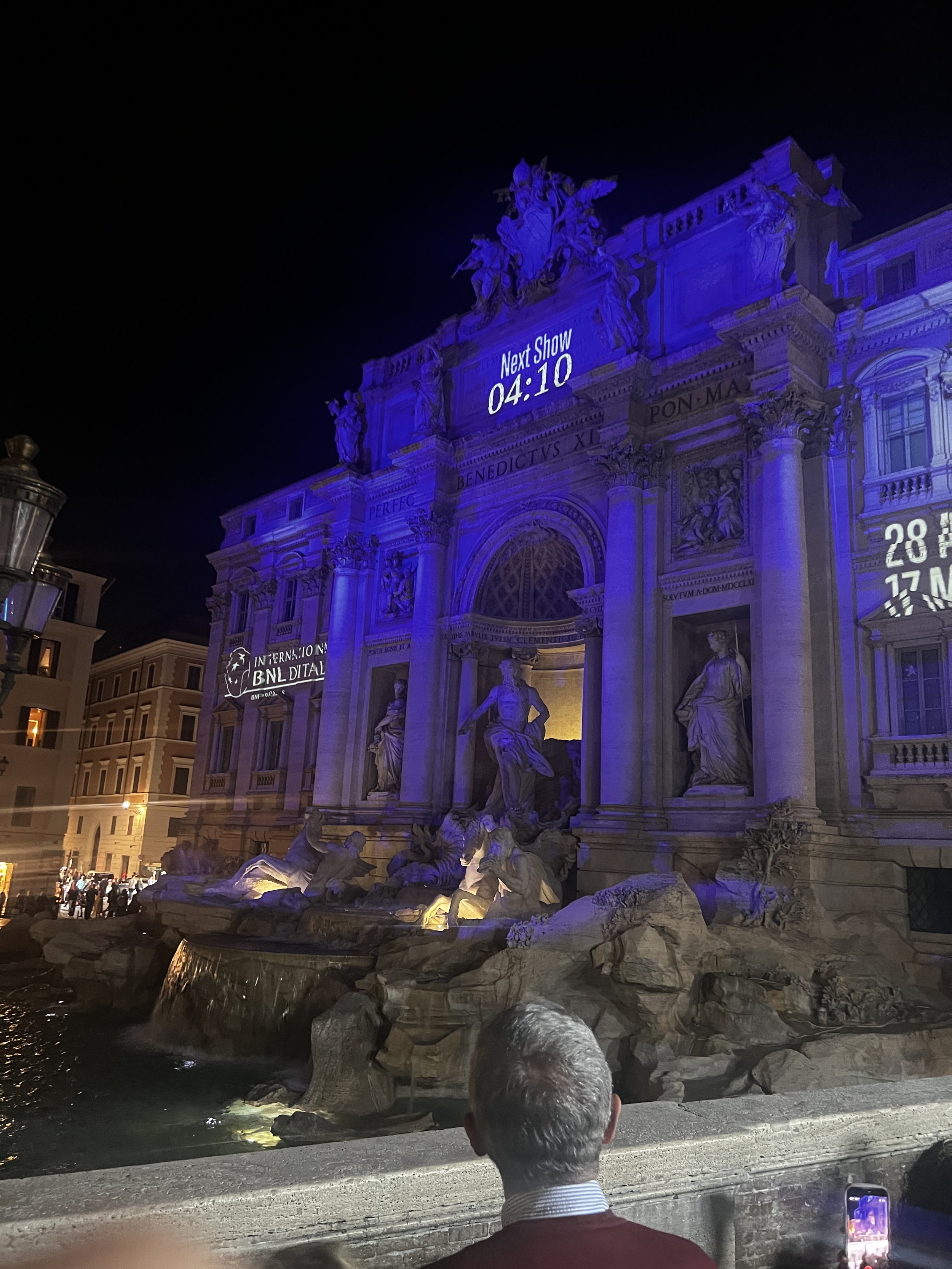
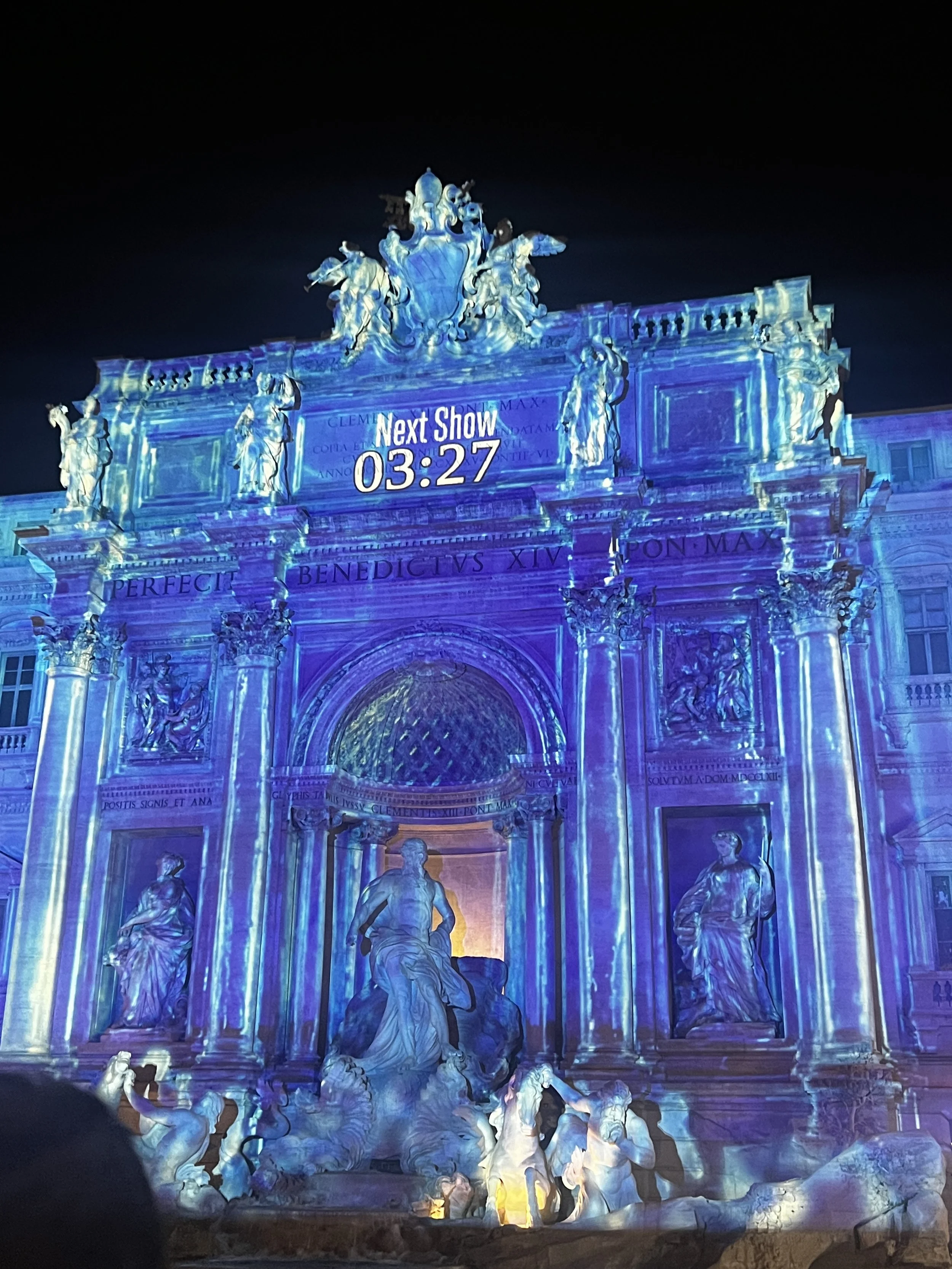
I went to see this show. Unfortunately, the event felt more like a grand commercial billboard for an Italian tennis tournament than a celebration of Baroque heritage. Using such an iconic monument primarily for corporate advertising felt like a missed opportunity to create something genuinely cultural.
This show could have been something more educational, for example.
There is a bittersweet irony in watching the crowd’s enthusiastic response. Hundreds of smartphones rise in unison, capturing the moment through screens instead of experiencing it directly through the eyes.
Rubbish all around
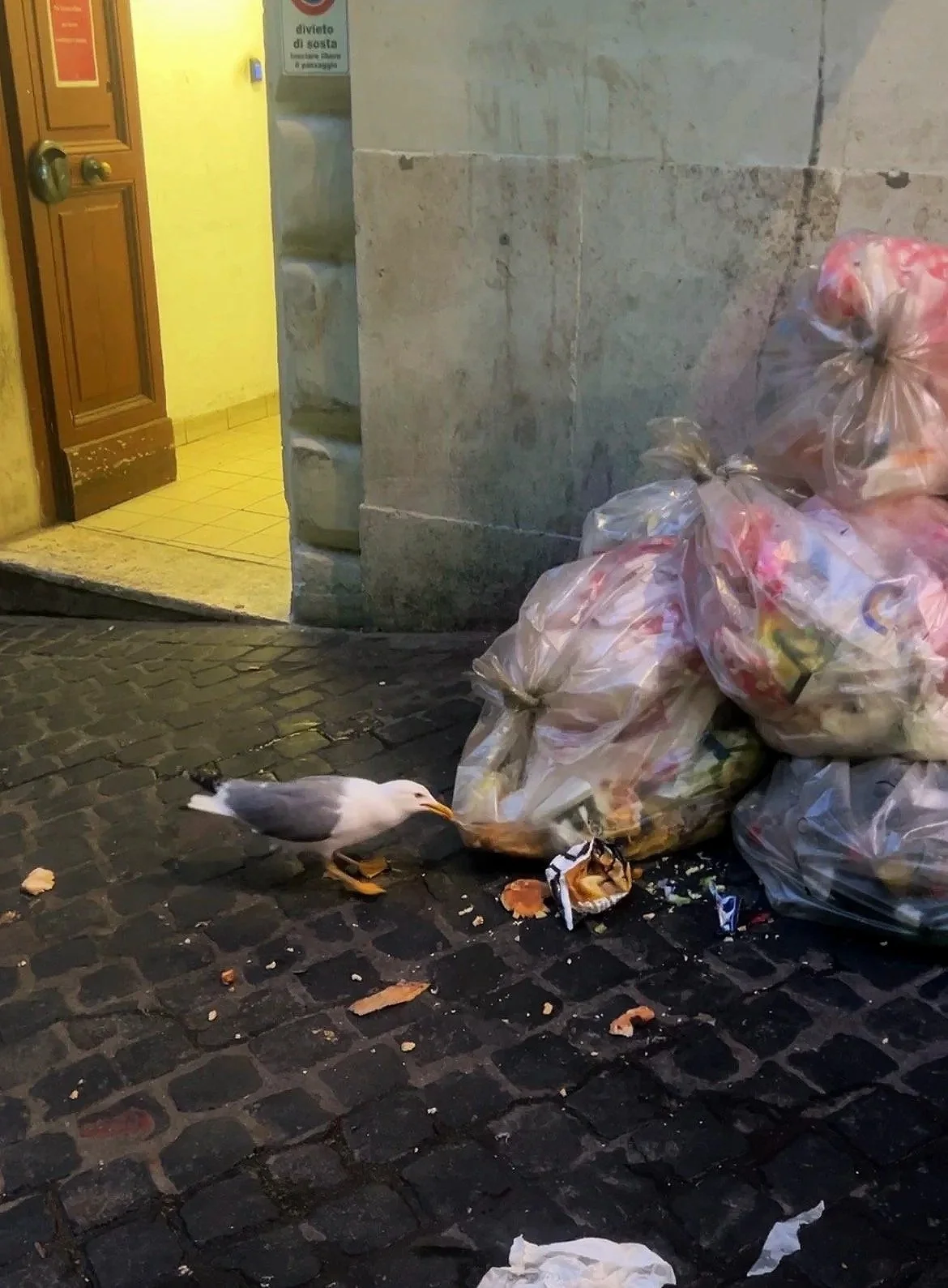
Naturally, the outcome of mass tourism is: mountains of plastic, cups, and wrappers right at the base of the monument and around. Despite the continuous efforts of municipal services, the sheer volume of waste makes it nearly impossible to keep up...
While Rome generates staggering tourist revenues, a significant portion of these funds is swallowed by the logistical nightmare of exporting waste abroad, a costly necessity due to Italy’s lack of local processing infrastructure, which leaves everyday street cleaning permanently underfunded.
Please, when you travel, wether in Italy or a fremote town in Peru, make sure you carry you rubbish straight to the bin, no matter how far you need to carry it.
The Dry FiguresThe extent of commercialization around the Trevi Fountain has long gone beyond what is reasonable, and the figures confirm this:
10 million people
— that’s as many tourists as visit the tiny square around the fountain each year.€1–1.5 million
— the annual amount that tourists automatically toss into the water (according to an old tradition, “to ensure a return visit”). This coinage is collected by the charity Caritas, but the very fact that a masterpiece has been turned into a giant coin slot is symbolic.
The phenomenon of “Disneyfication”: heritage as a simulacrum
What is happening to Rome is already well know to socioligists. It is know as “disneyfication” (Manning, 1992; Bryman, 1999).
Dysneyfication — the transformation of a society, place, or culture to resemble the standardized, highly controlled, and sanitized environment of Walt Disney theme parks.
But let’s call it what it actually is: turning human civilization into one giant, plastic gift shop, or a theme park for your disposal. In his book The Disneyization of Society, British sociologist Alan Bryman was warning us that our entire global culture was being systematically lobotomized.
God forbid we actually learn about 18th-century Baroque architecture or papal engineering. The Trevi Fountain is aggressively packaged as a one-dimensional, Instagrammable wish-making station.
People rarely care about the real value of Trevi and the story behind it. What is happening is exactly what the philosopher Jean Baudrillard wrote about: the object is transformed into a simulacrum — a copy that conceals the absence of genuine reality. Tourists aren’t going to the fountain itself; they’re going to the pop-cultural image from films like Fellini’s La Dolce Vita or Roman Holiday. For most of tourists, Trevi is just another Instagram spot, and a checkmark on the list.
The dead end of global tourism
Herein lies the central paradox and tragedy of our times. In trying to “touch eternity”, humanity is destroying that very eternity. We turn culture into a commodity, package it into a convenient light show, surround it with a fence and ticket booths, and sell admission for a couple of euros.
Once upon a time, the Trevi Fountain celebrated the triumph of the element of water and the grandeur of Rome. Today it celebrates the triumph of capitalism. And if we do not stop this aggressive Disneyfication we will soon find that all the great cities of the world have turned into identical, soulless souvenir shops surrounded by mountains of plastic trash.
Be a traveller, don’t be a tourist.
Alternatives to Trevi? Discover other Bernini’s hidden fountains
If you’re not happy about the new regulations and dense crowds at Trevi, and not ready to experience it, do not leave the neighborhood just yet. Rome is filled with breathtaking water architecture designed by Gian Lorenzo Bernini (the mastermind who heavily inspired Trevi’s theatrical style) that you can enjoy entirely for free, without fences or queues.
Fontana del Tritone (Piazza Barberini) is located just a 10-minute walk from Trevi, this is Bernini’s first independent fountain masterpiece. It features Triton, the sea god, blowing a conch shell to conquer the waves. It offers pure, unadulterated high-baroque drama with zero waiting lines.
Fontana dei Quattro Fiumi (Piazza Navona) is a bit further into the historic center sits the Fountain of the Four Rivers. This monumental masterpiece represents the four major rivers of the known world (the Nile, Ganges, Danube, and Plate). It is a masterclass in dynamic stone storytelling that you can admire while enjoying a gelato.
General info
Ticketing Hours. The entry fee applies daily from 9:00 AM to 10:00 PM (including the first Sunday of the month).
Where to Buy. Secure your ticket online via the official website, at Civic Museums, Tourist Infopoints, affiliated shops, or directly at the entrance (card payments only).
Free Admission. Entry remains free for Rome residents, children under 5, and visitors with disabilities plus their caregivers.
Pro Tip. If you are catching the 10:00 PM light show, keep in mind that paid access and fencing often stay active until around 10:15 PM due to peak crowds. Planning your arrival just slightly after this transition is a great way to enjoy a smoother, calmer viewing experience.
Note: Opening hours can occasionally vary due to maintenance or public order. Always check the official website at fontanaditrevi.roma.it for the latest real-time updates before you head out.
