
Pilgrimage to legendary Monkey Christ in Spain
In August 2012, media outlets around the world were buzzing with the story of how amateur artist Cecilia Giménez (then 81 years old), in a small town in Spain, ruined a nearly century-old fresco by Elías García Martínez. Under the enthusiastic brush of this well-meaning restorer, Jesus turned into something resembling a monkey. It was uproariously funny. It became legendary.
The drive was amazingly beautiful. I drove from Bilbao through foggy mountains and fresh crisp winter air.
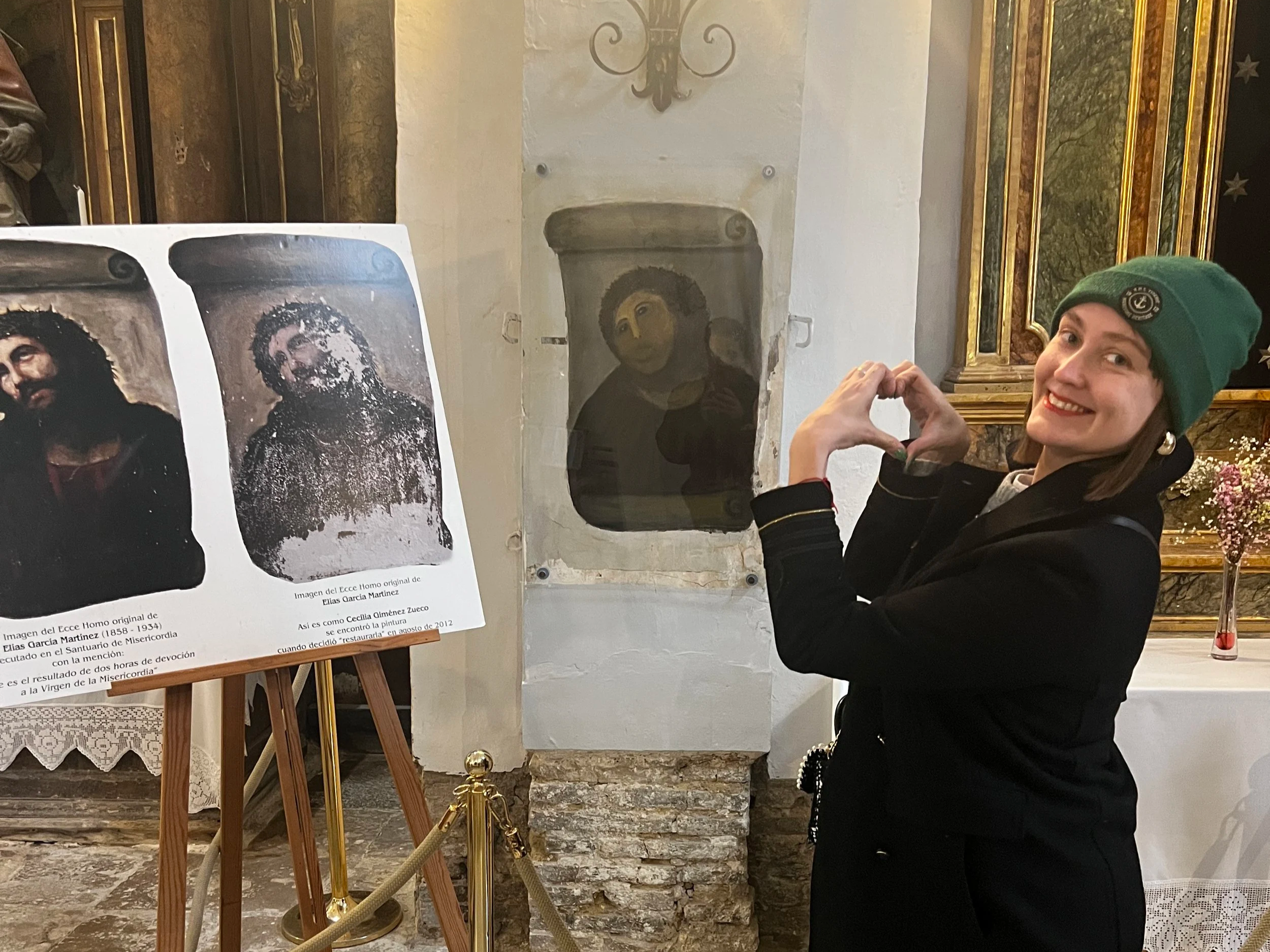
When I first read this story, I laughed until I cried, that’s not a metaphor. And I remember thinking that there is nothing more Spanish than this story.
February 2026. I drove to the Santuario de Misericordia near Borja from Bilbao. Stunning landscapes, and the thickest fog I have ever seen. The creator of the “masterpiece” Cecilia Giménez, sadly passed away in December 2025 at the age of 94. I was on my way to see her work in person.
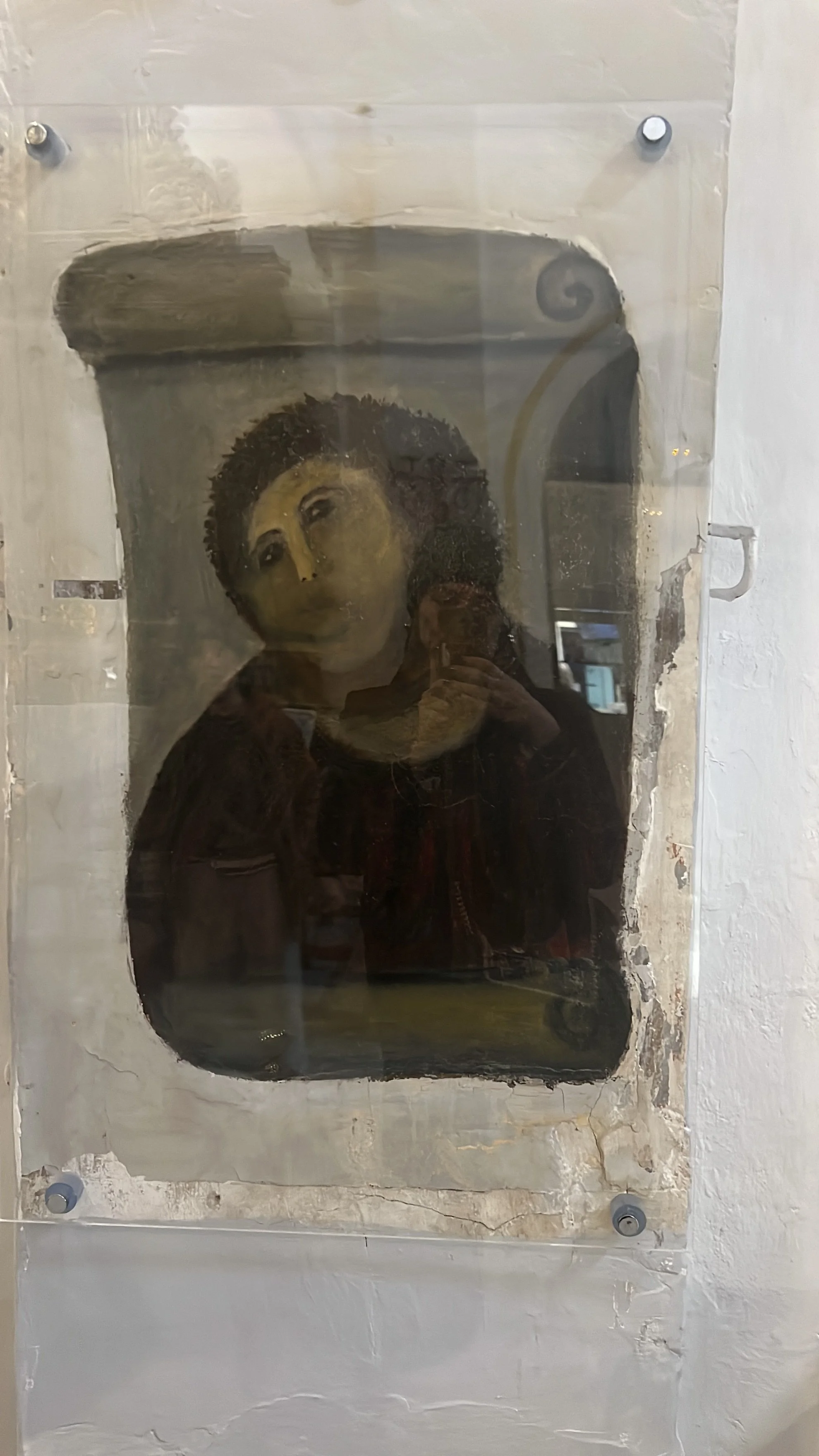
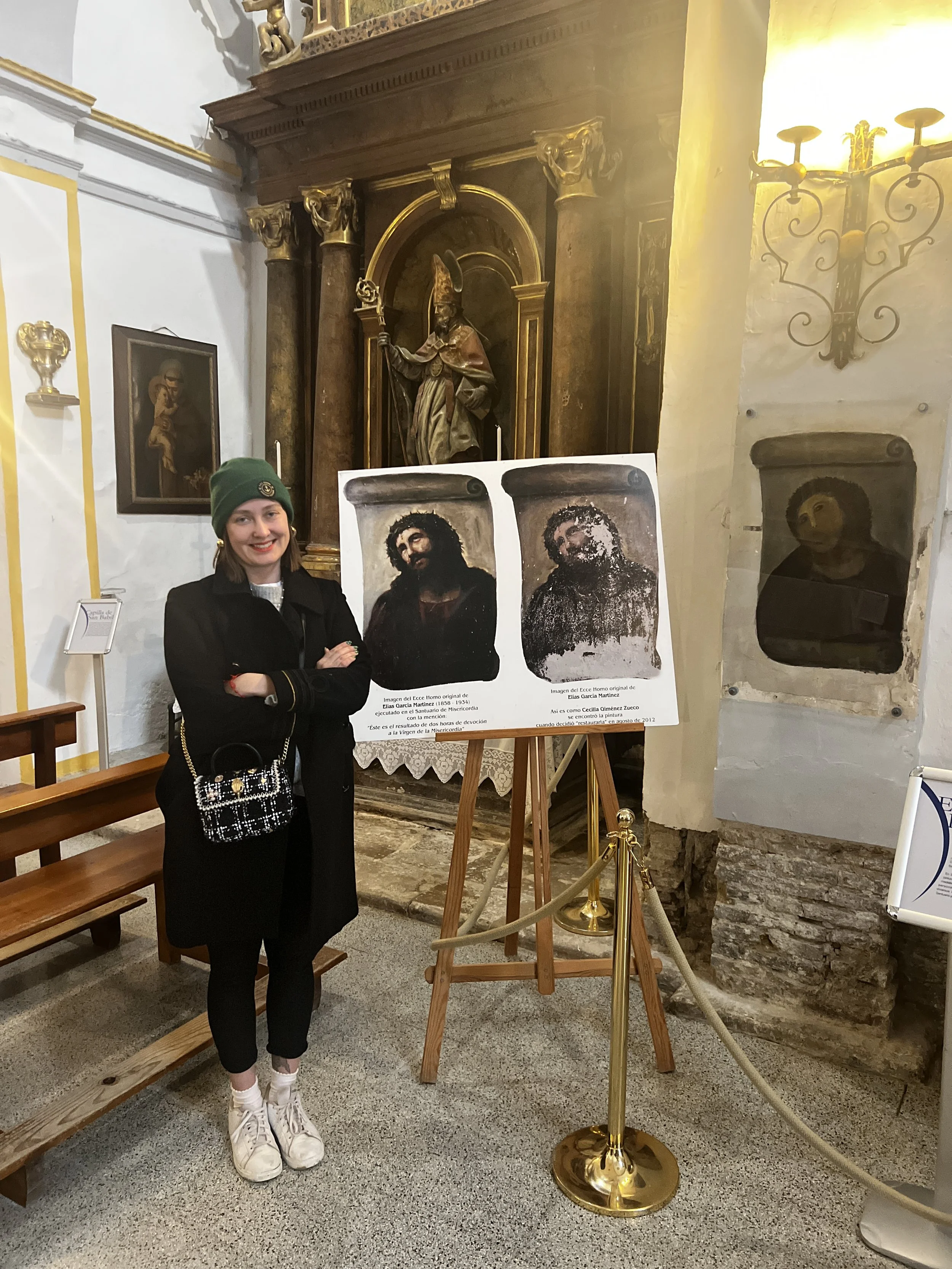
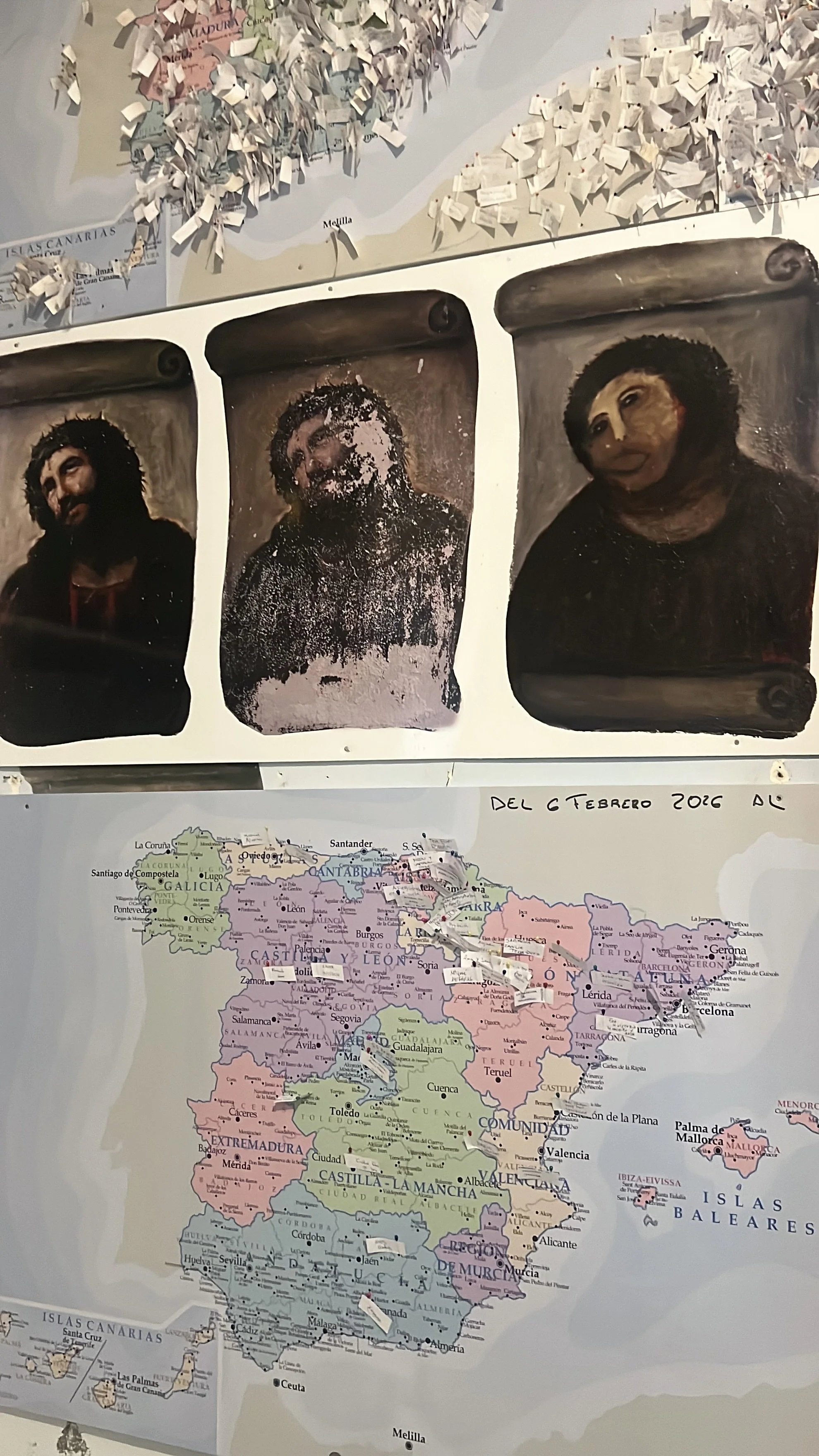
The Santuario de Misericordia is set in a beautiful, picturesque location. You’re greeted by a friendly staff member who tells you the story of the fresco and shares some history of the monastery. In February 2026, the entrance fee was 3 euros. A friend of mine had visited a few years earlier, and back then it was just 1 euro — so yes, the price has gone up. Which is understandable.
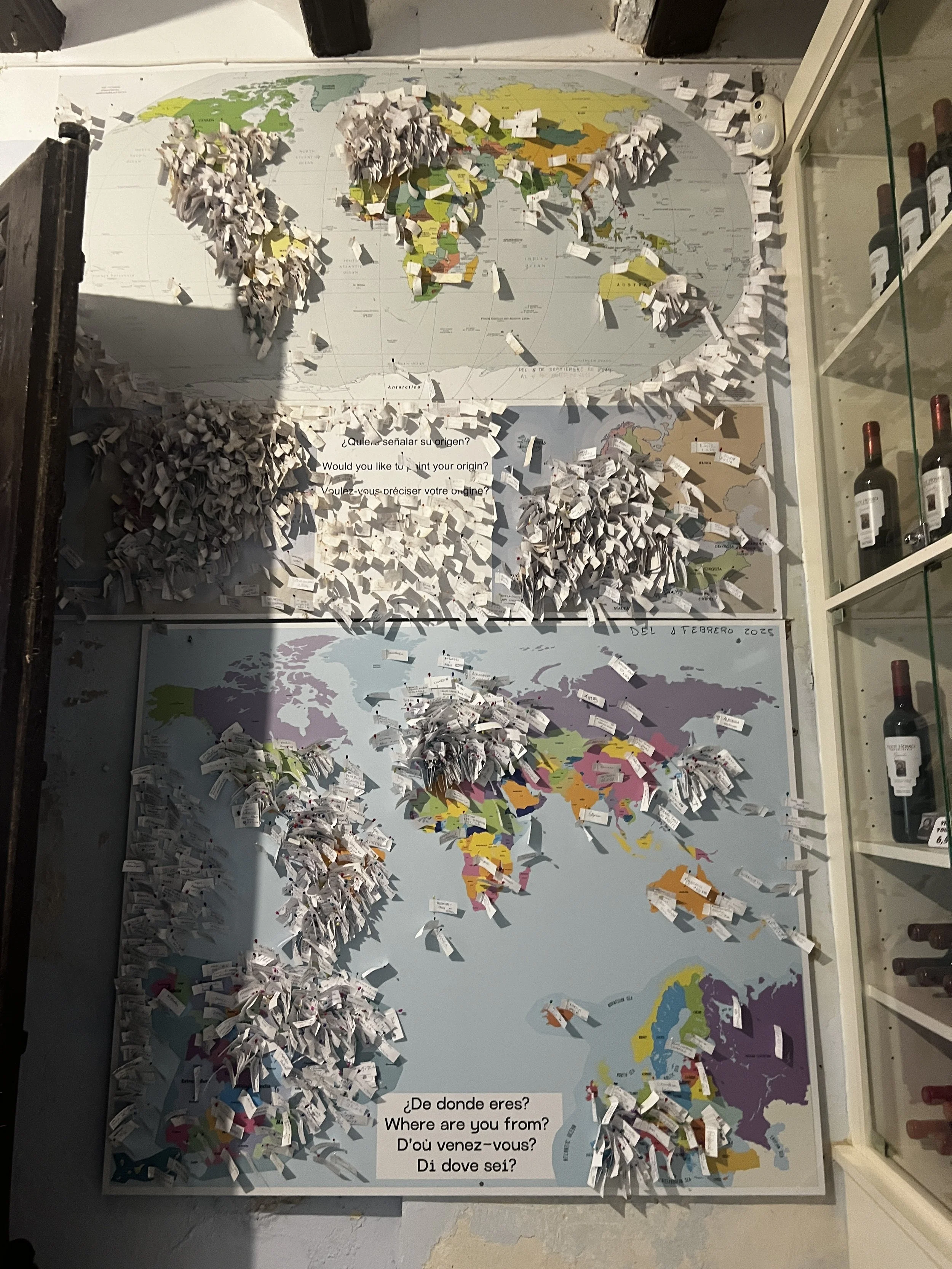
Ever since the “Monkey Christ” or “Monkey Jesus” appeared, it has captured the imagination of millions—without exaggeration.
Bad beginning, great result
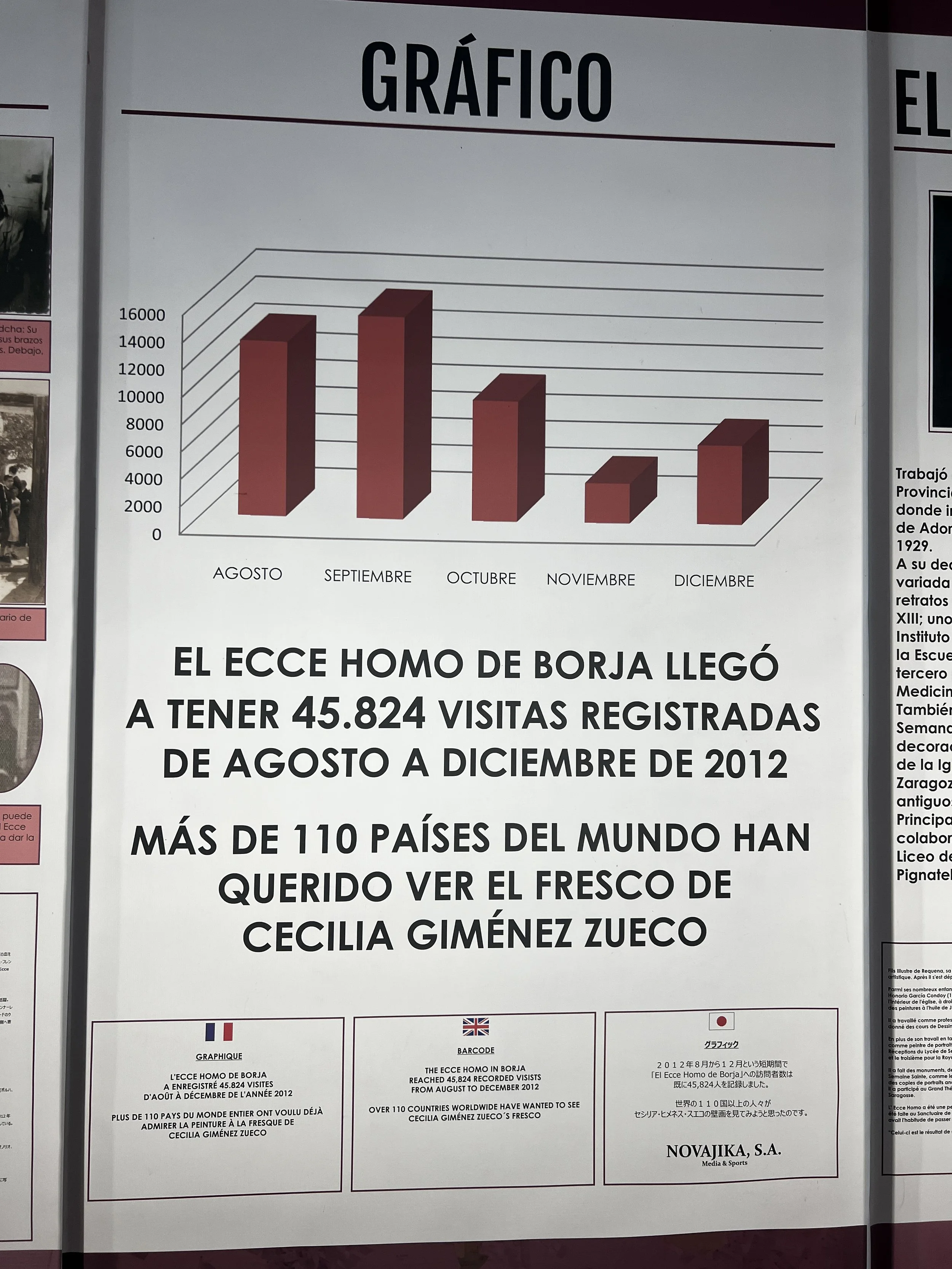
A little-known small town became a place of pilgrimage. Thousands upon thousands of tourists from all over the world come here each year, bringing millions of euros into the city’s budget.
Notably, fame and admiration did not come to Cecilia immediately. It is said that at first she faced a massive and rather cruel wave of criticism, condemnation, and public shaming. In my view, the municipality made the wisest possible decision — not to remove the fresco, but to turn it into a point of pride. That’s when the crowds of tourists and pilgrims began. Bravo! I’m glad that in the final years of her life, Cecilia lived like a true star.
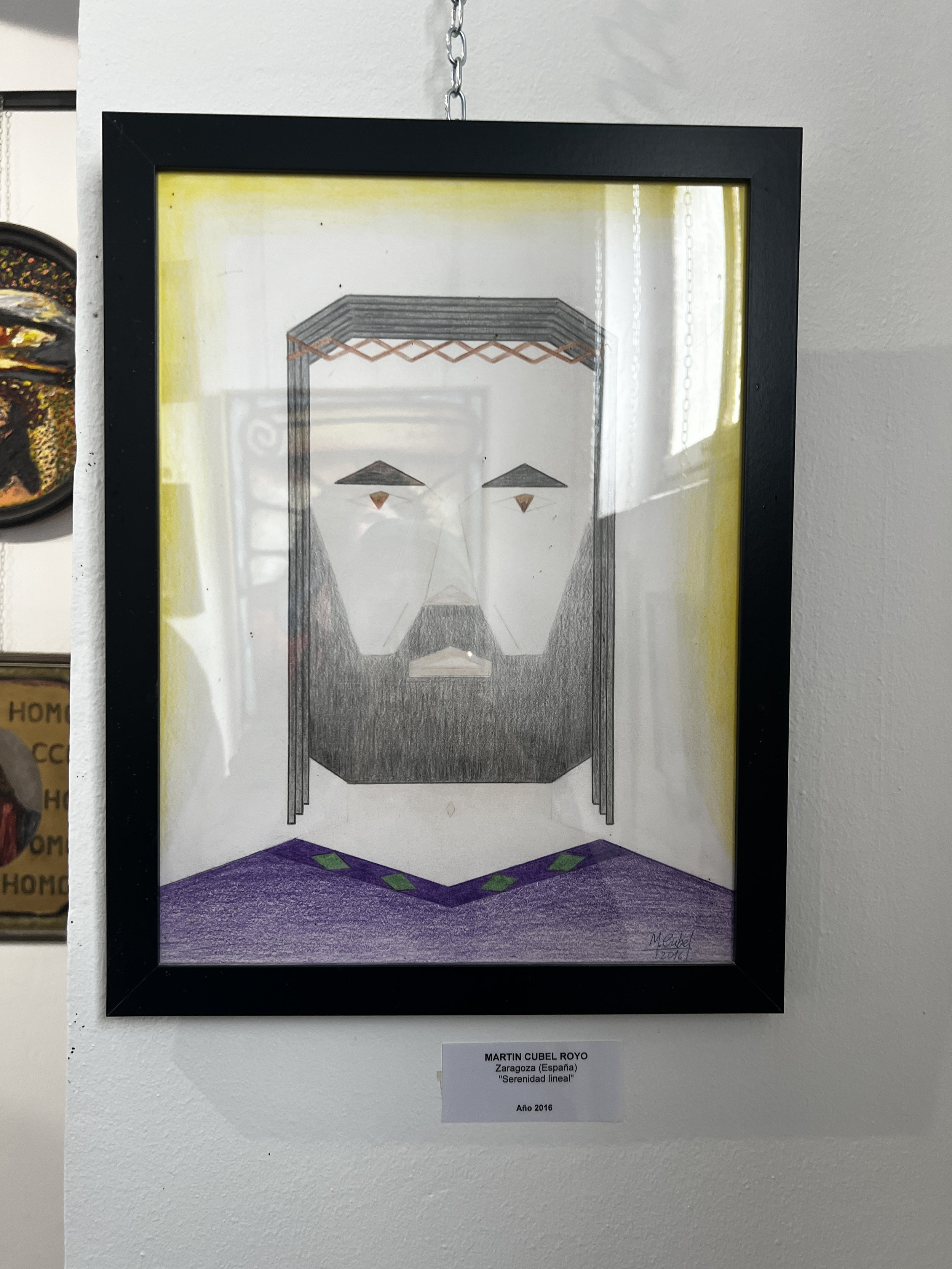
Over time, two exhibitions appeared in the left wing of the monastery. The first is dedicated to the story of how the Monkey Christ came into being, and the second presents interpretations of the image of Jesus by artists from different countries.
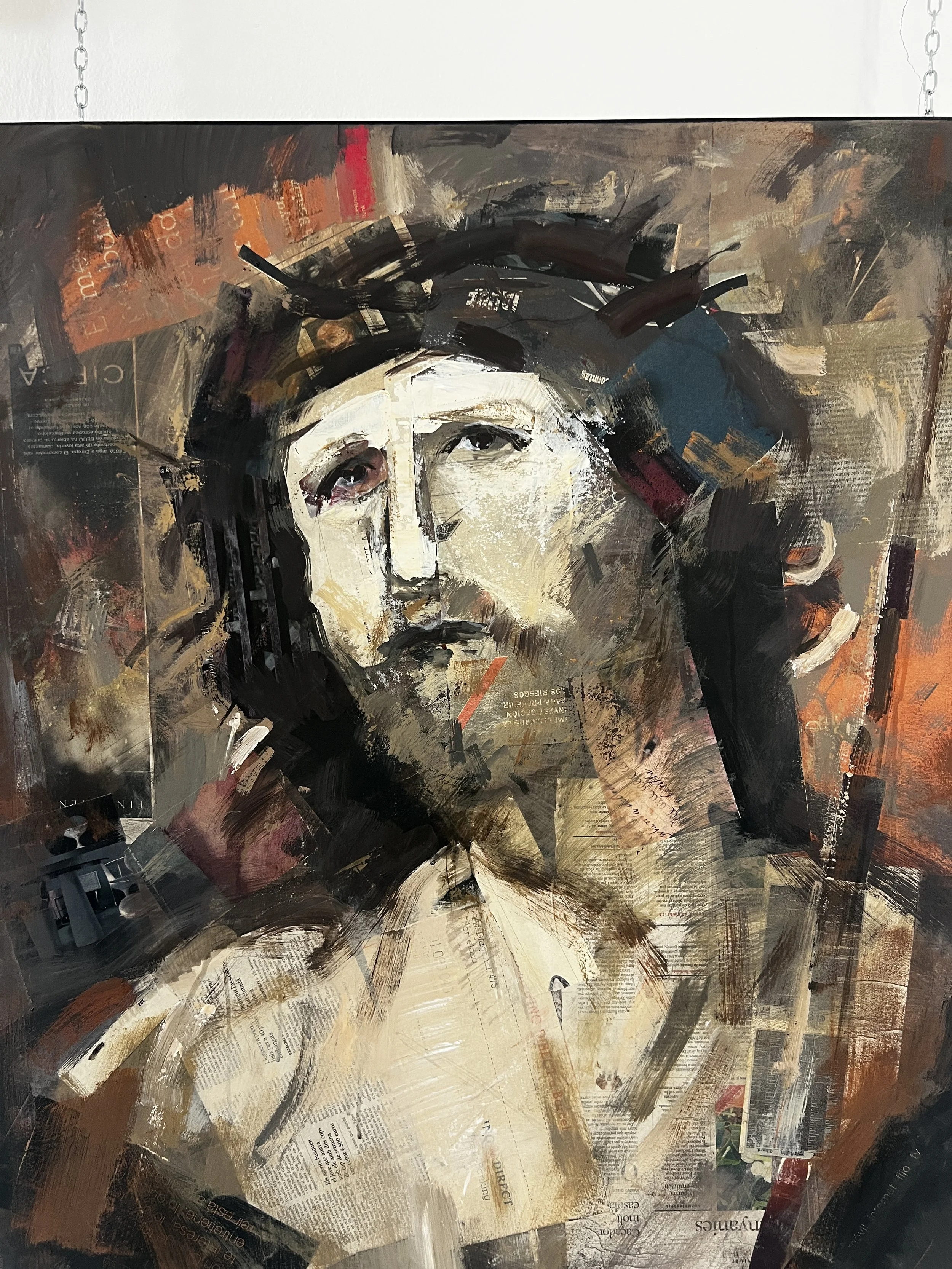
A feature, not a bug
There’s a wonderful way to manifest something — turn it into merch. The monastery and the local authorities have produced a ton of Monkey Christ merchandise, from keychains to T-shirts and mugs. I couldn’t resist and bought myself a T-shirt.
Monastery
The monastery and its surroundings are interesting in their own way. It feels like a fragment of that old Spain that has almost disappeared under the pressures of globalization.
The original Hermitage of Mercy was built to house an image of the Virgin Mary that appeared in 1451, at the beginning of the construction of the cloister of the Collegiate Church of Santa María.
It is believed that the image of the Virgin, bearing the inscription Mater misericordia (Mother of Mercy), had been buried for protection during the Moorish invasion. This discovery led, in 1539, to a request for permission to build the aforementioned hermitage on the ruins of an even older one — the Hermitage of Santa Eulalia. The construction of the hermitage was completed in 1546.
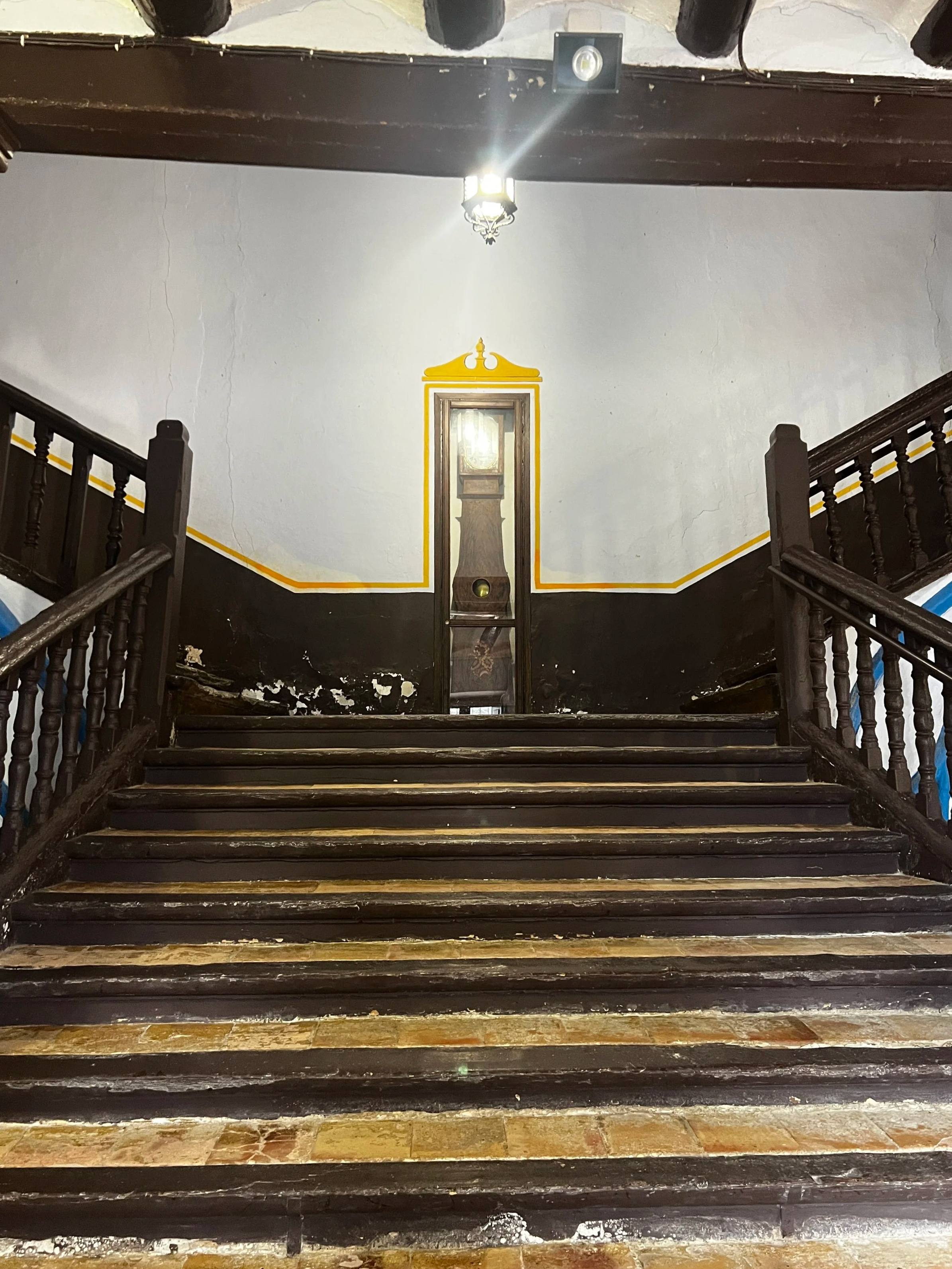
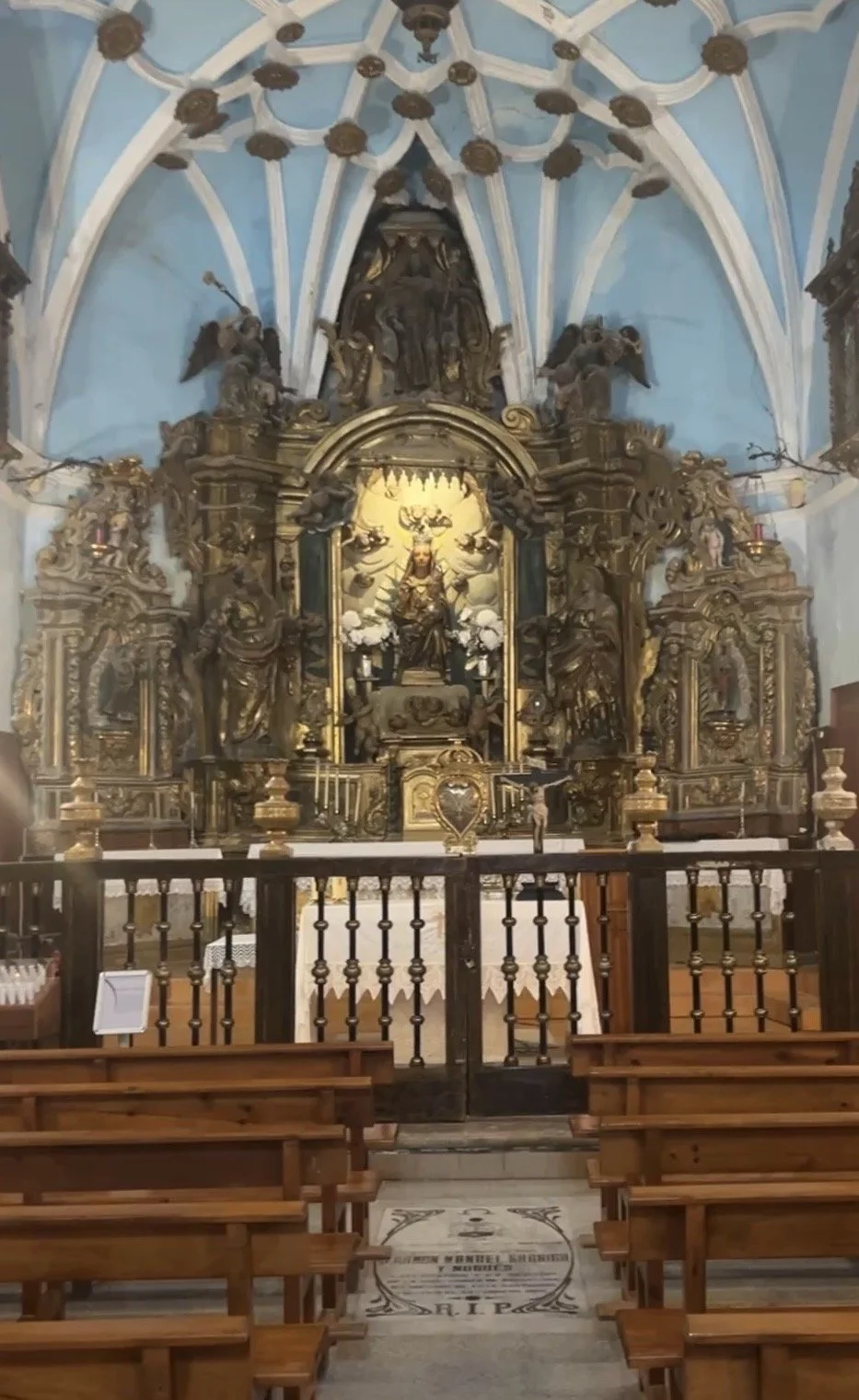
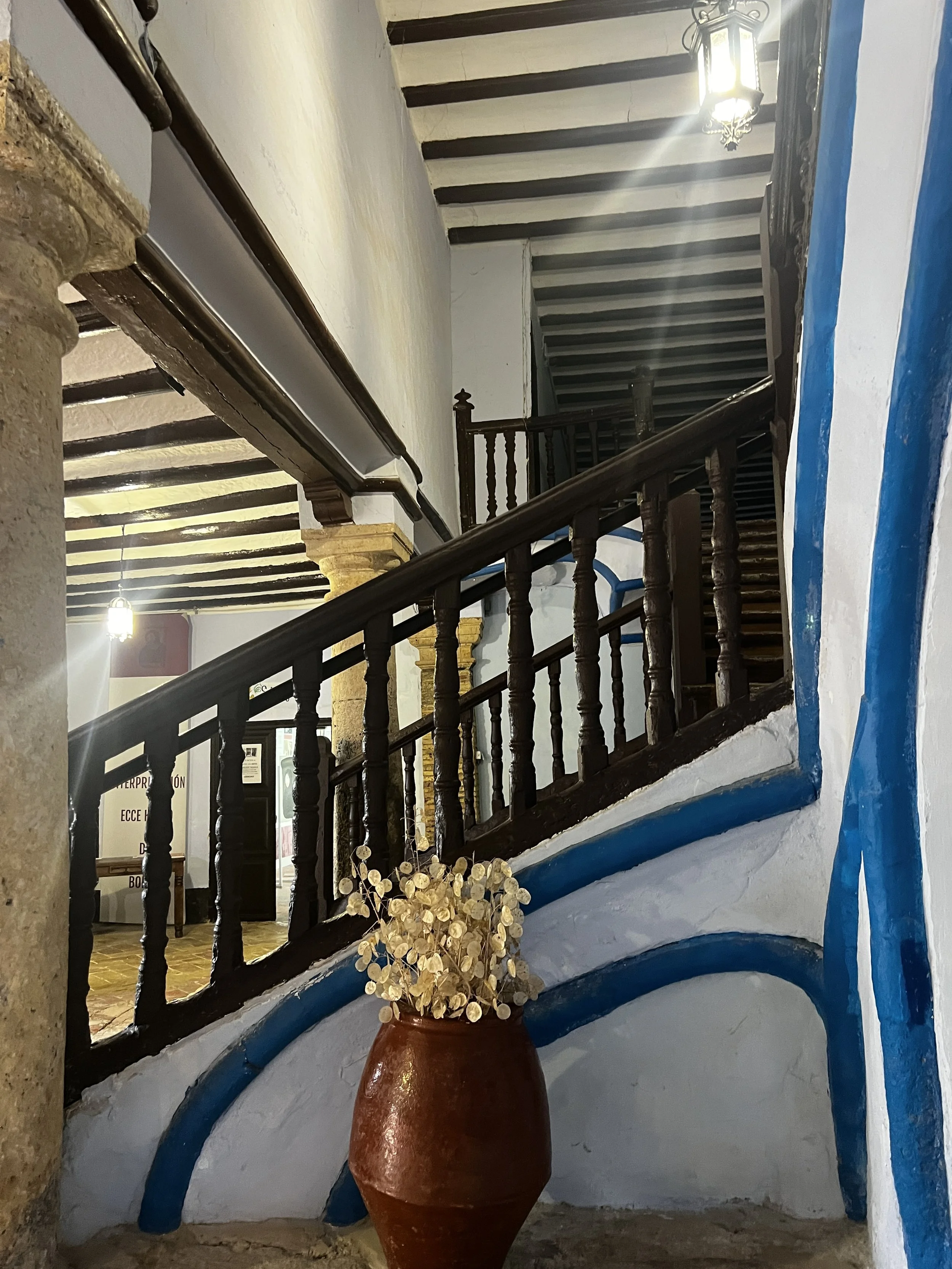
If you are visiting the Canctuary during summer months, you can enjoy a beer or two after your visit at the bar “Ambar”. During winter it is unfortunately closed.
General info
Open daily from 10:00 AM to 2:00 PM and 3:30 PM to 6:00 PM.
Admission Fee is approximately €2 to €3.50. The proceeds help fund local charities, church maintenance, and a nearby nursing home.
