

Montsalvat is an art village/commune located forty minutes’ drive northeast of Melbourne’s bustling central business district, nestled among the green hills of Eltham. It’s a place that resembles both a sun-drenched, slightly eccentric French provincial village and a hippy place from past century.
Table of Contents
* * *
📍 Location: 7 Hillcrest Avenue, Eltham VIC 3095, Australia.
Welcome to Montsalvat — Australia’s oldest continuously operating artists' community.
The majority of travelers come to Melbourne for the street art on Hosier Lane or the vast galleries of the National Gallery of Victoria (NGV). Both are wonderful, but they are carefully curated and polished. Monsalvat is none of these. It’s a raw, lived-in, slightly chaotic, and deeply personal place intricately woven into the dirt, stone, and wood. No white cube art!
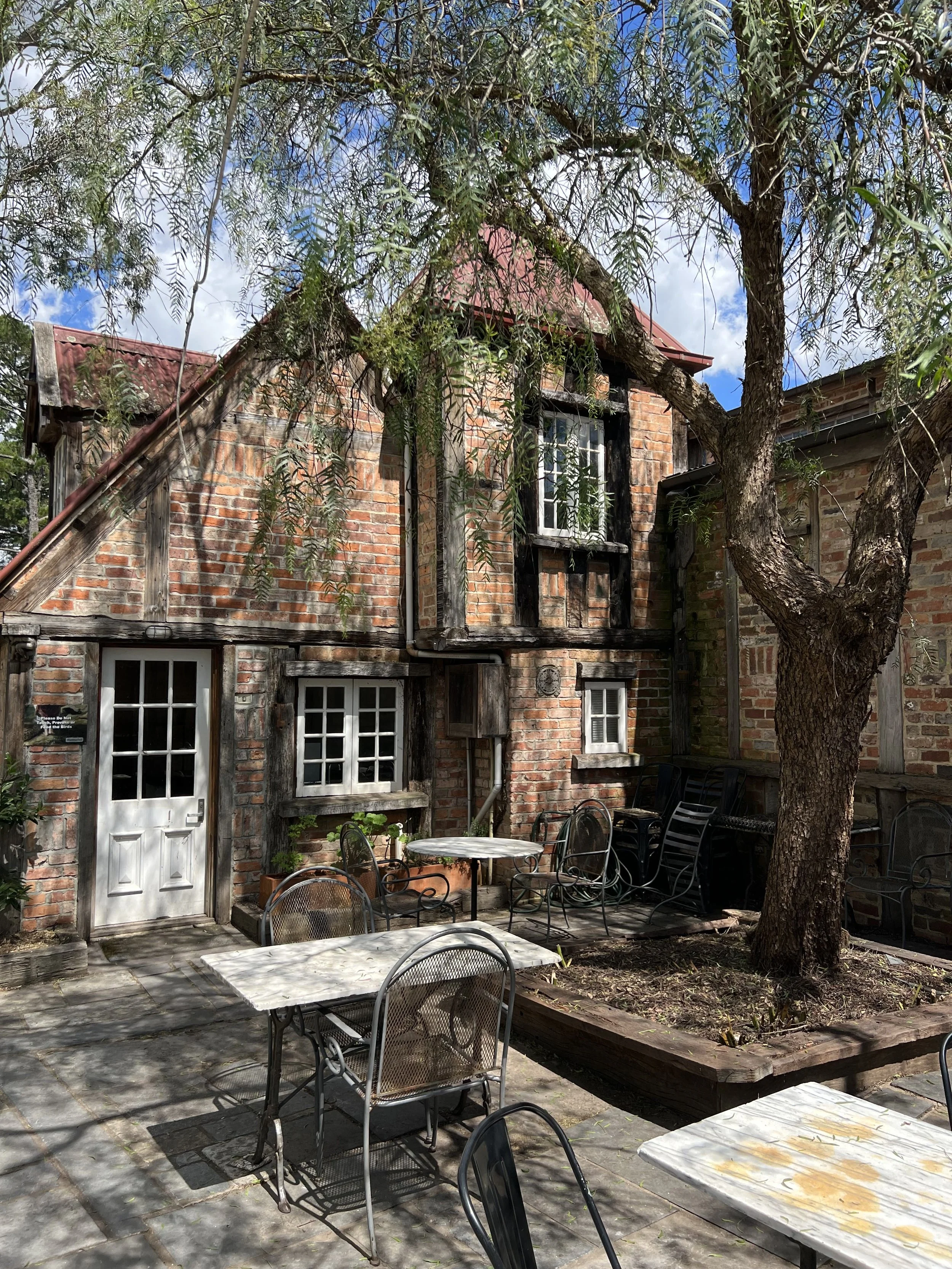
The sunlit central courtyard at Montsalvat, built by hand in the 1930s using mudbrick, heavy timber, and architectural salvage from demolished Melbourne buildings.
A bohemian utopia built from rubble (1934)
In 1934, Australian tonalist painter and architect Justus Jörgensen purchased twelve acres of land in Eltheam, driven by a radical idea: to create a self-sufficient artistic utopia inspired by medieval European villages and named after the legendary Holy Grail sanctuary from Wagner’s opera Parsifal.
In the midst of the Great Depression, Jörgensen and a circle of his devoted students, writers, and artisans built the entire complex with their own hands. They used local adobe bricks, hand-hewn timber, and — most fascinatingly — architectural elements salvaged from grand Victorian buildings being demolished in downtown Melbourne.
Gothic stonework, wrought-iron elements, and stained-glass windows from 19th-century banks and mansions are brought together here.
Wonderful place to spend a day, come woth friends or fmily.
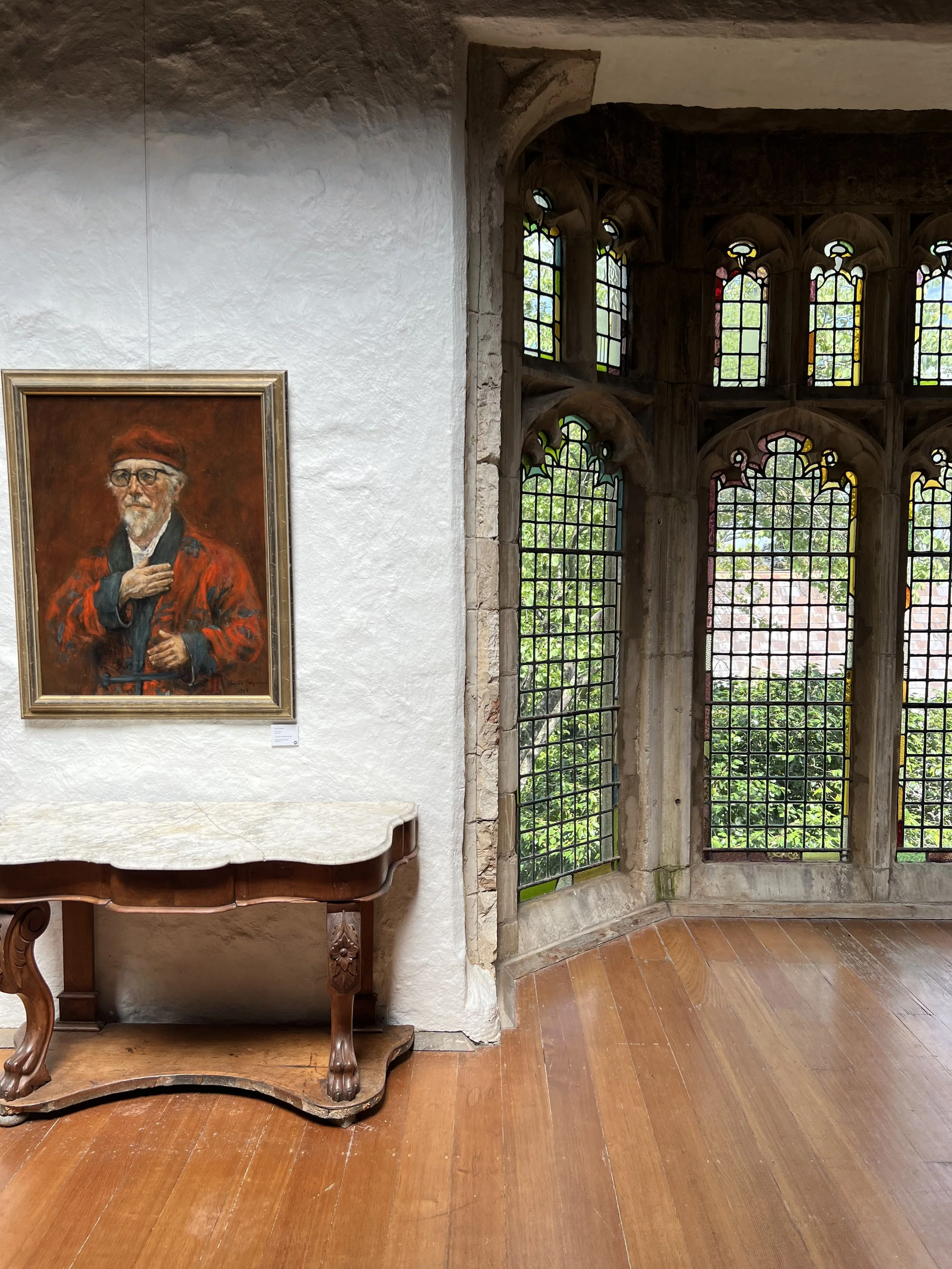
Founder Justus Jörgensen’s self-portrait in a crimson robe, hanging beside salvaged Gothic stone-mullioned windows inside the Great Hall.
Art, light, and tonalism
The three-story Great Hall is a main venue. During the 1930s, Jörgensen struck a deal with “Whelan the Wrecker” — Melbourne’s most famous demolition firm — to haul away priceless fragments from grand Victorian landmarks being torn down in the city center.
The tall, stone-mullioned Gothic windows filtering the Australian sun through colored glass were rescued directly from the demolished Royal Insurance Building, while the sweeping spiral staircase inside came from the razed Bijou Theatre on Bourke Street. Students living on the commune were tasked with hand-carving gargoyles into the mudstone walls to complete the illusion.
Hanging directly beside those salvaged windows is the visual anchor of the room: a self-portrait of Justus Jörgensen in a textured crimson robe, round glasses, and beret (see my interior shot above).
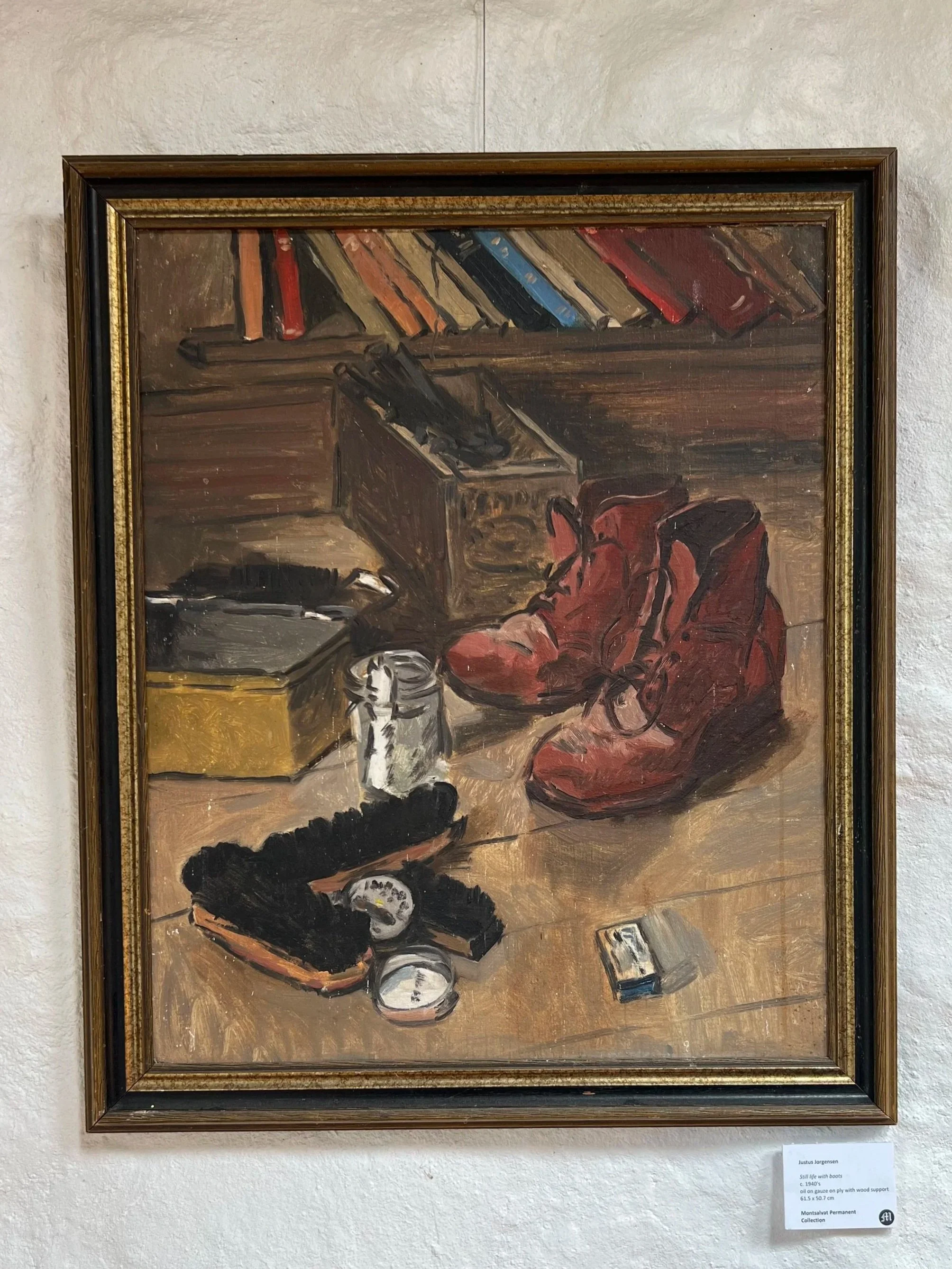
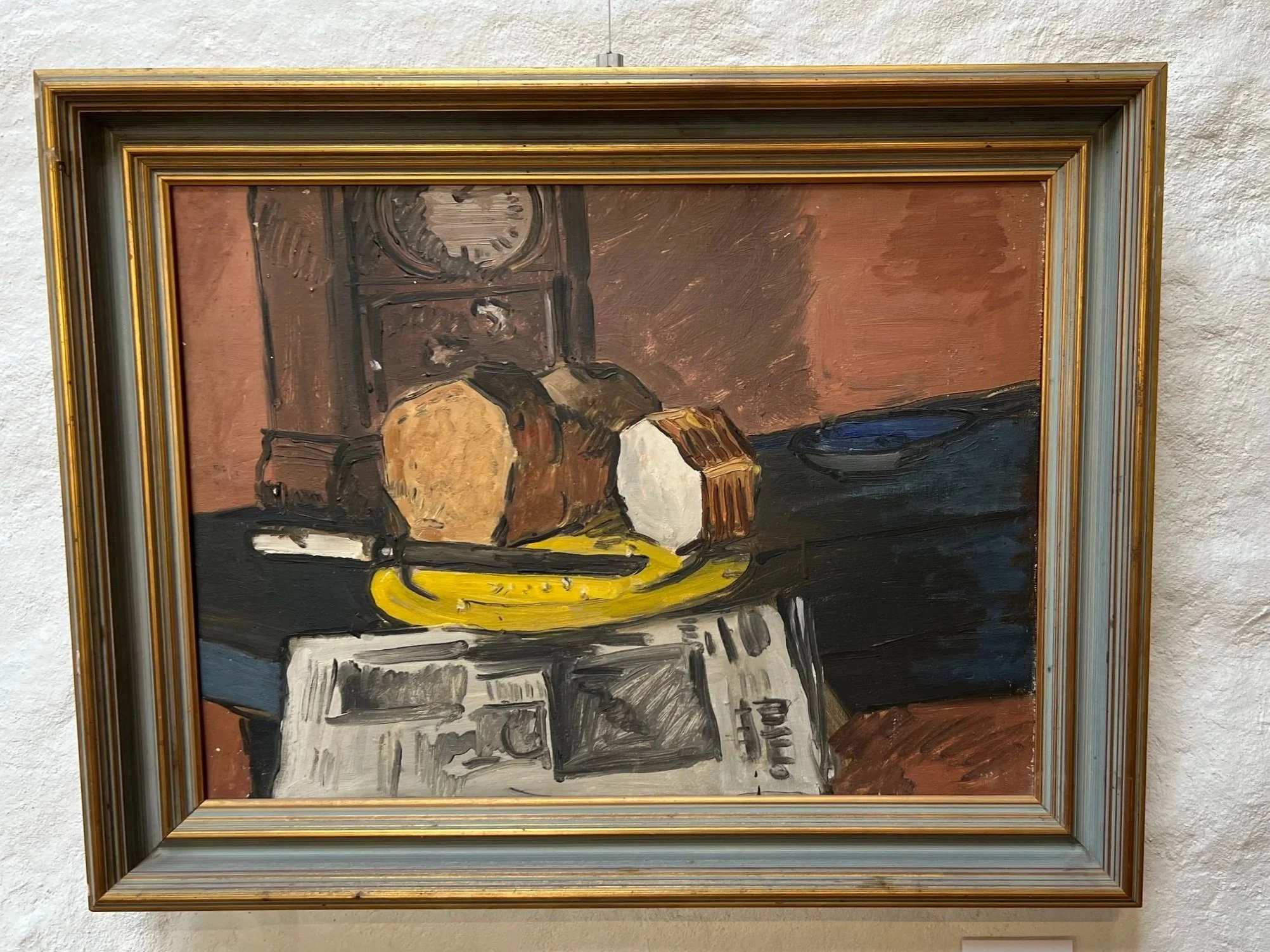
To understand the art hanging in this room, you have to understand Jörgensen’s rebellion against the art market. Trained under Max Meldrum, the controversial pioneer of Australian Tonalism, Jörgensen believed painting was an exact science of light, atmosphere, and tonal values rather than decorative storytelling.
He despised commercial galleries, mistrusted art critics, and refused to sell his canvases— exhibiting publicly only three times in his entire life. In his later years, he retreated almost entirely into painting intense self-portraits shown only to his inner circle.
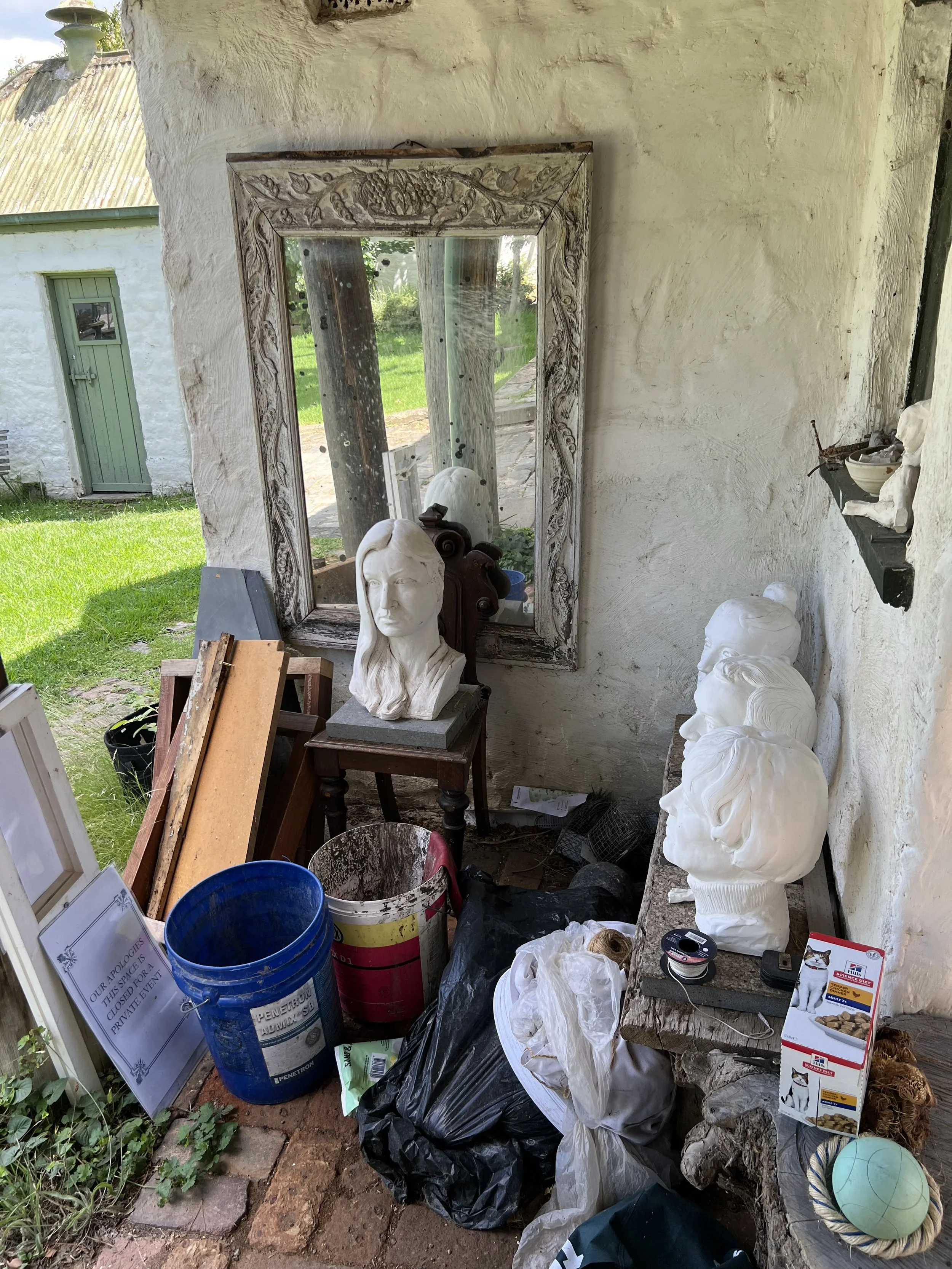
Behind-the-scenes studio clutter.
A living studio space
Monsalvat has never become a sterile museum with velvet ropes. More than a dozen artist-in-residence — from potters and jewelers to painters and stringed-instrument makers — continue to work on the complex’s grounds.
As you stroll along the gravel paths, you’ll frequently notice real creative life unfolding around every corner:
A puppeteer’s window
Peering through the arched window with a green frame (see my photo), I discovered a whimsical, slightly eerie collection of handcrafted marionettes — including a tiny Charlie Chaplin with a Hollywood clapperboard and characters from a bygone era.
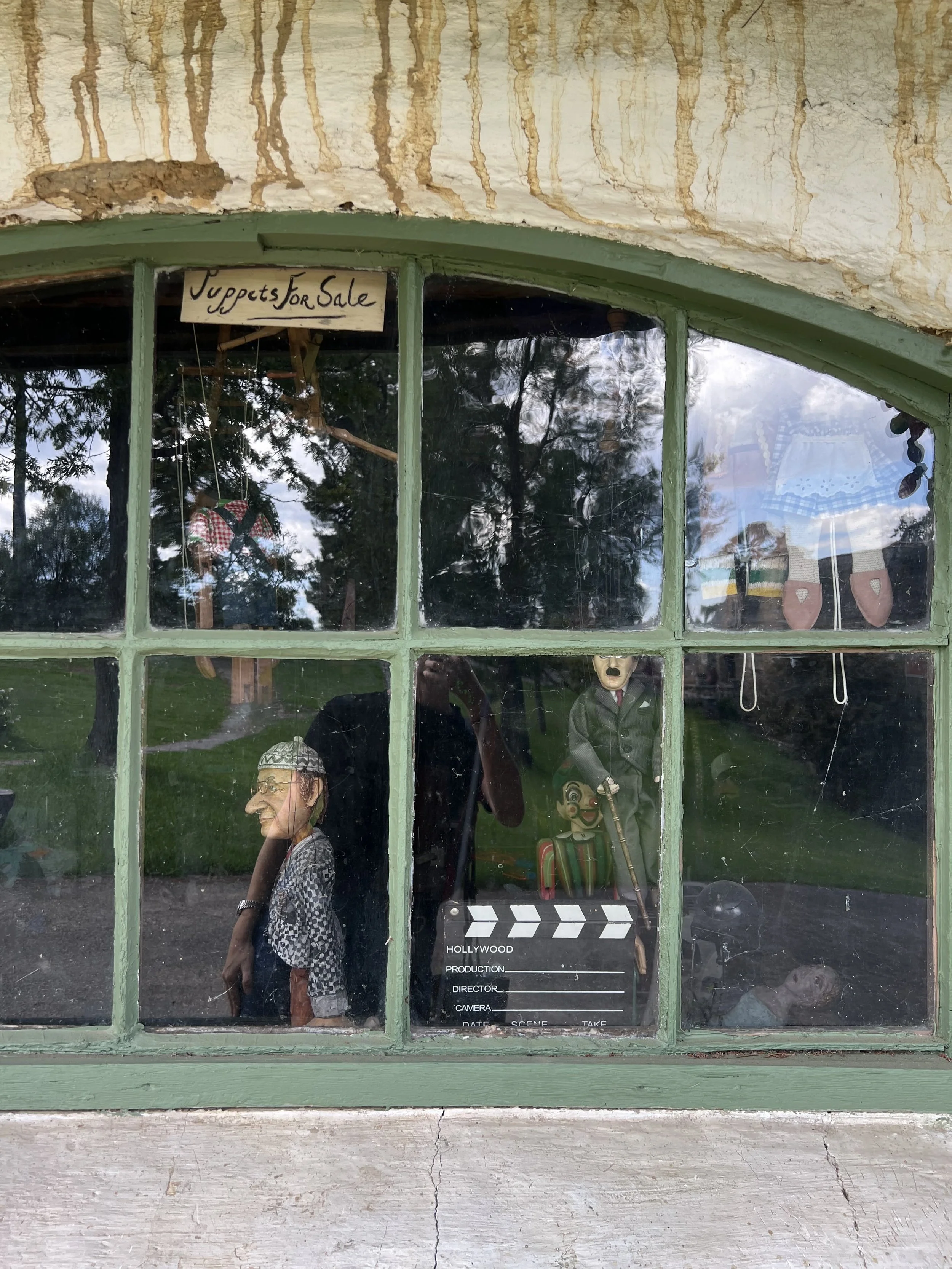
Handmade marionettes — including a miniature Charlie Chaplin.
Local birds
Take note of the brick walls and garden paths. Peacocks and local birds live here and freely walk throughout the grounds, though weathered signs on the brickwork look stern, reminding visitors: “Please do not touch, tease, or feed the birds.”
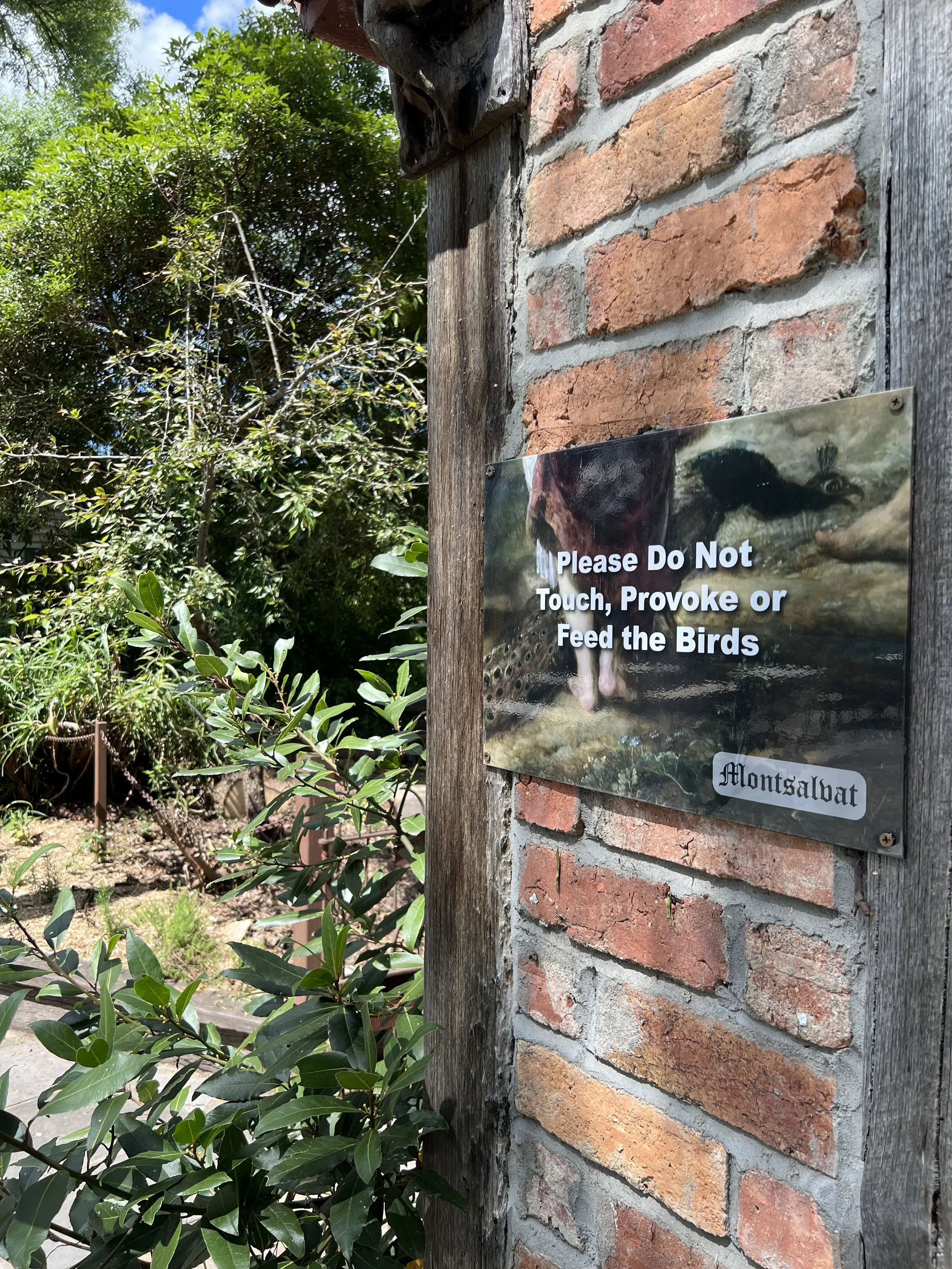
Your guide through Montsalvat
Montsalvat is a five-hectare maze of over three dozen mudbrick, stone, and timber structures. While studios are scattered across the bushland, the curated art is concentrated in four distinct spaces:
What’s inside: The architectural centerpiece of the colony. The upper gallery houses the permanent collection of Justus Jörgensen’s works (1934–1975)—including his intense self-portraits, rapid tonalist landscapes, and everyday still lifes—alongside portraits of the colony's founding bohemian circle.
What’s inside: Housed inside a dramatic, heavy-timbered rustic barn, this is Montsalvat’s primary space for rotating contemporary exhibitions. Expect large-scale modern paintings, sculpture, and multimedia installations by established Australian artists and visiting creators.
What’s inside: Located right beside the Ornamental Pool, this sunlit space features salvaged timber trusses, open fireplaces, and ceramic tile floors. It hosts a rotating calendar of curated visual art shows, printmaking, and textile exhibitions.
What’s inside: Dedicated exclusively to the painters, ceramicists, jewelers, and luthiers who currently hold studio residencies on the grounds. Beyond the gallery walls, you can wander past the open doors of the Clay Talk ceramic center and working ateliers to see pieces being fired and carved in real time.
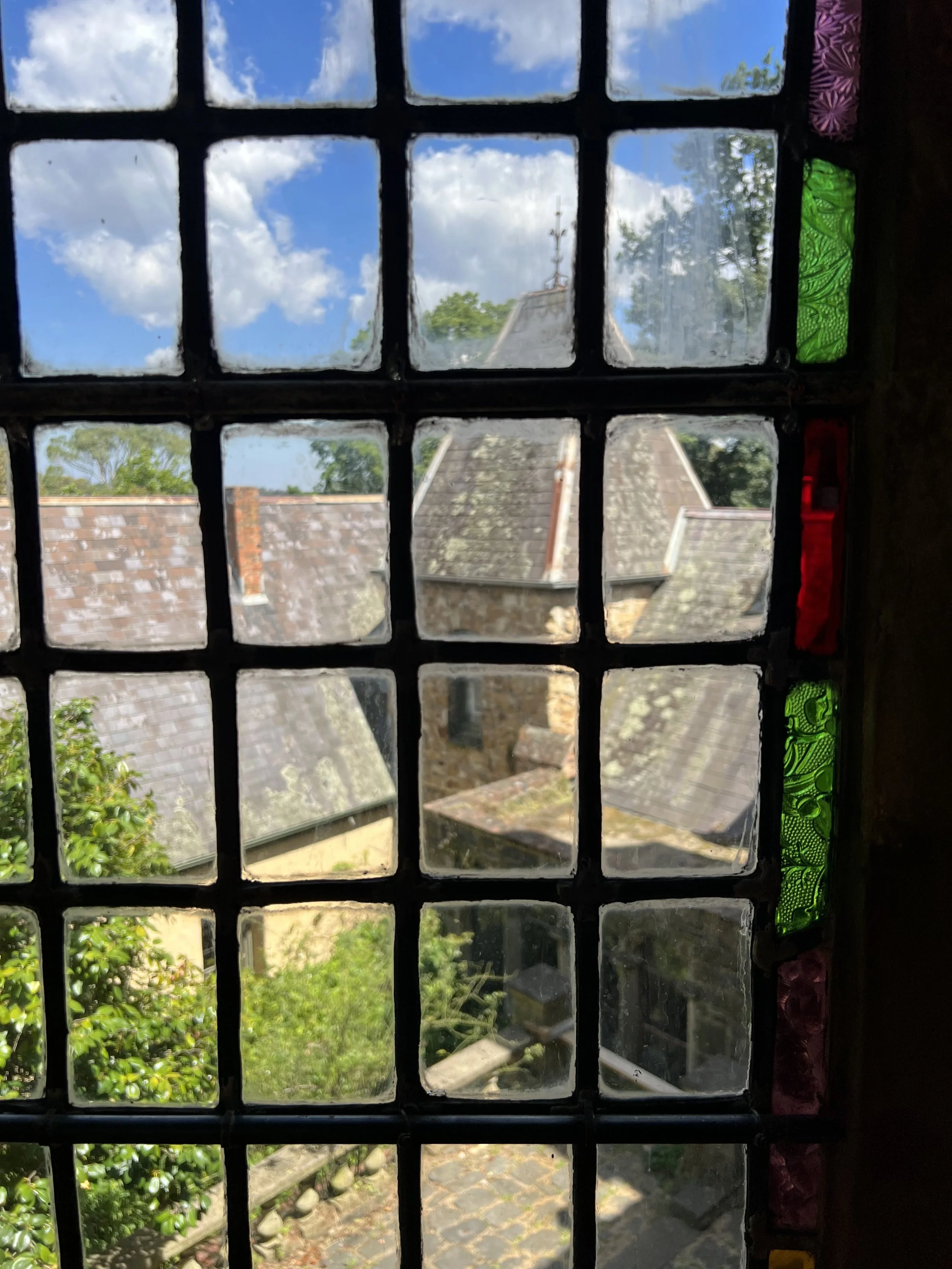
View of historic slate roofs and courtyard through an antique leaded stained glass window at Montsalvat, Victoria.
📋 General info & visiting logistics
Montsalvat is an easy half-day escape from central Melbourne, especially if you want to pair it with a wider trip into the Yarra Valley wine region. Here is everything you need to know before you go:
7 Hillcrest Avenue, Eltham VIC 3095, Australia. Located about 26 km northeast of Melbourne’s CBD. By car, it is a straightforward 35–40 minute drive with free on-site parking. If taking public transit, catch the Hurstbridge Line train from Flinders Street Station to Eltham Station (approx. 45 mins), then hop on local Bus 582 or take a 5-minute rideshare straight to the gates.
Wednesday to Sunday: 10:00 AM – 4:00 PM
Mondays & Tuesdays: Closed to the general public (do not make the mistake of showing up early in the week!).
Adults: $15.00 AUD | Concessions & Youth (12–18): $10.00 AUD | Children under 12: Free. Your entry pass includes full access to the historic grounds, the Great Hall, and all rotating resident exhibitions.
💡 Tip: pair it with the Yarra Valley
Wear flat, comfortable shoes — the historic mudbrick pathways and gravel courtyards are wonderfully uneven.
Grab a flat white at the on-site café overlooking the courtyard before you leave. Since Eltham sits right at the gateway to Victoria’s premier wine country, consider booking a private or small-group Yarra Valley Art & Wine Day Tour via GetYourGuide or Viator—many local itineraries include a morning stop at Montsalvat before heading into the vineyards for tastings.Sources & Further Reading
Primary documentation detailing Justus Jörgensen’s 1934 founding vision, mudbrick construction techniques, and Montsalvat’s role in Melbourne’s 20th-century arts scene.
A comprehensive biographical study of Jörgensen’s architectural philosophy, his training under Max Meldrum, and the bohemian social structure of the Eltham colony.
An exploration of the Australian Tonalist painting movement and how Jörgensen translated Meldrum’s theories of light and tone into both canvas and architecture.
