

Lake Como combines the very best of nature, culture, history and art. For art lovers and those who take their time to appreciate culture, the true soul of this region lies not in the façades of expensive villas. An incredible network of medieval, Romanesque and Baroque churches stretches along the western and northern shores of the lake.
Table of Contents
* * *
These sacred places house historic frescoes, rare marble works of art and ancient crypts, which most ordinary tourists completely overlook and simply drive past.
It’s hard to tell the exact number of churches around Como. However, the scale is staggering: the official catalogue of the Diocese of Como alone lists more than 360 active parish churches, and if we include small village chapels, private shrines attached to villas and semi-derelict medieval hermitages in the mountains, their number around the lake exceeds 500.
Let’s take a look at one of my most favourite ones.
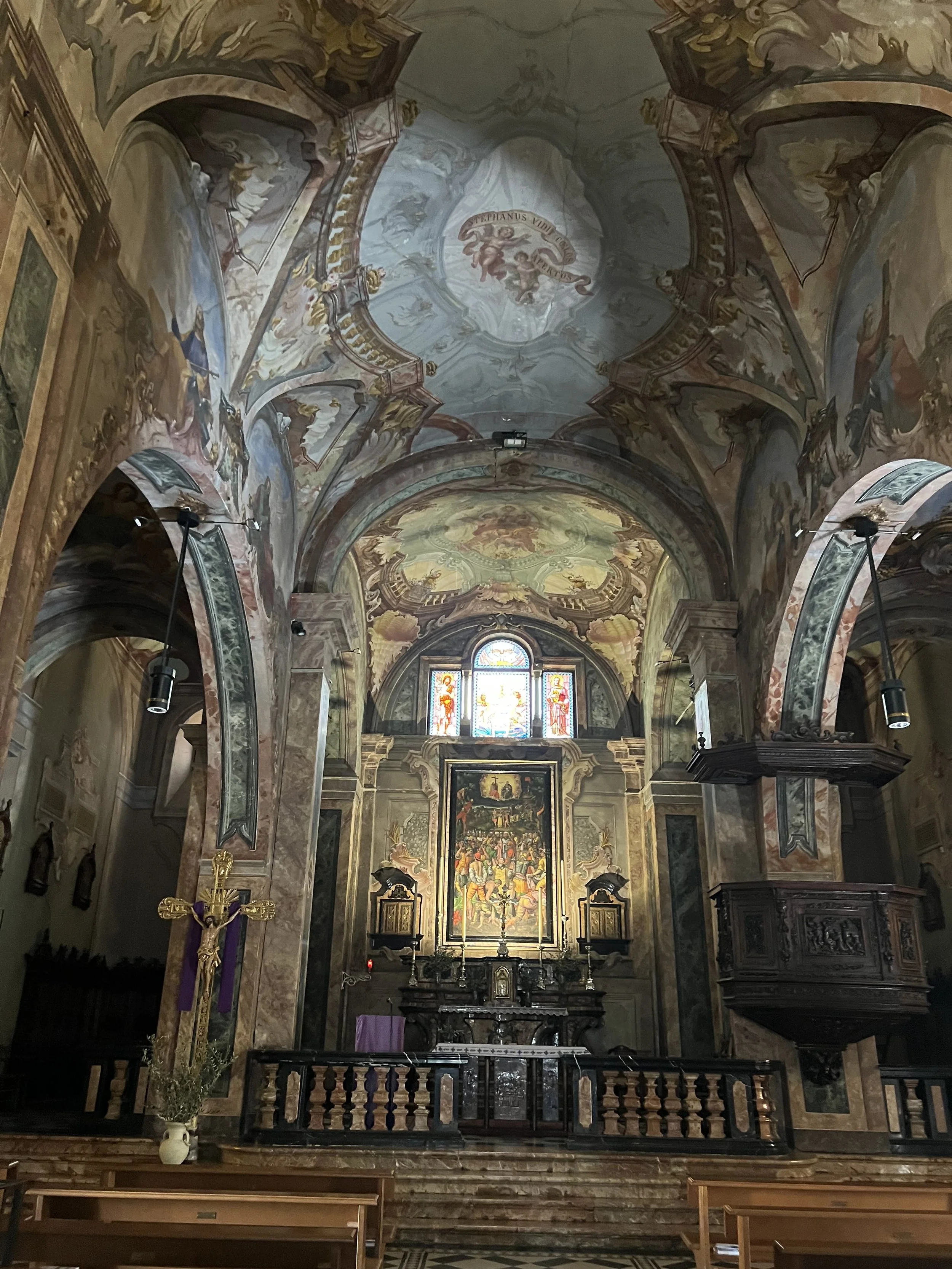
The baroque interior and high altar inside the Chiesa di Santo Stefano in Lenno, Lake Como.
A baroque masterpiece in Lenno: Chiesa di Santo Stefano
📍Location: Via S. Stefano 13, 22016 Lenno (Tremezzina), Province of Como, Italy.
Lenno is very quiet and small, yet wandering through those peacfull streets is pure delight. It is easy to pass by the facade of the Chiesa di Santo Stefano, which at first sight looks unassuming. Inside, however, you will see an astonishing contrast: a highly decorated, dramatic interior.
The frescoes and altarpiece
The current layout of the church dates back to major renovations in the 16th and 17th centuries, which transformed an ancient Romanesque structure into a three-nave basilican plan. The real beauty here is the theatrical 18th-century decorative cycle coating the vaults and walls of the presbytery.
Large, elegant painted frames (quadrature) enclose scenes depicting the Stories and Glory of St. Stephen. As you look closer at the high altar, you will find a valuable 16th-century altarpiece depicting the martyrdom of the saint, beautifully illuminated by stained glass windows just above the retable. The synthesis of light, dark marble balustrades, and a beautifully carved wooden pulpit creates an atmosphere of deep, hushed contemplation.
Tip: don’t miss the underground crypt
The building’s oldest secrets are hidden right beneath your feet. Through small trapdoors located in the central nave, you can descend into an 11th-century trapezoidal Romanesque crypt.
The crypt is upported by eight ancient columns with capitals repurposed from early Christian and Carolingian eras, and features fragments of 14th-century frescoes. We can tell a lot about Lake Como’s multilayered architectural history thanks to the remained crypt.
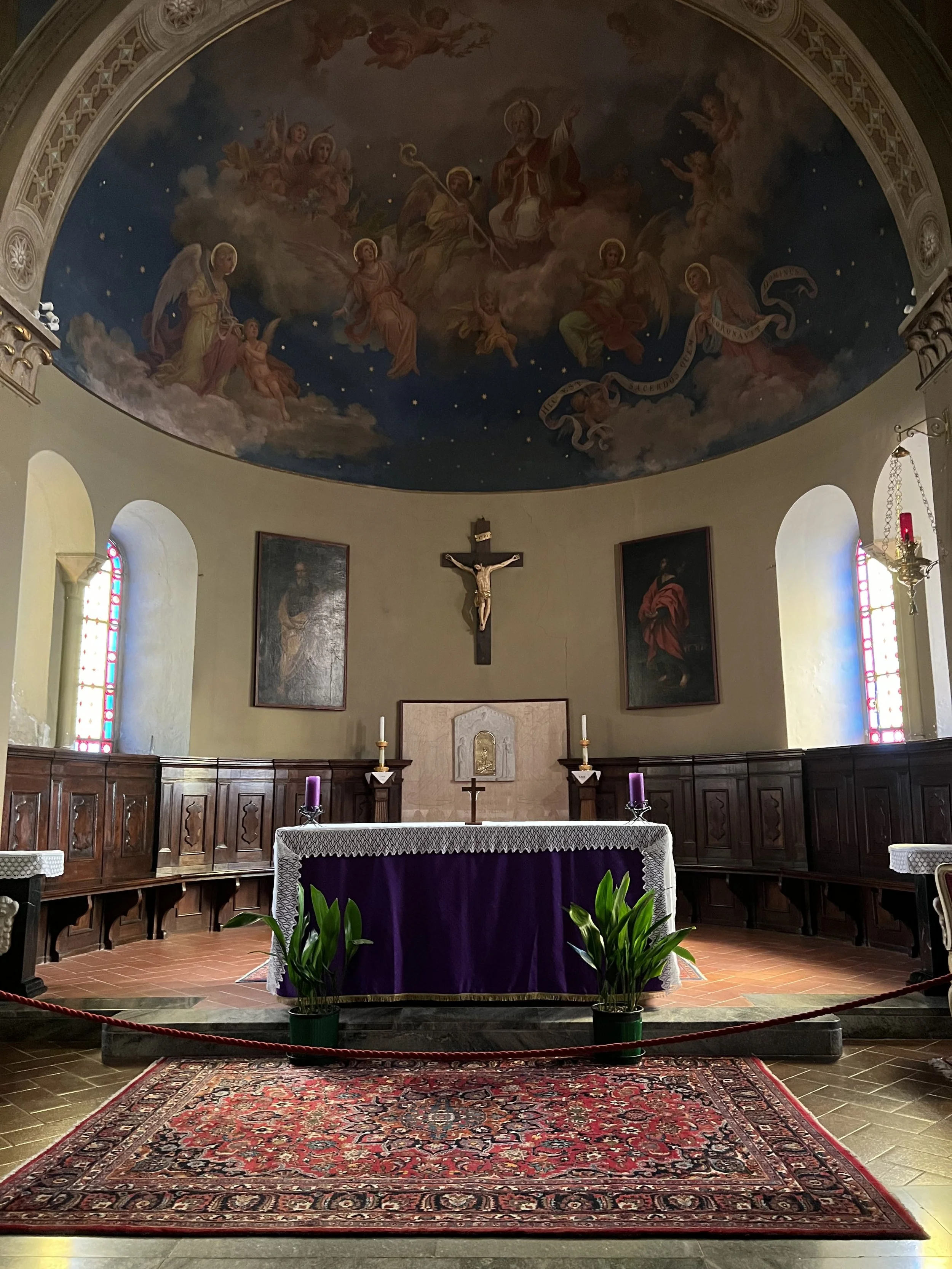
Chiesa di San Biagio in Musso
The lakeside heritage of Musso: Chiesa di San Biagio
📍 Location: Via Regina, 14, 22010 Musso CO, Italy.
Musso is a village famous for its historical marble quarries. It is located further north along the western shore, and right on its waterfront stands the Church of San Biagio. It was built in 1387 with origins tied to the medieval and Roman history of the Sasso di Musso area.
The three-nave Romanesque interior
The exterior is basically rustic facade modified in the early 16th century, but again, all the beauty is inside. The interior is classic Lombard-Romanesque three-nave layout supported by sturdy columns. The absolute focal point of the interior is the semicircular apse framing the main altar, dressed in liturgical purple during our visit.
The minimalism of the stone below makes the vibrant, starlit fresco on the ceiling stand out even more. The deep, star-lit blue sky, which serves as the backdrop to a celestial scene filled with soaring angels and saints, contrasts with the whitewashed lower sections of the walls and the dark wooden choir.

Black and pink marble side altar dedicated to Saint Anthony in San Siro, Lake Como.
The historical heart of Rezzonico: Chiesa di Santa Maria Assunta (San Siro)
📍Location: Piazza Chiesa, 1, 22010 San Siro (Como), Italy.
Continue northwards to the municipality of San Siro, which comprises several villages. Here you will find the historic hamlet of Santa Maria Rezzonico, situated on the shores of the lake.
Here stands the Church of Santa Maria Assunta – a fine example of a 14th-century Dominican monastery, which over time has become a veritable local treasure trove of Christian art. The present building was constructed between 1464 and 1474 by a community of Dominican friars on the ruins of a previous medieval place of worship.
The side altars and fine marble craftsmanship
The main nave of the Church of Santa Maria Assunta is renowned for its tall Gothic arches; if you look closely at the side chapels, you can see the incredible evolution of Baroque stylistic elements.
One of the most impressive side altars is adorned with a magnificent architectural retable, carved from meticulously polished local black marble and elegantly framed by columns and balustrades of pastel-pink marble.
In the central niche stands an expressive statue of Saint Anthony of Padua holding the Infant Christ, beautifully illuminated beneath a serrated canopy. On the left, a traditional statue of Our Lady of Lourdes creates an atmosphere of humble devotion, and the graceful ceiling vaults overhead combine classical floral motifs with depictions of symbolic religious texts.
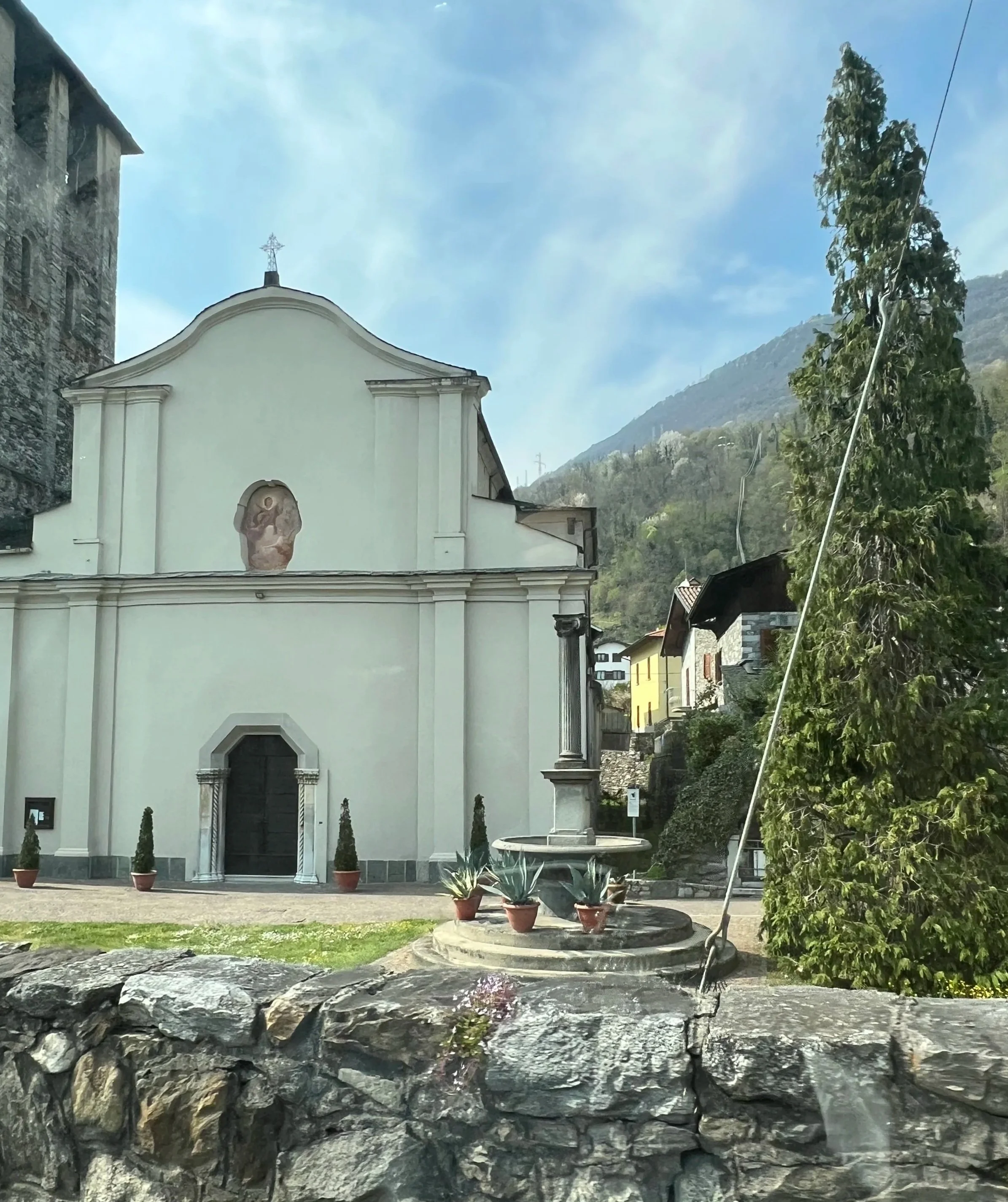
The northern frontier: Chiesa di Santo Stefano in Sorico
📍Location: Via Vittorio Emanuele, 4, 22010 Sorico CO, Italy.
At the very northern tip of Lake Como, where the lake waters slowly transition into the Pian di Spagna nature reserve, lies the peaceful town of Sorico. Historically, Sorico was part of the legendary Tre Pievi (Three Parishes) — a powerful medieval alliance of local lakeside towns.
The origins of the church are rooted in 15th century, and the current site has seen multiple religious buildings, including an early medieval church dedicated to Christ the Savior and a subsequent Romanesque structure
A medieval watchtower turned bell tower
The church welcomes visitors with an elegantly curved façade in the minimalist Baroque style, created during its 18th-century renovation; however, the building’s layout tells a story that dates back more than a thousand years. Directly in front of the stone courtyard stands a historic stone fountain, adorned with potted agaves, creating a typically Italian atmosphere of hospitality.
To the left of the main entrance lies one of the most fascinating architectural features of this site. The massive structure of rough-hewn stone rising above the white walls is the church’s bell tower. Built in the 14th century, this tower was not originally a religious structure; it was a military watchtower designed to guard the Alpine trade routes. Today, it stands as a stark monument to the region’s turbulent medieval past.
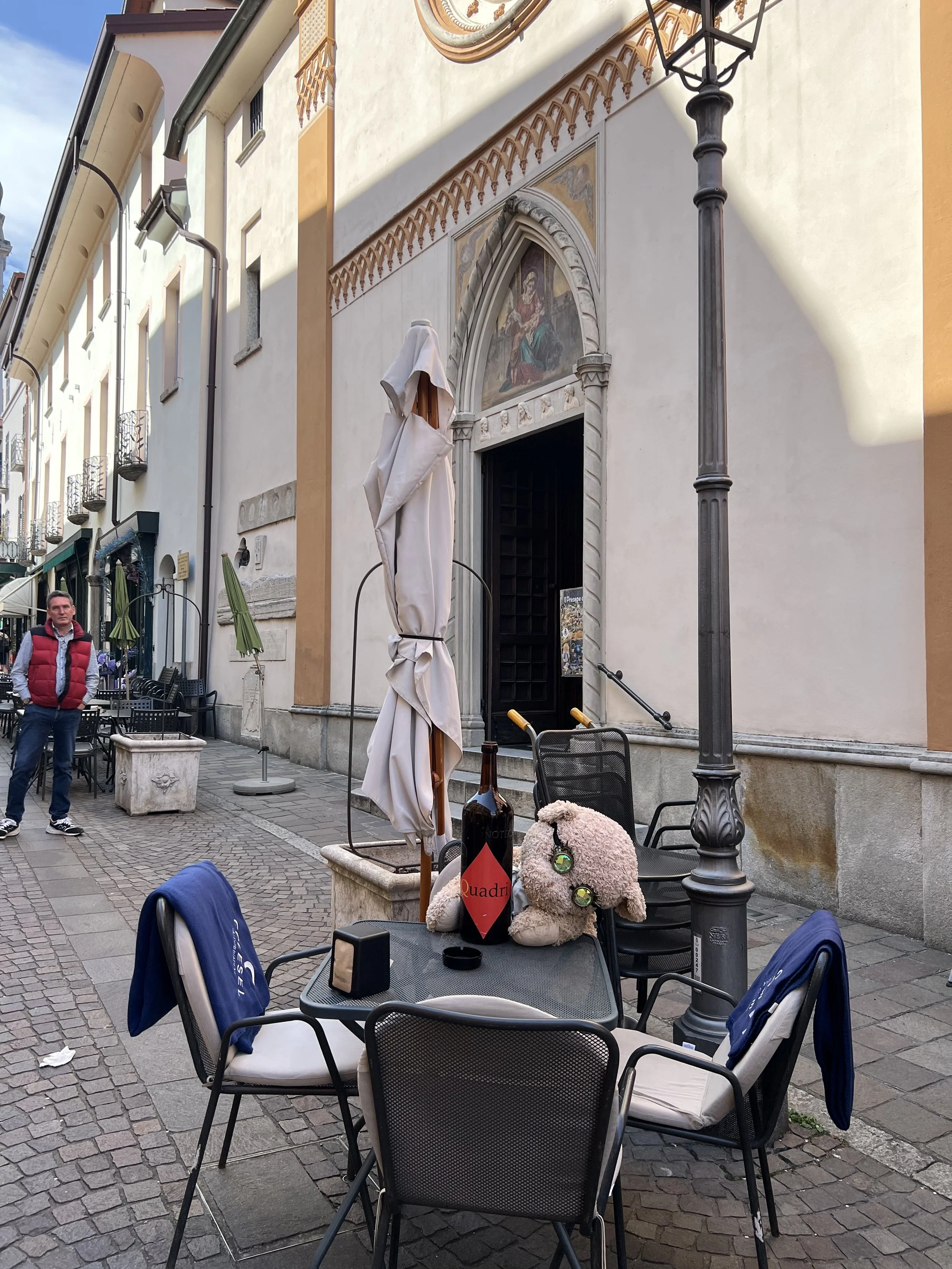
An outdoor cafe table in front of a historic church facade with an ornate gothic portal in Dongo on Lake Como.
Plan your Lake Como cultural itinerary
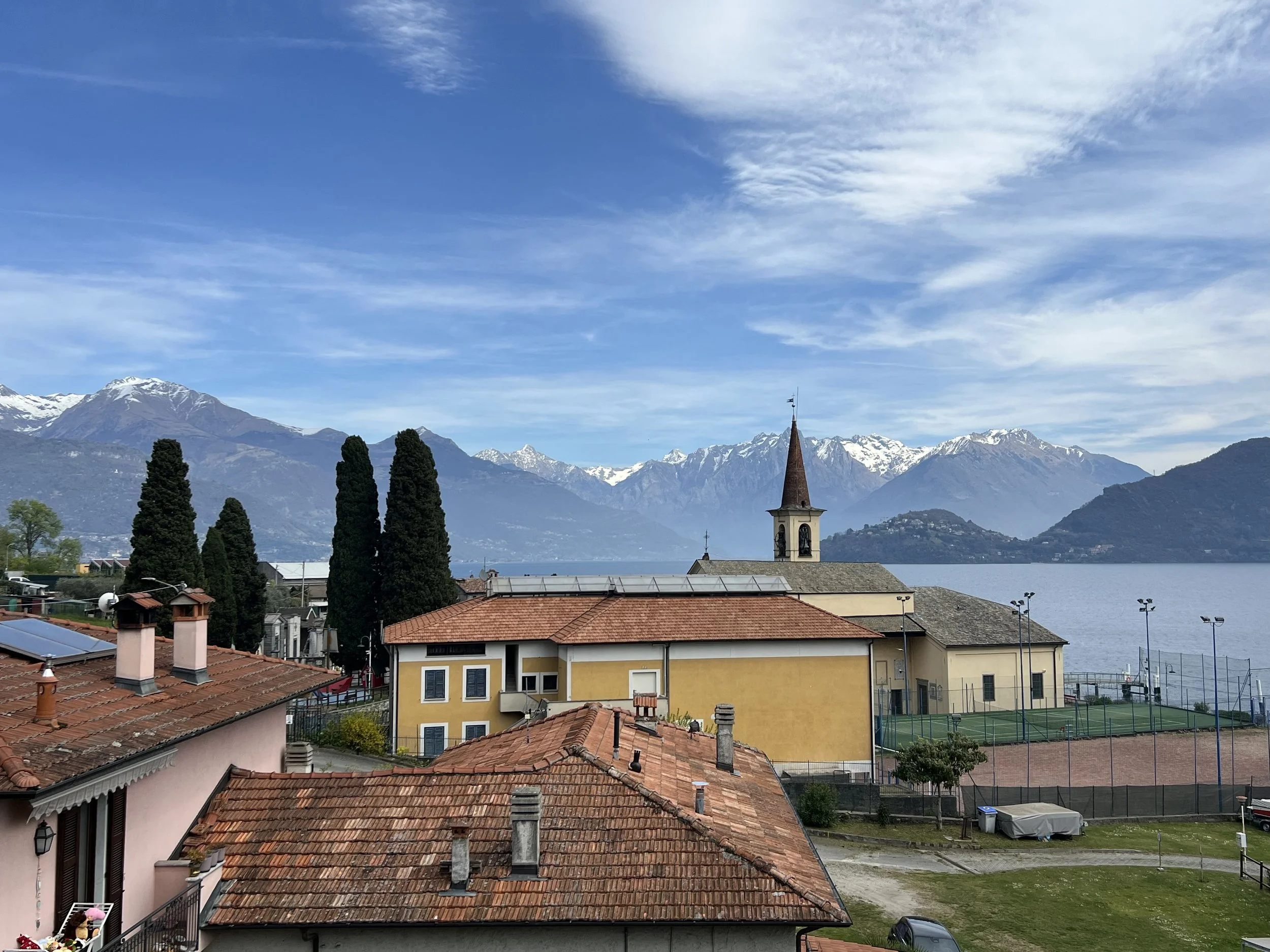
To get the most out of this slow travel journey, we highly recommend exploring the western shore using the public ferry network or the C10 regional bus line. Navigating these northern towns rewards you with dramatic, sweeping views where terracotta rooftops, soaring Romanesque bell towers, and deep blue lake waters collide beneath a jagged horizon of snow-capped Alpine peaks.
Quick Practical Tips:
Dress Code: Remember that these are active places of worship; ensure your shoulders and knees are covered when entering.
Opening Hours: Many smaller northern churches operate on limited hours or open primarily around morning and evening mass. Plan your transit accordingly.
Combine with Heritage Sites: Many of these locations pair perfectly with other landmarks, such as the Castello di Rezzonico in San Siro or the Greenway hike starting in Lenno.
🚢 Getting there: transportation & logistics
If you’re not hiring a car, you’ll need to familiarise yourself a little with the local public transport system to plan a cultural tour of the churches in the northern and western parts of Lake Como. The central part of the lake is well served by boats; however, when heading to the quieter northern areas — such as Musso, San Siro and Sorico — you will need to combine ferry journeys with picturesque views and the reliable local bus network.
Best used for: Moving comfortably between Lenno and the central lake golden triangle. The panoramic views of the lakeside architecture from the water are unmatched.
The downside: Ferries run less frequently than buses, and they only dock at the deep northern towns (Musso, Sorico) a few times a day.
Best used for: Zipping from Como City straight to Lenno or the upper lake basin without wasting hours stopping at every tiny lakeside village.
The downside: Seating is strictly limited, and tickets can sell out fast during peak summer hours. There is no open-air deck, so it is optimized for speed rather than sightseeing.
Best used for: The most affordable, flexible, and reliable way to reach the secluded historic gems in Musso, San Siro, and Sorico where ferry schedules are too restrictive.
The downside: During peak summer months, the C10 can occasionally get caught in traffic on the narrow, winding lakeside highway, causing slight delays.
💡 Insider logistics tips
The central lake daily pass
If you plan to explore the interior of Lenno’s church and then hop across the water to Varenna or Bellagio on the same day, don't buy single boat tickets. Ask for a "Daily Pass" for the central lake basin (around €15.00). It gives you unlimited hop-on, hop-off ferry access and pays for itself by your third ride.
Buy bus tickets before boarding
Drivers on the C10 bus line rarely sell tickets on board, and if they do, you will pay a steep cash premium. Always buy your tickets ahead of time at local tobacco shops (marked with a large T sign) or newsstands in town. Alternatively, download the official ASF Autolinee mobile app to buy digital tickets on your phone.
Beware of the sunday schedule
On Sundays and Italian national holidays, the timetables for both the buses and the ferries cut their trip frequencies almost in half. Always double-check the seasonal Sunday column on the official Navigazione Laghi (for boats) and ASF Autolinee (for buses) websites so you don't find yourself stranded in the quiet north.
