
Torvehallerne food market in Copenhagen, Denmark (how to visit, what to eat)
Do you like fish? Then Torvehallerne Food Market is a place you simply must visit. However, don’t think of Torvehallerne solely as a place to buy food. It will be a profound cultural experience and a learning opportunity for you.
Food markets are an important part of cities and the stories they have to tell. Sometimes a city market will tell you far more about a region’s heritage than any historical museum — but only if you know how to look at it. I urge you to visit markets whilst travelling. After all, markets are not just about food; they are literally culture that you can eat, touch, taste and smell.
Table of Contents
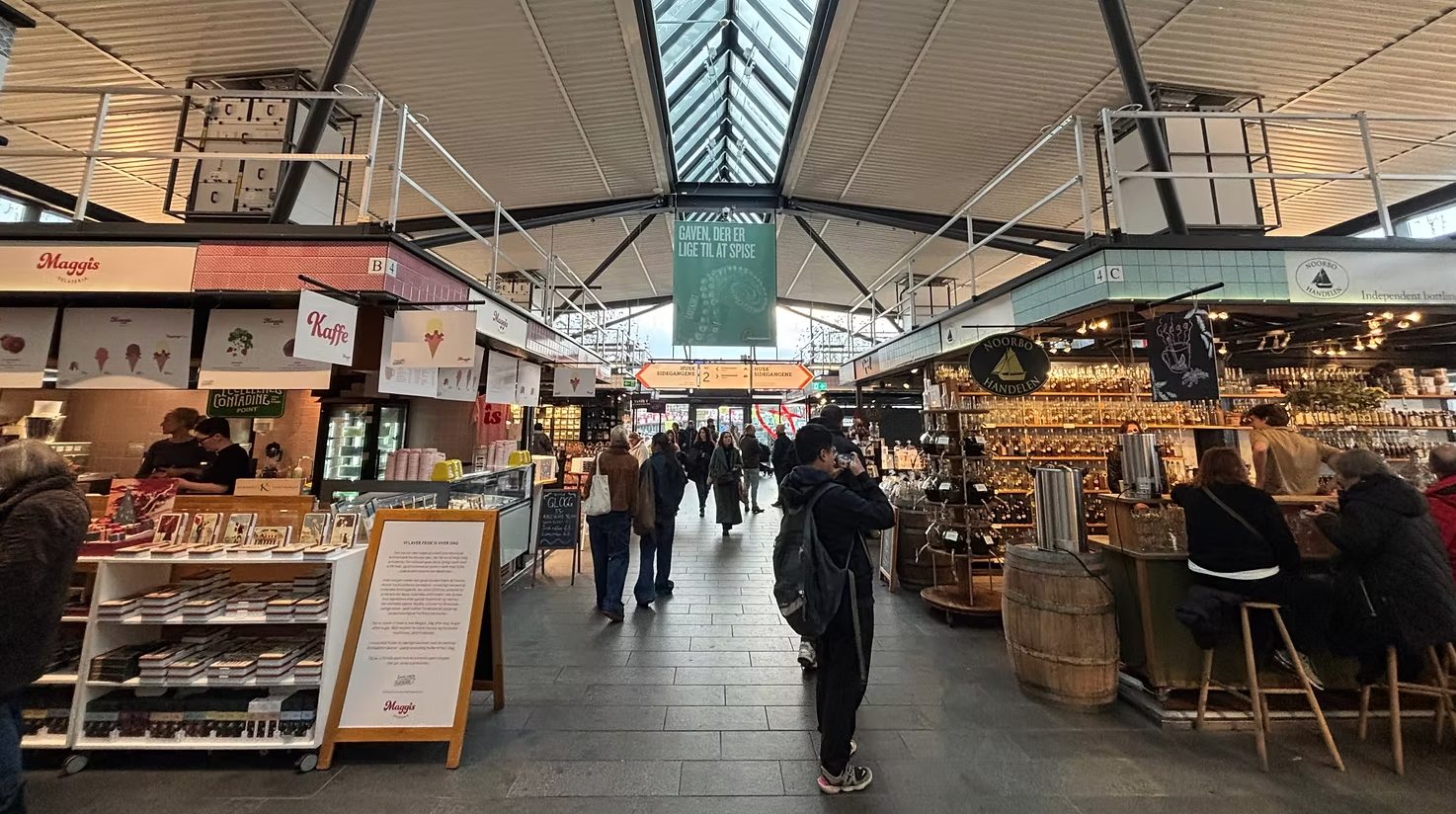
Torvehallerne is located right next to Nørreport St, it is a very center of the city
As soon as you step through the doors of Torvehallerne, you’ll be enveloped by the coziness typical of city markets. The rich aroma of freshly brewed coffee, the scent of fish, and the smell of freshly baked bread is hard to resist.
A nation shaped by fishing
Denmark is defined by water.
Historically, the sea and the waters here are a huge part of the economy, but not just that. The sea is a whole framework of life that has shaped the Danish mindset, their habits and their visual language.
For centuries, the Danish coastline has determined what people ate, how they worked, how they preserved food, and how they understood themselves through the harsh and chaotic flow of life.
The sea, water, fish — these form a system of knowledge in Denmark.
The renowned Danish philosopher Søren Kierkegaard, in his theological reflections, compared the inhabitants of Copenhagen to fish frolicking in shallow waters. They feel safe until they realise that depth is the true element of faith, frightening and demanding an existential leap.
In the summer of 1835, Kierkegaard was holidaying in the north of the island of Zealand in the fishing village of Gilleleje. In his diary, he described in detail the social isolation and internal traditions of the local community.
He noted the fishermen’s aloofness, their habit of gathering in groups on street corners to discuss their affairs away from the rest of the rural population.
Kierkegaard also recorded a unique custom: after every catch, all the men of the village would gather for a communal lunch, each contributing a shilling. In this tradition, he saw a manifestation of genuine community spirit, characteristic of Denmark’s insular societies.
The Torvehallerne food market as a mirror of Danish society
The modern Torvehallerne food market should be viewed almost through the prism of philosophy, specifically the philosophical aspect of the sea and fishing; in other words, one should see this popular Copenhagen spot not just as a shopping arcade, but as a deep cultural and existential phenomenon.
As soon as you step into the Torvehallerne food market, I suggest you immediately try to view it through three philosophical layers.
Glass pavilions as a boundary between the elements
Let’s start with the architecture. The two parallel transparent pavilions made of glass and steel, designed by Hans Peter Hagen, are a real metaphor for the shoreline.
Hans Peter Hagens’ Architecture firm, Arkitekturværkstedet, drew inspiration from Mediterranean and Moorish architecture to design the market. I find it very symbolic and beautiful — different culturies found its intersection in Copenhagen, large port city.
Torvehallerne is that very man-made ‘shallow water’ of which Kierkegaard wrote. The transparent walls blur the line between the controlled urban interior and the chaotic external environment. Here, one is in absolute safety, where nothing threatens them. All that remains is to calmly contemplate the gifts of the ‘dangerous abyss’ within an interior of Scandinavian urban design and gastronomic flair.
The fish stalls (Hav, Fiskerikajen) as the ‘Existential Catch’ — our main stop
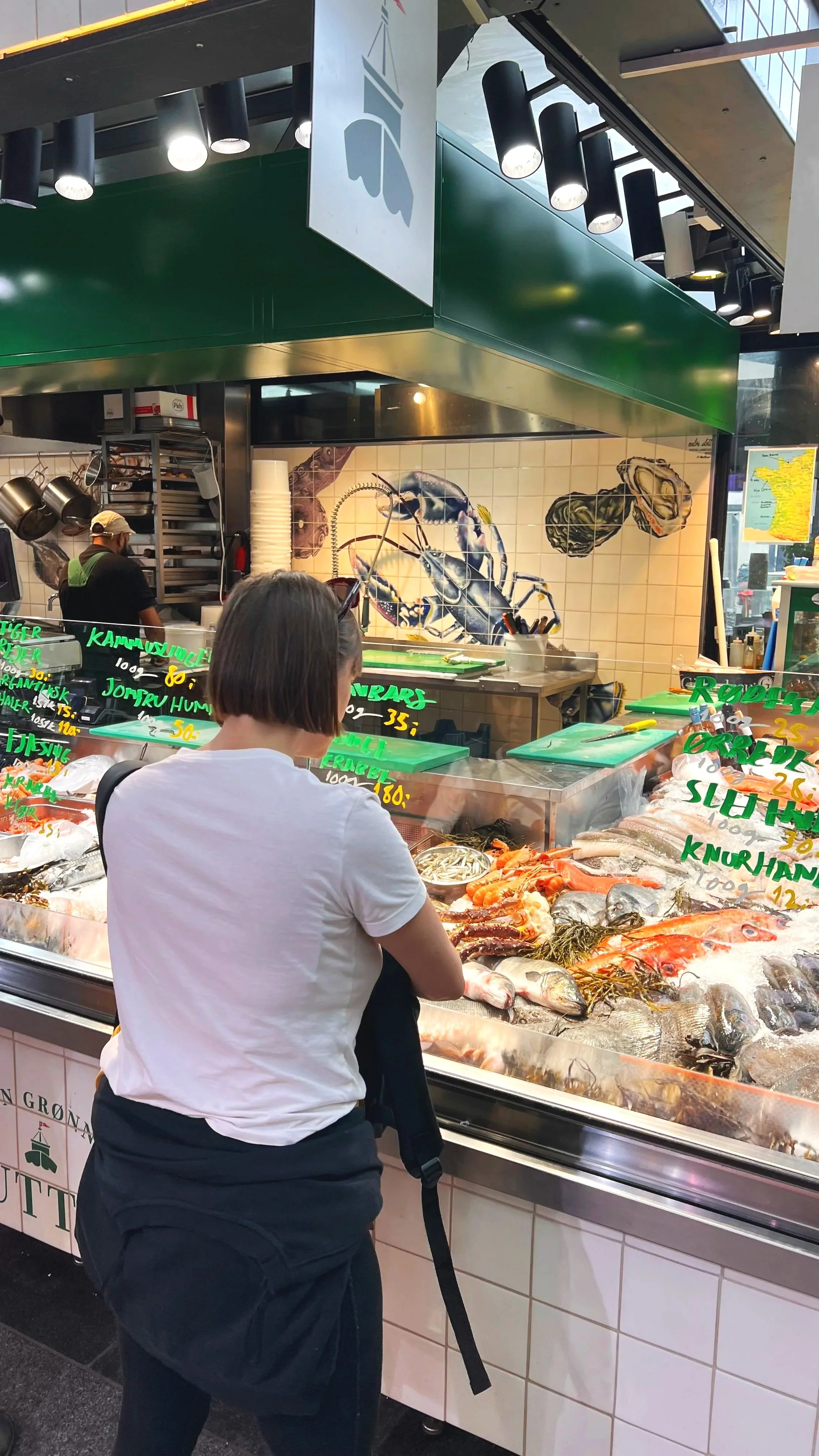
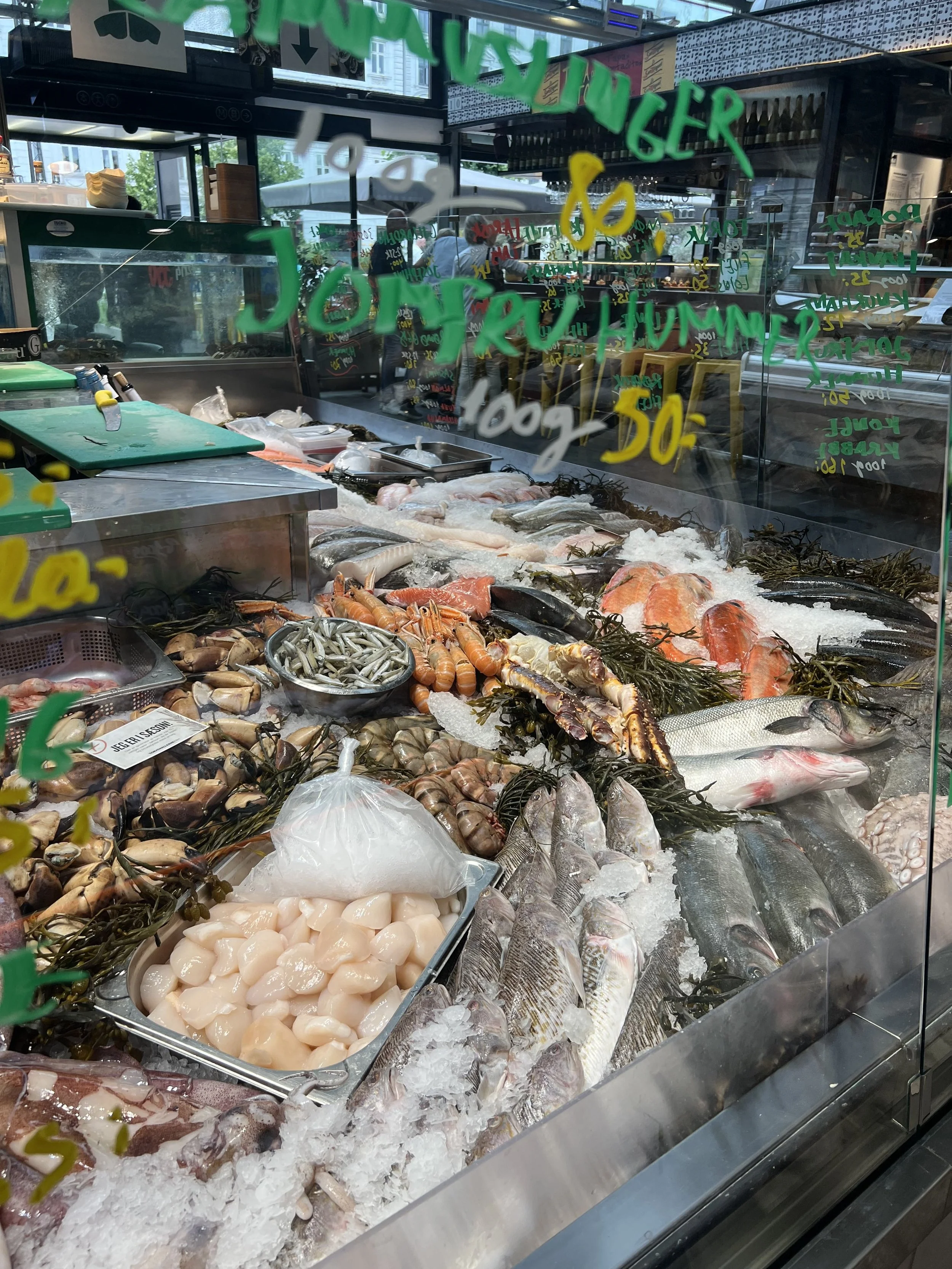
In the first hall, the fish stalls take centre stage, where you can buy fresh herring, salmon and oysters.
Take a closer look...This is a theater of the deep, a showcase of all the natural riches held within the waters of the Danish seas. The silvery, shimmering scales of herring lie atop mountains of crushed ice. The rich coral-pink color of salmon from the Faroe Islands contrasts with the dark, rough, stony shells of oysters from Limfjord. All these delicacies are also available in cans.
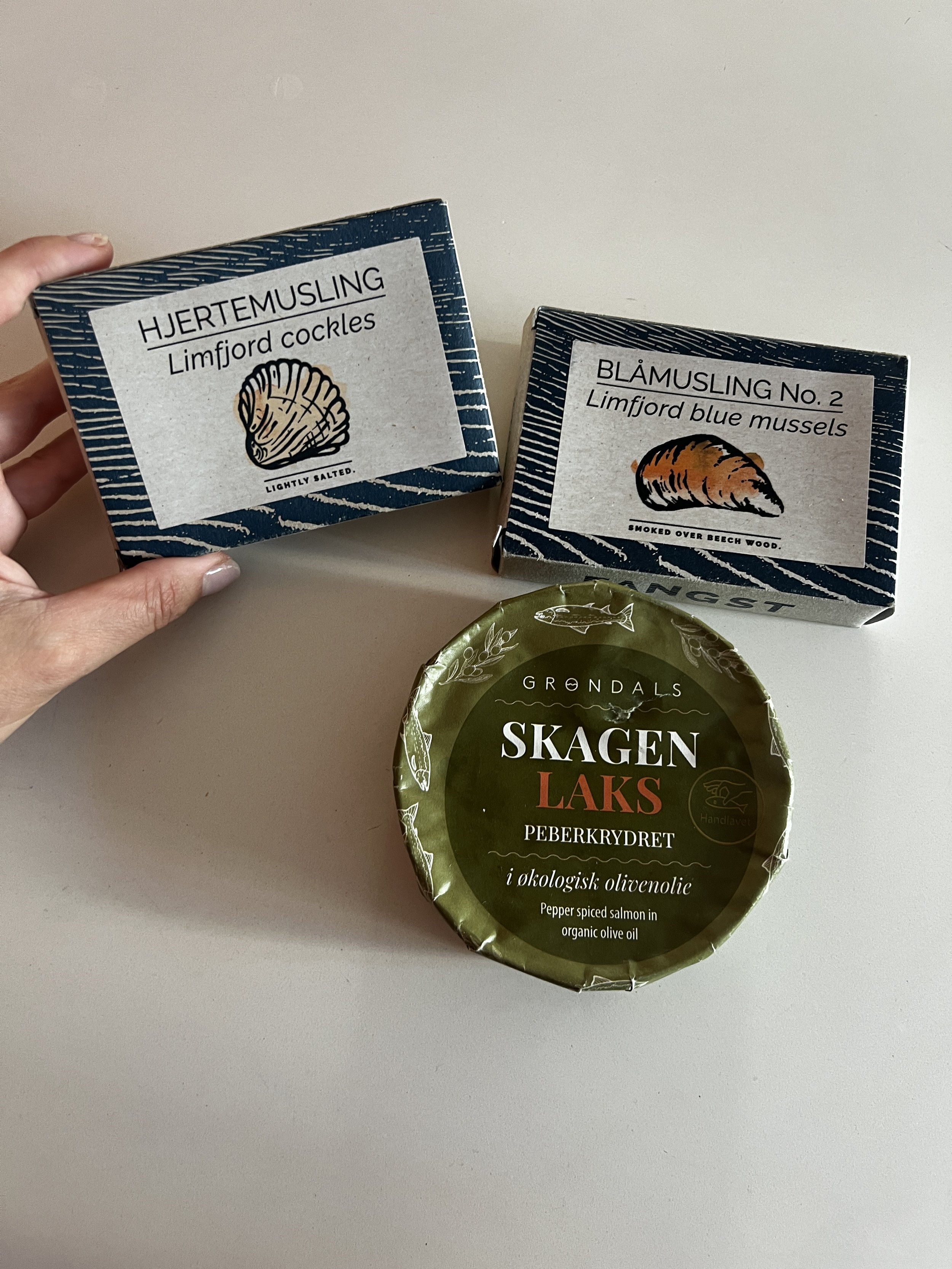
In Kierkegaard’s philosophy of the sea, the process of extracting something from the depths (as in his parable of the locked box at the bottom of Lake Søborg) is an act of unearthing hidden truth.
At the fish stalls (Hav, Fiskerikajen) you can order produce to cook yourself, or ready-sliced food to eat right here and now.
I’ve tried practically everything from these stalls: herring with herbs, mustard, and pickled. Salmon — prepared in all sorts of ways. When you order pickled herring, take note of its complex texture. The fish is firm and oily, and its flavor contrasts sharply with the sweet-and-sour vinegar brine.
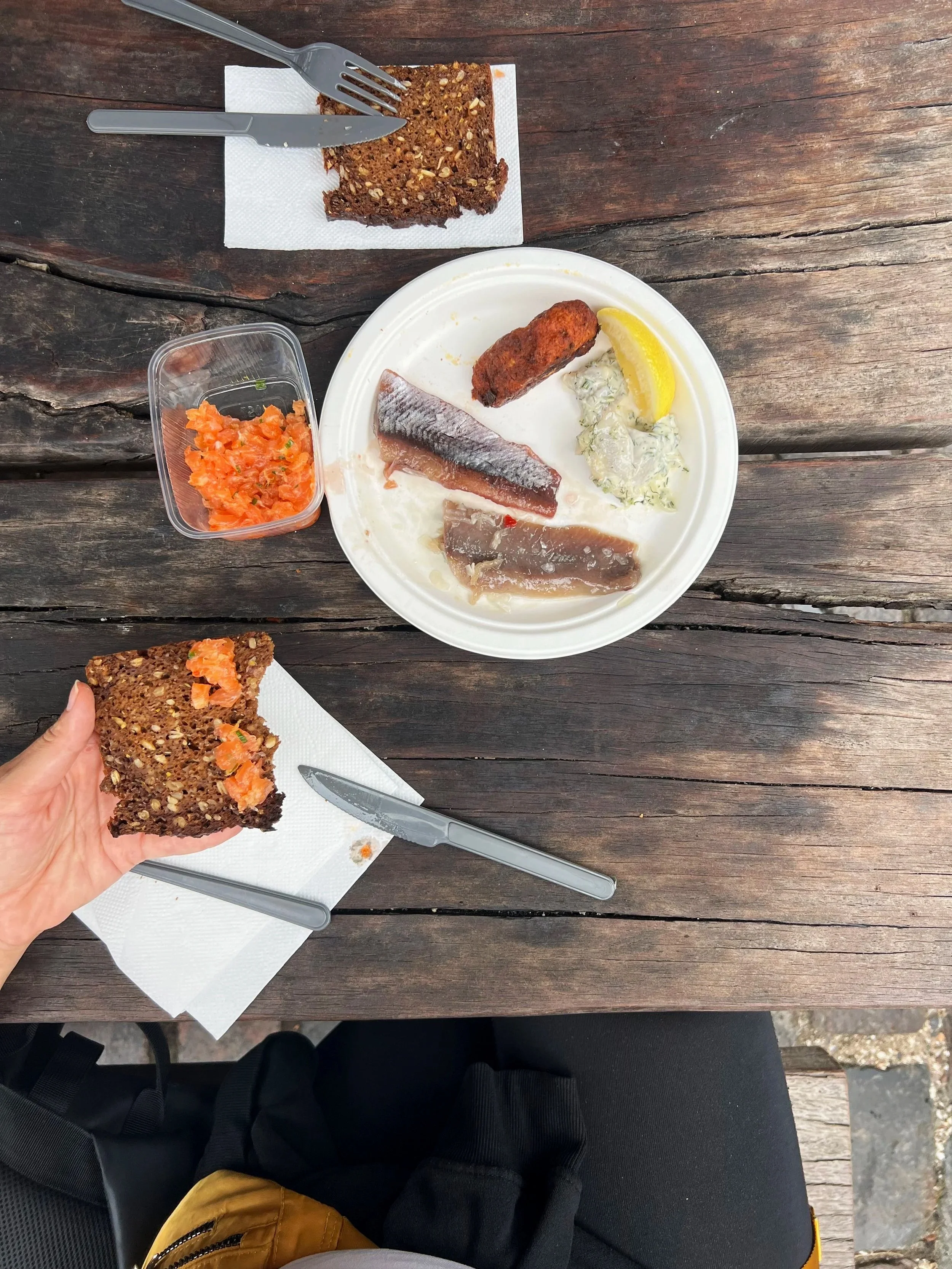
Try it with a slice of dense, heavy Danish rugbrød (rye bread), coarse, grainy, and slightly sour.
When you take a bite, the crunch of raw onion and the fresh, peppery flavor of dill sprigs round out the experience. It’s a great appetizer to pair with a glass of sparkling wine or a meal on its own.
From a philosophical point of view, the sea conceals secrets; it is impersonal and frightening. Fishing is a bold attempt by man to enter into dialogue with the abyss and take a share of its riches.
The fish at Torvehallerne is man’s triumph over the chaos of the sea. The buyer is confronted with the result of this existential labour. Here, the sea’s elements are tamed, aestheticised and transformed into an object of hedonistic choice.
From stinky ‘Gammel Strand’ to bohemean-ish Torvehallerne — the evolution
Gammel Strand used to smell of rotting seaweed, cheap schnapps, and mud. The fishmongers’ (skovserkoner) hands were red and chapped from the salt water and shouting.
Today, at Torvehallerne, the wood of the long communal benches is smooth and oiled. People sit shoulder to shoulder, clinking heavy glasses of local craft beer or organic wine. There is no smell of struggle in the air; here it smells of truffle oil, seared langoustines, and refined leisure. The transfer of this culture under the roof of modern pavilions reflects a change in the very nature of Danish community life.
At Torvehallerne, this ritual of shared experience has been transformed into new for of ‘aesthetic stage’ of life.
The sea no longer threatens people; it entertains and nourishes them.
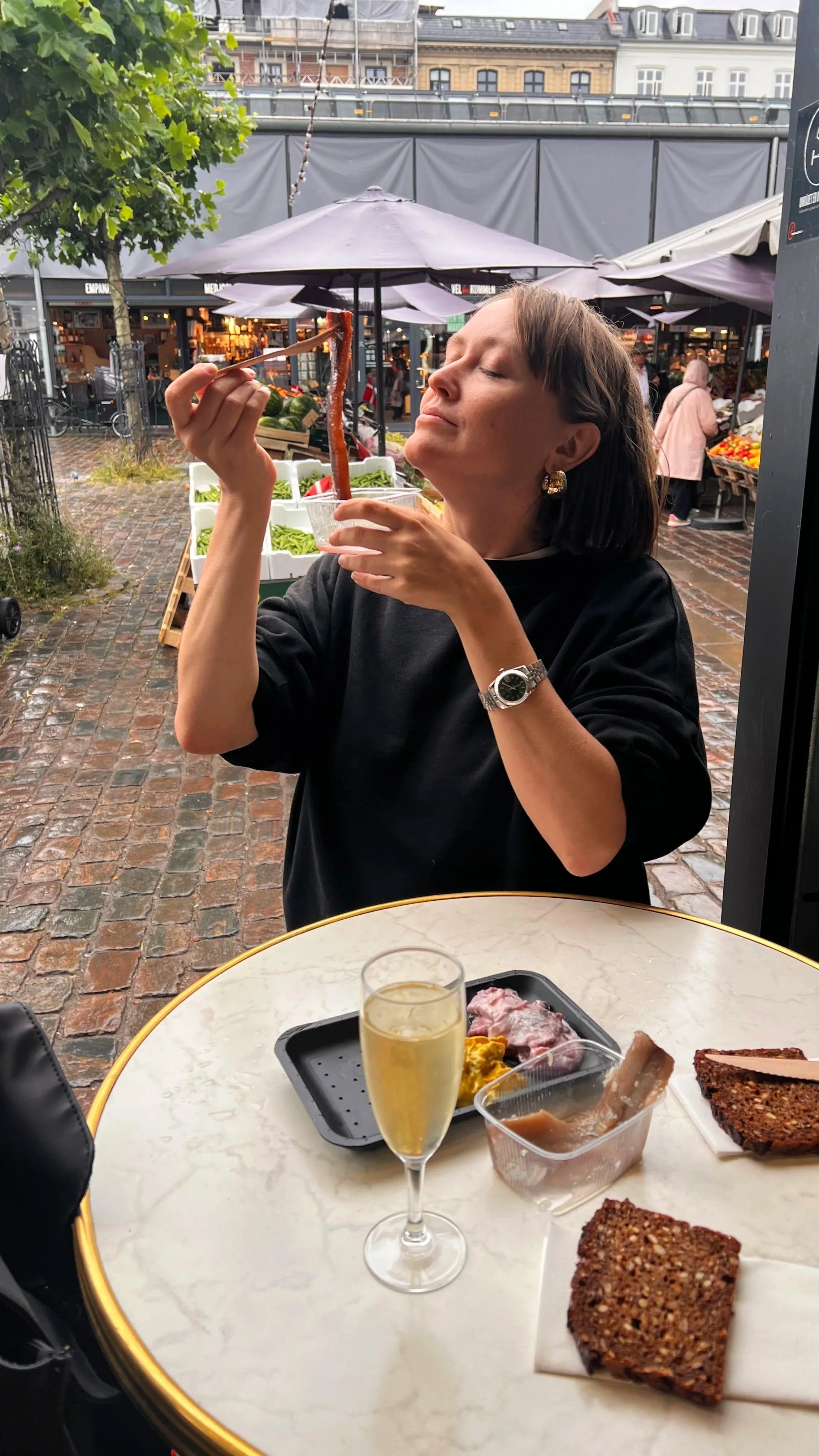
Not just fish
Of course, there is more than fish. Great coffee, fresh bread, delicious cheeses and cured meats, wines and much, much more.
General info
Location: Frederiksborggade 21.
Opening hours for most of the stalls are Monday to Friday at 10-19, Saturday to Sunday at 10-18.
