

How to see the Prado Museum in just 2 hours (and not get tired)
How many times has it happened that I’ve taken my friends to the Prado Museum, telling them it’s a “must-visit”, only for their enthusiasm to immediately fizzle out at the mere sight of the museum’s size and the long queues?
Yes, museum fatigue is real, but you can — and should — visit the Prado smartly. The Prado houses about 8,000 artworks, and of course, a visit like this can be more exhausting than enjoyable.
Be prepared in advance and follow the plan. Spoiler alert — you don’t have to see all 8,000 pieces.
Table of Contents
Tickets and entrance
First things first. Buy your tickets online. If you try to buy them at the ticket counter, you’ll most likely have to stand in a long line and get tired before you even get inside. There’s a separate line for those who bought tickets online, and it’s always shorter than the main one. That’s because there are still consistently fewer forward-thinking art travelers.
Booking a fast-track ticket on the Official Museo del Prado Website guarantees an entry time. Try booking for 10:00 AM (right at opening) or between 2:00 PM and 4:00 PM, which are historically the quietest windows before the evening rush, because most of people simply eta their lunch during that window.
NOTE. The Prado enforces strict security, and carrying a heavy tote or backpack is not permitted. Check your umbrellas, coats, and large bags into the free cloakroom right after passing security.
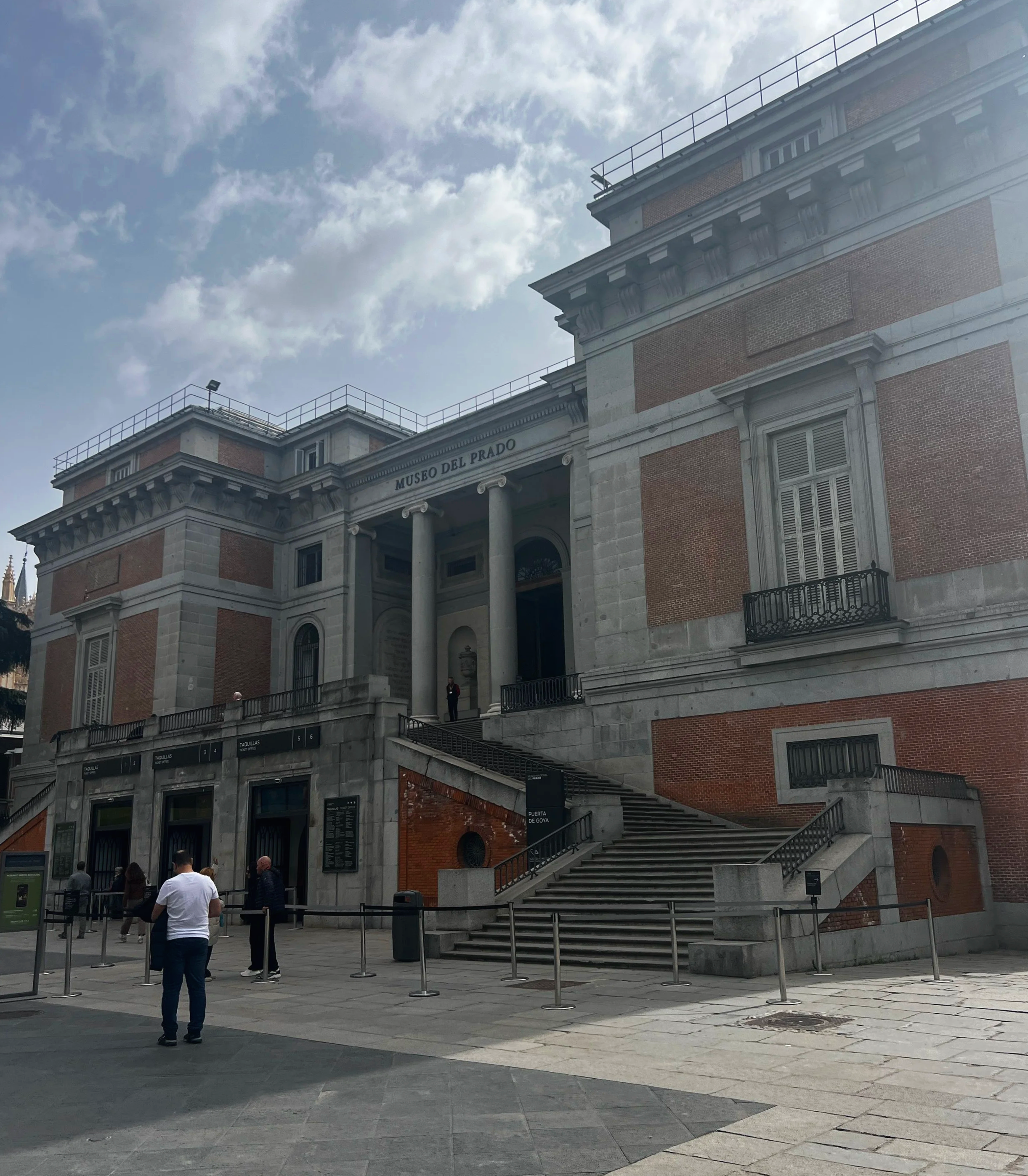
The Prado Museum entrance
Prepare beforehand and set time limit
Even before you head there, like a day prior, go ahead and check out the Prado Museum’s collection online in advance — take a look and make a list of your own must-sees.
The human brain can only absorb so much artworks before burning out. Cap your active viewing at 1.5 to 2 hours maximum. Accept from the start that you will not see everything, and you will leave feeling inspired rather than physically drained.
It’s better to see fewer things but appreciate them more deeply than to rush past the paintings without understanding or remembering a thing. We don’t travel just to check things off a list; we travel to learn and grow.
Follow highlights itinerary
Do not wander aimlessly from room to room. Grab the museum’s official map upon arrival or download the Museo del Prado 2-Hour Itinerary, which efficiently links 30 of the most significant masterpieces. Here are some of them:
The ground floor (Floor 0). Early Renaissance & surrealism
Fra Angelico, The Annunciation (Room 056B). An early Italian Renaissance masterpiece showing the Archangel Gabriel approaching Mary, with Adam and Eve in the background.
Hieronymus Bosch, The Garden of Earthly Delights (Room 056A). Legendary triptych showing a path of humans — from the creation to wild indulgence, ending in a terrifying, chaotic depiction of Hell.
Hieronymus Bosch, The Haywain Triptych (Room 056A): Another tryptich masterpiece by maestro Bosch, about humanity greedily grabbing at a giant wagon of hay (worldly goods), entirely oblivious that demons are pulling it straight to Hell.
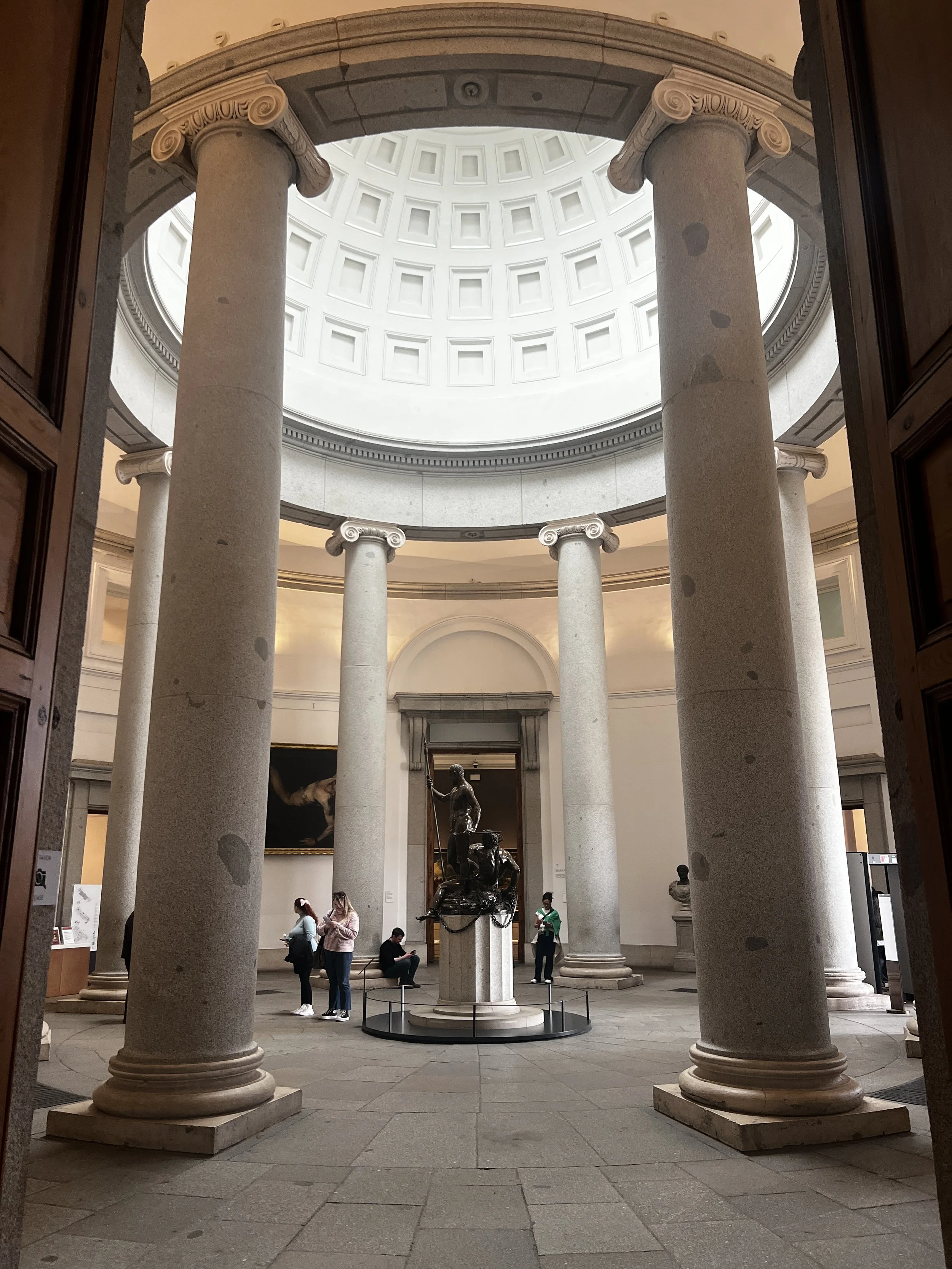
The main floor (Floor 1). The titans of Spanish & Italian art
El Greco (Room 008B)
The Nobleman with his Hand on his Chest. An iconic, intense portrait of a mysterious knight making an oath.
The Adoration of the Shepherds. El Grecopainted this piece for his own tomb. It features figures lit by a supernatural glow radiating from the newborn Christ.
Diego Velázquez (Rooms 009A & 012)
Las Lanzas (The Surrender of Breda) (Room 009A). A massive historical canvas about an act of mercy, where a Spanish general gently stops a defeated Dutch enemy from kneeling.
Las Meninas (The Maids of Honor) (Room 012). The undisputed crown jewel of the Prado. A complex composition where Velázquez paints himself looking at the viewer, breaking the fourth wall centuries before cinema.
Titian & the Italian influence on Spanish art (Room 027)
Titian, Emperor Charles V at Mühlberg. The blueprint for royal propaganda. The Holy Roman Emperor is depicted in gleaming armor under a dramatic, blood-orange sunset.
🖤 Francisco Goya (Rooms 064 & 067)
The Third of May 1808 (Room 064). An anti-war masterpiece showing Napoleon’s firing squad executing faceless, terrified Madrid citizens in the dead of night.
The Black Paintings (Las Pinturas Negras) (Room 067). A collection of 14 dark, horrifying murals painted directly onto the walls of Goya’s own house as he lost his hearing and sanity.
Saturn Devouring His Son. A terrifying titan tears into a bloody human torso in pitch darkness.
The Dog. A devastatingly minimalist painting. Here you will only see a tiny dog’s head drowning or looking up over an empty, vast slope.
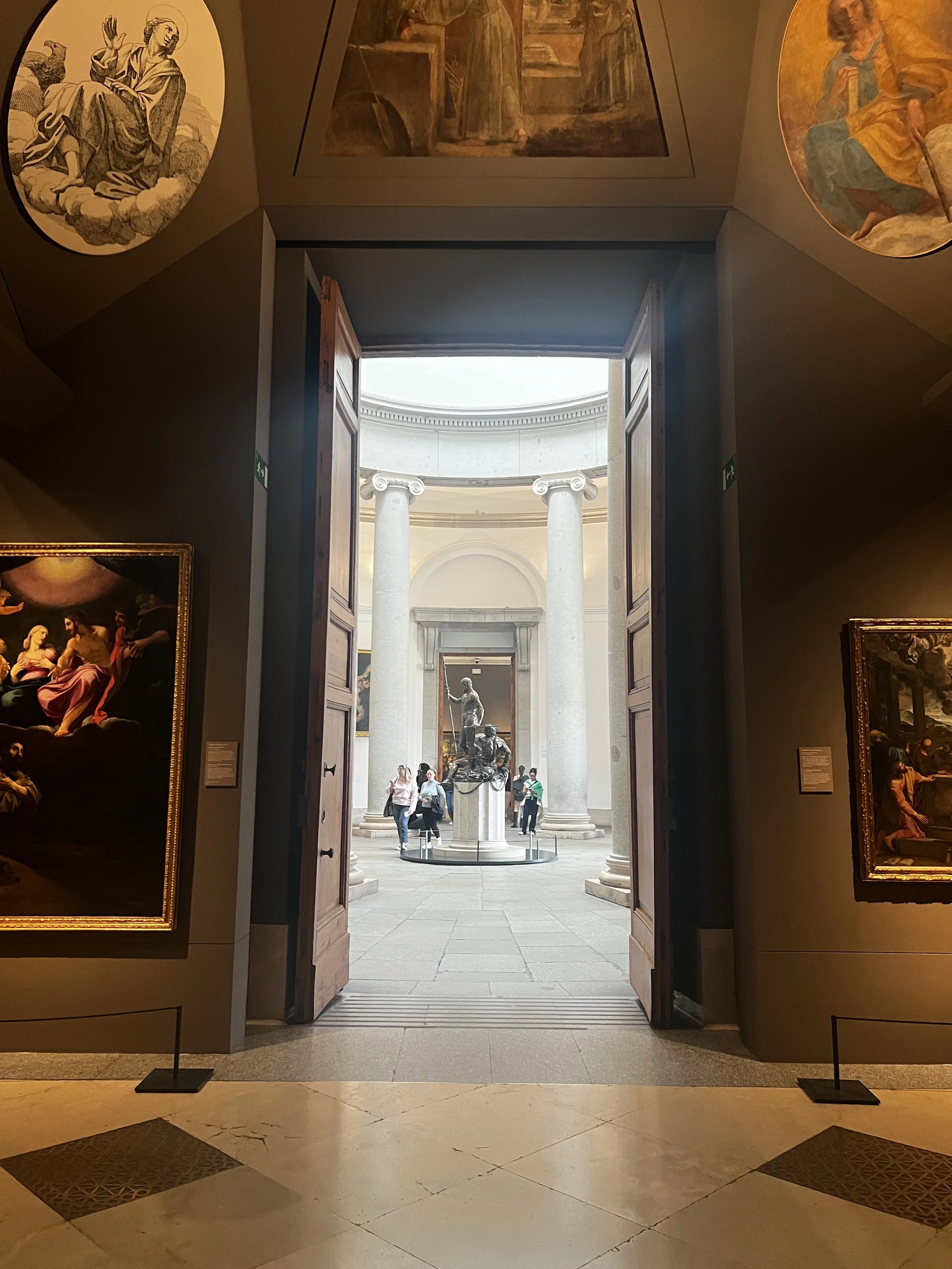
The “sit and absorb” method
You absolutely CAN avoid the sensation of ‘museum feet’ that happen from the constant slow, halting, tiresome shuffle. Break the cycle!
Do not rush and, I repeat again, do not aim to see every single piece, just follow your plan. Use the benches thoughtfully placed throughout the grand galleries. Sit down for 10 minutes in front of a masterpiece, rest your legs and yet keep studying details you would otherwise glance past while walking.
Don’t forget about your Art Travel Diary. Sketch, write, reflect.
Midway break, coffee and bite
You most likely will feel your attention span dropping. Head to the ground floor Prado Café. Grab a coffee or a quick snack to reset your senses before diving into your final leg of the museum. Prado Café is very aesthetic and pleasant cafeteria.
Read my Prado Café review here" ——
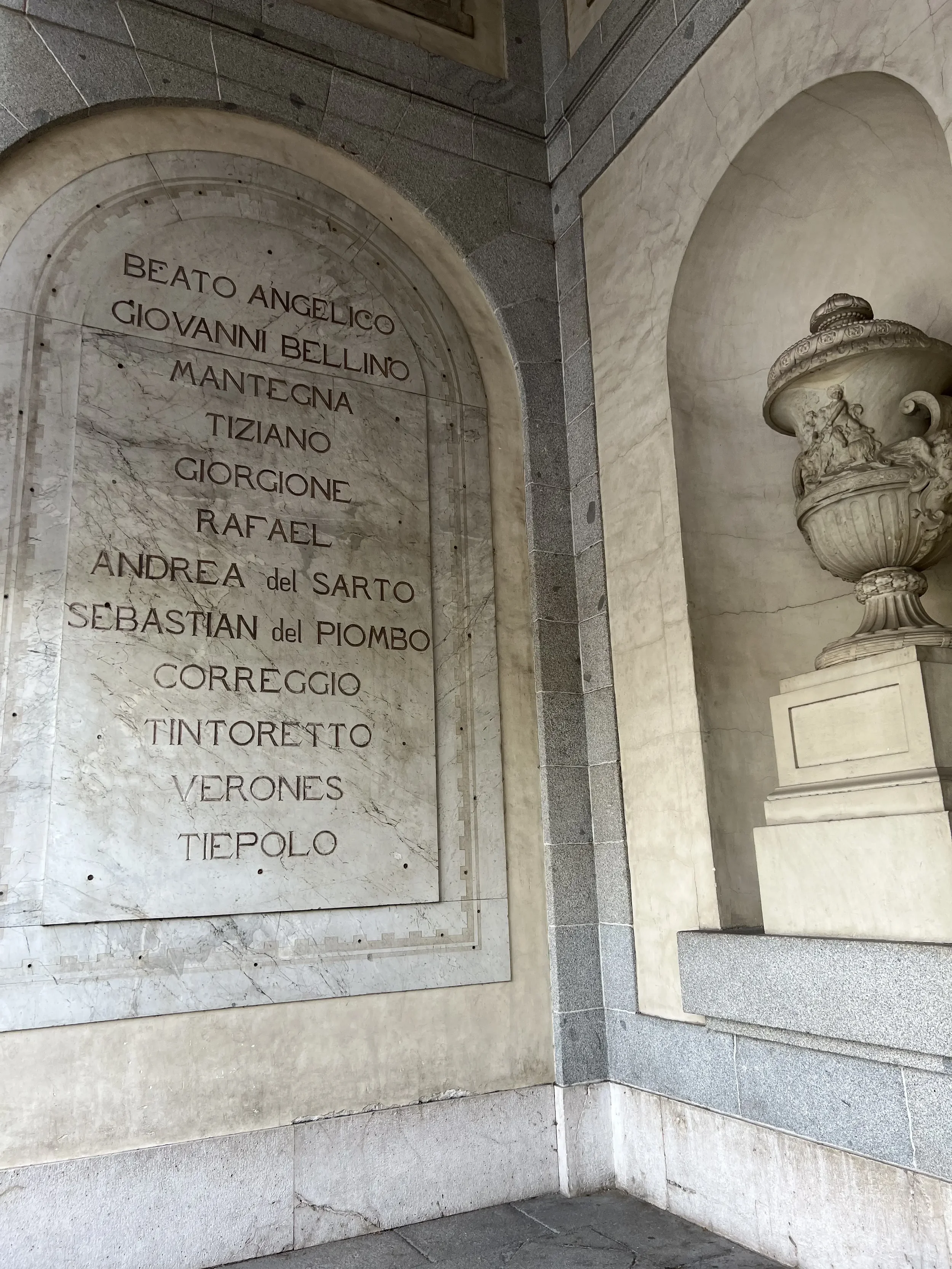
Photo policy
Making photos of individual artworks is not allowed at the Prado. Under any circumstances. If you attempt to take a photo of a work of art, a museum attendant will approach you and ask you not to take any photos.
This tradition has developed over time, and at press conferences, the museum director periodically emphasizes that the museum has no intention of lifting this ban. This stems from the belief that art should be viewed with one’s own eyes and that crowds with screens should not be allowed to gather around the works, as happens, for example, at the Louvre around the Mona Lisa.
So please, respect and take advantage of this rule to keep your phone away and fully immerse yourself in the art.
General info
Address. Paseo del Prado s/n, 28014 Madrid, Spain (Located in the heart of central Madrid’s famous “Golden Triangle of Art”).
Closest Metro Station is Banco de España (Line 2 / Red Line) or Atocha (Line 1 / Blue Line). It is an easy 20-30 minute walk from Puerta del Sol or Plaza Mayor.
Opening Hours
Monday to Saturday: 10:00 AM – 8:00 PM
Sundays and Public Holidays: 10:00 AM – 7:00 PM
Enjoy the best you can! It s an amazing museum and one of my absolute favourites in Europe.
